Introduction
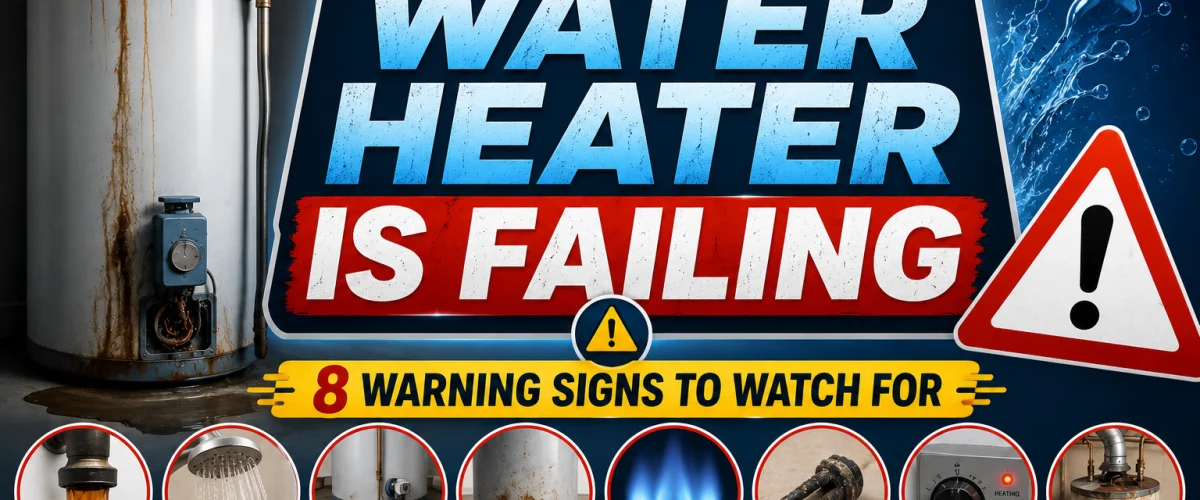
Your water heater is one of the hardest-working appliances in your home — and one of the easiest to forget about until something goes wrong. Tank water heaters typically last between 8 and 12 years, and the good news is that most don’t fail without giving you some warning first. The bad news is that most homeowners miss those warnings entirely.
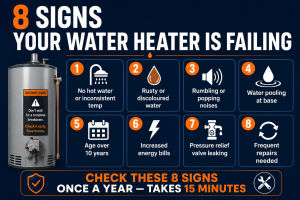
Whether you have a gas or electric water heater, the 8 signs in this guide give you a clear checklist to run through once a year. Catching a failing water heater early means you can plan a replacement on your own schedule — not at 6am on a January morning when the hot water stops. If you’re unsure which type of water heater suits your home, see our tankless vs tank water heater guide and our electric vs gas water heater comparison.
⚡ AT A GLANCE
| Difficulty |
Diagnostic — no tools needed |
| Time |
15–30 Minutes |
| Cost |
Free to diagnose |
| Tools Needed |
Flashlight, notepad |
| Skill Level |
Beginner |
💬 OUR TAKE
“Most water heaters give plenty of warning before they fail completely — the problem is homeowners rarely check them until the hot water stops working entirely. A failed water heater in winter is a genuine emergency. Spending 15 minutes checking these 8 signs once a year could save you a very cold morning and an emergency plumber call-out fee.”
Sign 1 — No Hot Water or Inconsistent Temperature
If your hot water is running out faster than it used to, or if the temperature fluctuates unexpectedly during a shower, your water heater may be struggling. A full tank that delivers significantly less hot water than usual before going cold is a clear indicator that something is failing inside the unit.
For electric water heaters, the most common cause is a failing heating element — most electric models have two elements (upper and lower), and when the lower element fails, your hot water supply drops significantly. For gas water heaters, a failing thermocouple or faulty thermostat can cause inconsistent temperatures and premature hot water cutoff. Neither issue repairs itself — both require a plumber or appliance technician to diagnose and fix. If the hot water has stopped entirely rather than just running out early, our water heater no hot water troubleshooting guide walks through diagnosis by heater type.
💡 Tip: If hot water lasts less than half the normal time — the lower heating element is likely failing on electric models. A plumber can test and replace a single element for a fraction of full replacement cost.
Sign 2 — Rusty or Discolored Water
Brown, orange, or reddish water coming from your hot tap is one of the clearest signs of internal tank corrosion. Run the cold tap at the same time — if the cold water runs clear but the hot water is discolored, the problem is your water heater, not the supply line or pipes.
Internal corrosion occurs when the sacrificial anode rod inside the tank becomes fully depleted. This metal rod is designed to corrode in place of the tank wall itself, but once it’s gone, the steel tank is exposed to water and begins to rust from the inside. Anode rod replacement is a straightforward maintenance task that can significantly extend water heater lifespan — but once internal corrosion has taken hold, full tank replacement is the only reliable solution.
⚠️ Warning: Do not drink or cook with discolored water — corrosion particles are a health concern. Contact a plumber immediately and avoid using hot water for anything other than bathing until the issue is resolved.
A water heater that rumbles, pops, or bangs during the heating cycle is almost always telling you the same thing: sediment has built up at the bottom of the tank. Over time, dissolved minerals — primarily calcium and magnesium — settle out of the water supply and harden into a layer at the tank base. When the heating element or burner fires up, it has to burn through this sediment to heat the water above, causing the rumbling and popping you hear.
Sediment buildup reduces heating efficiency, forces the unit to work harder and longer, and can eventually cause the tank to overheat and fail prematurely. In hard water states like Arizona, Texas, Nevada, and Southern California, sediment buildup is the single biggest cause of premature water heater failure — minerals in the water settle at the bottom of the tank and reduce efficiency significantly. Annual flushing is strongly recommended in these states to extend water heater lifespan.
💡 Tip: A rumbling water heater is not necessarily at the end of its life — professional flushing can restore normal operation if caught early. Ask your plumber to inspect the anode rod at the same time. Our guide to
how to flush a water heater covers the DIY process if you’d rather handle it yourself.
Sign 4 — Water Pooling Around the Base
Any moisture around the base of your water heater warrants a closer look. Small amounts of water can sometimes come from loose inlet and outlet connections at the top of the tank — these fittings can work loose over years of thermal expansion and contraction, and tightening or replacing them is a straightforward fix.
A consistent puddle or moisture under the tank itself is more serious and usually indicates the tank has developed a crack or pinhole leak — often the result of internal corrosion that has finally eaten through the tank wall. Before assuming the worst, check the pressure relief valve (see Sign 7) — a weeping PRV can look like a base leak. If you have water leak detectors installed near your water heater, they’ll alert you to any moisture before a small drip becomes a flood.
⚠️ Warning: Water pooling under a gas water heater needs immediate attention — turn off the gas supply at the shutoff valve behind the unit and call a plumber the same day. Do not attempt to relight the pilot on a leaking gas water heater.
Sign 5 — Age of the Water Heater
Age is one of the most reliable predictors of water heater failure — and one most homeowners don’t track. Tank water heaters have an expected lifespan of 8 to 12 years. Tankless models last significantly longer, typically 15 to 20 years with proper maintenance. Once your tank water heater passes the 10-year mark, you should budget for replacement even if it appears to be working normally.
To find the manufacture date, look for the rating plate label on the side of the unit. The serial number encodes the year of manufacture — on most brands, the first two digits represent the year. A water heater manufactured in 2014 or earlier is well past its expected service life and could fail at any time. If yours is approaching or past the 10-year mark, a proactive replacement gives you control over timing and cost rather than facing an emergency call-out.
💡 Tip: Find the manufacture date on the rating plate label on the side of the tank — the first two digits of the serial number are usually the year. If the label has worn off, your plumber can often date it by model number.
Sign 6 — Increased Energy Bills
An aging water heater that’s working harder than it should will show up on your energy bill before it shows other visible signs of trouble. As sediment builds up at the bottom of the tank, the heating element or burner has to run longer to achieve the same water temperature — burning more energy for the same result. As the tank ages and its insulation degrades, it also loses heat faster between heating cycles.
Compare your current energy bills to the same months from the previous year. A consistent upward trend in water heating costs — particularly a jump of 20% or more year-over-year with similar household usage — is worth investigating. Your utility provider can often break down energy consumption by appliance if you have a smart meter, making it easier to isolate water heater costs specifically.
💡 Tip: A sudden spike in energy bills combined with lukewarm water is a classic sign of a failing heating element — your heater is working overtime to compensate for the element’s reduced output. This combination almost always means a repair or replacement is needed soon.
The temperature and pressure relief valve (T&P or PRV) is a critical safety device fitted to every water heater. Its job is to release excess pressure if the tank overheats or if internal pressure climbs too high — preventing the tank from becoming a dangerous pressurized vessel. The PRV has a discharge pipe that typically runs down the side of the water heater and terminates near the floor or a drain.
Occasional dripping from the PRV discharge pipe is sometimes normal during pressure fluctuations. Consistent dripping, constant discharge, or a PRV leaking around its body indicates a problem. The cause may be high water pressure in your supply line forcing the valve to release constantly, a failed valve body, or the tank genuinely overheating. In any of these cases, a plumber should assess it promptly.
💡 Tip: Never cap or disable a pressure relief valve — it prevents tank explosion in failure scenarios. A PRV replacement costs very little compared to the risk of operating a water heater with a disabled safety valve.
Sign 8 — Frequent Repairs
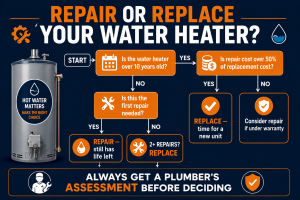
One repair in the lifetime of a water heater — a thermostat replacement, a new anode rod, or a failed element — is entirely normal. But if you’ve had two or more service call-outs for the same unit within the past two years, the water heater is telling you it’s reaching the end of its service life. Individual components are failing because the whole system is aging out simultaneously.
The repair-versus-replace calculation is straightforward: if the estimated cost of the next repair approaches 50% of the cost of a comparable new water heater, replacing is almost always the better financial decision. You’re putting money into a unit that will need further work shortly, rather than investing in a new unit with a manufacturer’s warranty and a full service life ahead of it.
⚠️ Warning: If repair cost exceeds 50% of replacement cost — always replace rather than repair. Factor in the age of the unit: a 9-year-old water heater on its second repair is likely to need full replacement within 12 to 18 months regardless.
What to Do If Your Water Heater Is Failing
If you’ve identified one or more of the signs above, the right next step is a professional assessment — not a DIY repair. Water heaters involve pressurized systems, high-temperature water, and either gas or high-voltage electricity. A licensed plumber can assess your unit in around 30 minutes and give you a clear picture of what you’re dealing with.
Start by documenting what you’ve observed — which signs are present, when they started, and how frequently they occur. When the plumber arrives, this information helps them prioritize their inspection. Ask for a clear quote covering both the cost of repairing the existing unit and the cost of a full replacement. Once you have both figures, the decision is usually straightforward.
If replacement is the right call, consider using the opportunity to upgrade. A tankless water heater reduces water heating energy costs significantly and eliminates the risk of tank failure entirely. Heat pump water heaters are among the most energy-efficient options available for US homes. See our electric vs gas water heater guide for a full comparison of your options before committing.
💡 Tip: A plumber can assess your water heater in 30 minutes and give an honest repair vs replace recommendation. Get quotes from at least two plumbers for any replacement — pricing varies significantly by region and unit type.
Frequently Asked Questions
Q: How long does a water heater last?
Tank water heaters typically last between 8 and 12 years with normal use. Tankless water heaters have a longer lifespan of 15 to 20 years. Hard water and skipping regular maintenance — particularly annual flushing and anode rod inspection — can shorten lifespan significantly. If your water heater is over 10 years old, start budgeting for replacement now rather than waiting for an unexpected failure.
Q: What are the first signs a water heater is going bad?
The earliest signs are usually changes in hot water performance — water taking longer to heat up, running out faster than usual, or fluctuating in temperature during use. Unusual noises such as rumbling or popping during the heating cycle are another early warning sign, usually indicating sediment buildup at the bottom of the tank. These signs can appear a year or more before outright failure, giving you time to plan a replacement rather than face an emergency.
Q: Should I repair or replace my failing water heater?
The general rule is: if the repair cost exceeds 50% of the replacement cost of a comparable new unit, replace rather than repair. Age is the other critical factor — a water heater over 8 years old that needs its second or third repair is rarely a good investment. A licensed plumber can give you a side-by-side estimate for both options. If the unit is under 5 years old and the repair is straightforward — a single heating element or thermostat — repair is usually the right call.
Q: Can a water heater fail suddenly without warning?
Yes, though it’s relatively uncommon. Most water heaters show at least one or two of the warning signs above before failing completely. The exception is a sudden pressure relief valve failure or a catastrophic tank rupture — both rare but possible, particularly in units past the 12-year mark. This is one reason annual inspection matters: a plumber can identify weakening PRVs and early tank wall corrosion before they become emergencies.
Conclusion — Know the Signs Before It Fails
A failing water heater rarely fails without warning. The 8 signs in this guide — from inconsistent temperatures and discolored water to unusual noises, pooling water, advanced age, rising energy bills, a leaking pressure relief valve, and frequent repairs — give you a clear diagnostic checklist you can work through in under 30 minutes.
Age and internal corrosion are the clearest indicators of impending failure. A tank water heater over 10 years old that shows any additional warning sign should be assessed by a plumber as soon as possible. Do not wait for complete failure before acting — a planned replacement is always cheaper and less disruptive than an emergency one in the middle of winter.
If your inspection suggests it’s time to replace, use the opportunity to upgrade to a more efficient system. Our tankless vs tank water heater guide covers the full comparison, and our electric vs gas water heater guide will help you choose the right fuel type for your home and budget.
✍️ About This Guide
PTR Editorial Team — Plumbing Guides. We compare manufacturer specifications, installation requirements, compatibility and available product documentation to help homeowners choose suitable tools and parts. How we review →