
Guides
19 Oct 2026

Can’t Reach the Faucet Nut? Choose the Right Tool Before You Buy
Not sure which tool fits your faucet nut? Identify the fixing, see how it lets go and check your clearance first. Then choose a tool, or use one you own.
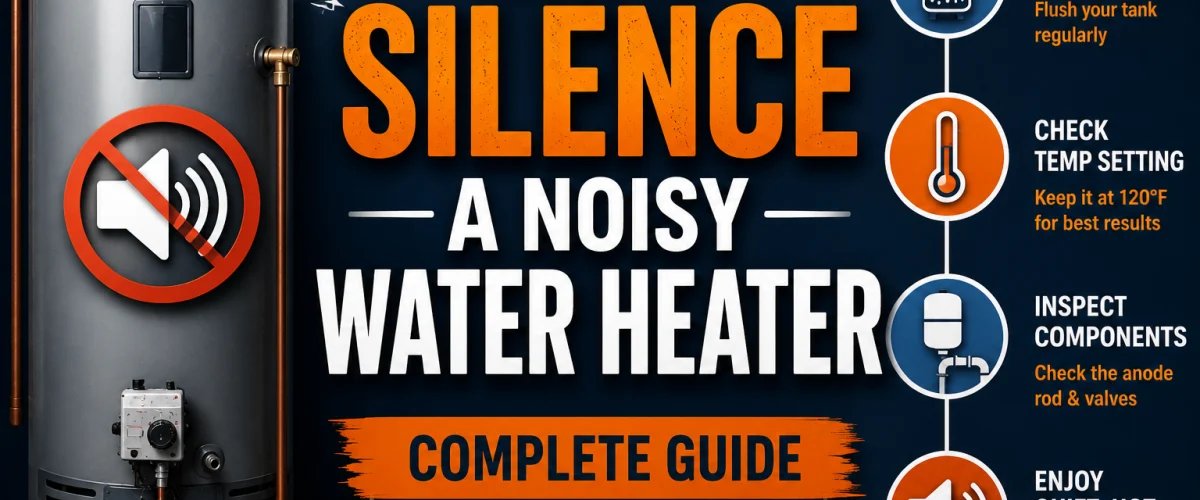
Popping, rumbling, ticking, or banging — every water heater noise means something different. Learn how to diagnose and fix each one.
Please note: Information in this guide is subject to change. If a noise persists after trying the fixes below, or you’re uncomfortable working near the unit, consult a licensed plumber before proceeding.
Most water heaters run nearly silent once they’re properly installed and working normally — a faint burner hum or an occasional soft click as the thermostat cycles is about all you should ever notice day to day. So when a new sound develops, or an existing one starts getting louder, that’s genuinely useful diagnostic information, not background noise to tune out. Unlike a lot of plumbing problems that give little warning before something fails outright, a water heater tends to announce trouble audibly well before anything serious happens — if you’re paying attention to it.
The specific sound matters more than the simple fact that there is one. Popping and rumbling point to a completely different cause — and a completely different fix — than banging or screeching does. This guide walks through the most common water heater noises one at a time, what’s actually causing each, and whether the fix is something you can handle yourself in an afternoon or a signal that it’s time to call a professional.
At a Glance
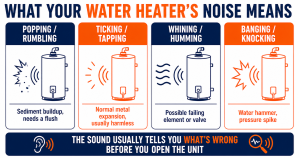
| Popping / Rumbling | Sediment buildup in the tank — flush the tank to fix it |
| Ticking / Tapping | Normal pipe expansion as metal heats and cools — usually harmless |
| Whining / Humming | Heating element or valve issue — worth investigating further |
| Banging / Knocking | Water hammer — usually needs an arrestor or a pipe strap check |
✏️ Our Take
A healthy water heater is one of the quietest appliances in the house — so when it starts making noise, that’s genuinely useful diagnostic information, not just an annoyance. The good news is that the sound itself usually tells you what’s wrong before you even open up the unit. Popping and rumbling point to sediment buildup, which is often a simple flush away from being fixed. Banging points to water pressure issues that a small, inexpensive part can resolve. The sounds worth real concern are usually the least common ones — screeching or a noise that keeps getting louder over time — which is when it’s worth involving a professional rather than troubleshooting further.
IN THIS GUIDE
Nearly every water heater noise traces back to one of four underlying causes, and recognizing which one applies makes diagnosing a specific sound much faster. The most common by far is mineral and sediment buildup — dissolved minerals in tap water settle out as the tank heats and cools repeatedly, accumulating at the bottom over months and years. The second is thermal expansion: metal components, including the tank itself and the pipes connected to it, expand slightly as they heat and contract as they cool, and that movement can produce sound as parts shift against each other or against surrounding framing.
The third cause is water pressure fluctuation, most often from water flow stopping suddenly somewhere in the plumbing system and sending a pressure spike back through the pipes. The fourth, and least common, is a failing mechanical part — a heating element, a valve, or another internal component starting to wear out or fail. These four causes map fairly cleanly onto the specific sounds covered in the sections below, which is why identifying the sound correctly is most of the battle in figuring out what’s actually going on.
Popping or rumbling is the single most common water heater noise complaint, and it’s also one of the easiest to diagnose with confidence. The sound comes from sediment — a layer of minerals, primarily calcium and magnesium, that settles out of the water and accumulates at the bottom of the tank over time. As the burner or heating element heats the water above that sediment layer, small pockets of water become trapped underneath it. Those trapped pockets boil before the surrounding water does, and the popping or rumbling sound is literally the noise of those little pockets of steam bursting up through the sediment layer.
This process tends to develop gradually. A newly installed water heater is essentially silent, and popping typically starts months or years into the unit’s life as sediment slowly accumulates layer by layer. The more sediment that builds up, the louder and more frequent the popping becomes, since there’s more trapped water boiling against a thicker insulating layer at the bottom of the tank. Left unaddressed, heavy sediment buildup doesn’t just cause noise — it also reduces the tank’s heating efficiency, since the sediment layer acts as an insulating barrier between the burner or element and the water it’s supposed to be heating.
The fix is flushing the tank — draining it fully and running fresh water through it to carry the loose sediment out through the drain valve at the bottom. This is a standard maintenance task most homeowners can do themselves in under an hour, and it’s worth doing as routine annual maintenance rather than waiting for popping to start. If popping has already developed, a flush usually reduces or eliminates it, though tanks with years of heavy accumulation sometimes need more than one flush cycle to fully clear. Our how to flush a water heater guide covers the full process step by step.
A light ticking or tapping sound, usually heard shortly after hot water starts running or shortly after the burner or element kicks on, is typically caused by thermal expansion — the tank itself and the metal pipes connected to it expand slightly as they heat up, then contract again as they cool. That small amount of movement, particularly where a pipe passes through a joist, strap, or other framing member, can produce a soft ticking or tapping noise as the metal shifts against whatever it’s in contact with.
This is generally the most benign of the sounds covered in this guide. It doesn’t indicate sediment buildup, a failing component, or a pressure problem — it’s simply physics, and most water heaters produce at least some degree of this sound throughout their working life without it ever developing into anything more serious. The ticking usually corresponds directly to the heating cycle: it starts as the burner or element activates and the tank begins heating, and it tapers off once the water reaches temperature and the heating cycle ends.
It’s worth clearly distinguishing ticking or tapping from banging, which is covered in its own section below — the two sounds are often confused but point to entirely different causes. Ticking is quiet, rhythmic, and tied closely to the heating cycle. Banging is louder, more percussive, and tends to happen in response to water flow stopping elsewhere in the plumbing system rather than the heating cycle itself. If a pipe is ticking loudly enough to be genuinely bothersome, securing a loose pipe strap where it passes through framing can sometimes reduce the sound, though in most cases no action is needed at all.
A whining or humming sound is worth paying closer attention to than ticking, since it more often points to something mechanical starting to go wrong rather than simple thermal movement. On electric water heaters specifically, a humming sound can indicate a heating element that’s beginning to fail — as an element degrades, it can produce an audible hum during operation that wasn’t there when it was new. On both gas and electric units, a whining sound can also indicate a partially closed or failing valve somewhere in the system restricting water flow more than it should.
One useful diagnostic question is whether the sound is constant or only occurs during heating cycles. A whine or hum that’s only present while the burner or element is actively heating the tank is more consistent with a heating-element issue, since the sound is tied directly to that component being energized. A sound that persists constantly, regardless of whether the unit is actively heating, points more toward a valve or water-flow issue rather than the heating element itself, since that kind of restriction affects flow any time water moves through the system.
Checking the inlet and outlet shutoff valves to confirm they’re fully open is a reasonable first step, since a partially closed valve is an easy, no-cost thing to rule out before assuming a part has failed. If the valves are confirmed open and the whining or humming continues, particularly on an electric unit, a failing heating element is the more likely explanation and typically requires replacing the element rather than something you can adjust your way out of.
Banging or knocking, sometimes described as a loud thump or a metallic clang somewhere in the walls, is most often water hammer — a pressure spike that occurs when water flowing through a pipe stops suddenly. When a valve closes quickly, whether it’s a washing machine’s solenoid valve, a dishwasher, or a faucet shutting off fast, the moving column of water has nowhere to go and slams to a stop almost instantly. That sudden stop sends a pressure shockwave back through the pipes, and where that shockwave meets a loose pipe or fitting, it produces the bang or knock you hear.
This is an important distinction to understand: water hammer is very often not actually caused by the water heater itself, even though the sound is frequently noticed near it, since the water heater sits at a central point in the plumbing system where multiple lines converge. A washing machine on the other side of the house finishing its fill cycle can produce a bang that seems to originate at the water heater, simply because that’s where the pressure wave happens to resonate loudest against a loose strap or fitting.
The standard fix is installing a water hammer arrestor — a small device, typically installed near the fixture causing the pressure spike, that absorbs the shockwave with a cushion of air or a spring-loaded piston rather than letting it travel unchecked through the pipes. It’s also worth checking that pipes near the water heater are properly strapped and secured to the framing, since a loose pipe has more room to move and bang against something when a pressure spike hits it, even with an arrestor installed elsewhere in the system. Our water hammer arrestor reviews cover current options if you’ve confirmed that’s the cause.
Screeching or a high-pitched whistling sound is one of the less common water heater noises, but it’s also one of the more specific ones to diagnose. In the large majority of cases, this sound is caused by a partially closed shutoff valve restricting water flow through a narrower opening than the pipe was designed for — much like how partially covering the end of a hose with your thumb produces a high-pitched hiss as water is forced through a smaller gap.
The first thing to check is the water heater’s main shutoff valve, along with the inlet and outlet valves, confirming each is turned fully open rather than partway. Valves are occasionally left partially closed after maintenance work, or can drift slightly over time, and fully opening a partially closed valve resolves screeching in most cases without needing anything replaced. Older gate-style valves are more prone to this than modern ball valves, since a gate valve’s position isn’t always obvious just by looking at it.
If you’ve confirmed every relevant valve is fully open and the screeching continues, that’s a stronger signal something inside the valve itself, or elsewhere in the system, has failed rather than simply being closed too far. Persistent screeching that doesn’t resolve after checking valve positions warrants a professional inspection rather than continued troubleshooting, since it may point to a valve that needs replacing or a pressure issue further upstream in the plumbing system.
Most of the sounds covered in this guide are either harmless or resolvable with a simple DIY fix, but a few patterns are worth recognizing as signs to bring in a professional rather than continuing to troubleshoot on your own. Noise that’s getting progressively louder over a period of days or weeks, rather than staying at a stable level, suggests whatever’s causing it is actively getting worse — a pattern that’s worth having evaluated before it develops into a bigger problem.
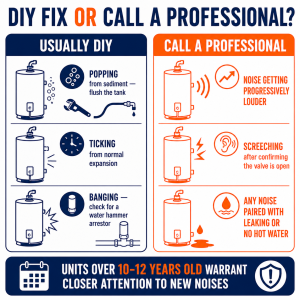
Noise combined with any other symptom is a second clear signal. A water heater that’s making an unusual sound and also leaking, producing inconsistent hot water, or giving off an unusual smell is showing multiple signs of a developing issue at once, and that combination is worth a professional diagnosis rather than addressing the noise in isolation. Our signs your water heater is failing guide covers the fuller list of warning signs worth watching for alongside noise.
Age is the third factor worth weighing. Any new or worsening noise from a unit older than 10 to 12 years carries a higher likelihood of pointing to genuine internal component wear rather than something as simple as sediment or a loose strap, since a tank of that age has had far more time to accumulate wear on its internal parts.
Popping and rumbling from sediment buildup is especially common across the US in hard water regions, where mineral content accumulates in the tank noticeably faster than in areas with naturally soft water. Homeowners in these regions often benefit from flushing their water heater more frequently than the standard annual recommendation to stay ahead of sediment-related noise and efficiency loss.
If a noise persists after trying the fixes above, or you’re not comfortable working near the unit, search PlumberArchive.com — the US plumber directory with 12,000+ verified local plumbers across all 50 states.
Get weekly plumbing tips and DIY guides delivered straight to your Facebook feed.
A very quiet burner hum or an occasional soft tick as pipes expand and contract during the heating cycle is normal and nothing to worry about. What’s not normal is any sound that’s new, unusually loud, or getting progressively worse over time — those are the signals worth diagnosing using the sound-specific sections in this guide rather than something to dismiss as just how the unit sounds.
Yes, flushing a water heater is a standard DIY task that most homeowners can complete in under an hour with no specialized tools, and it’s the direct fix for popping or rumbling caused by sediment buildup. Our how to flush a water heater guide walks through the full process step by step, including how to safely drain and refill the tank.
Sounds that only occur while the burner or heating element is actively running — including popping, rumbling, ticking, and some cases of humming — are directly tied to the heating process itself, whether that’s sediment boiling, metal components expanding, or a heating element working. A sound that persists even when the unit isn’t actively heating points more toward a water flow or valve-related cause instead, which is a useful distinction when narrowing down the source.
Not usually. Most water heater noises, including popping, rumbling, and ticking, are resolved with simple maintenance like flushing the tank or securing a loose pipe strap, not replacement. Noise is more likely to point toward needing replacement when it’s combined with other symptoms like leaking or inconsistent hot water, or when it occurs on a unit already past 10 to 12 years old, rather than as an isolated symptom on its own.
A noisy water heater is almost always trying to tell you something specific, and matching the sound to its cause is most of the work in fixing it. Popping and rumbling point to sediment and a routine flush. Ticking is usually just thermal expansion and rarely needs any action at all. Whining, humming, and screeching point to a valve or component worth checking, and banging usually means water hammer somewhere in the system rather than the water heater itself.
Save a call to a professional for the noises that keep getting louder, show up alongside other symptoms like leaking or inconsistent hot water, or come from a unit already well past 10 years old. For most other cases, the fix is simpler than it sounds — often nothing more than a tank flush or a quick valve check away from a quiet water heater again.
Prices and ratings may change. Always check Amazon for current prices.
✍️ About This Guide
PTR Editorial Team — Plumbing Guides. We compare manufacturer specifications, installation requirements, compatibility and available product documentation to help homeowners choose suitable tools and parts. How we review →
Not sure which tool fits your faucet nut? Identify the fixing, see how it lets go and check your clearance first. Then choose a tool, or use one you own.
Check your manual and the drain route first: gravity hose, built-in pump or external pump. Then see whether you need a dehumidifier hose at all.
Explore portable bidets that need no water-line connection, from bottle caps and squeeze bottles to battery-powered handhelds.

