
Guides
19 Oct 2026

Can’t Reach the Faucet Nut? Choose the Right Tool Before You Buy
Not sure which tool fits your faucet nut? Identify the fixing, see how it lets go and check your clearance first. Then choose a tool, or use one you own.
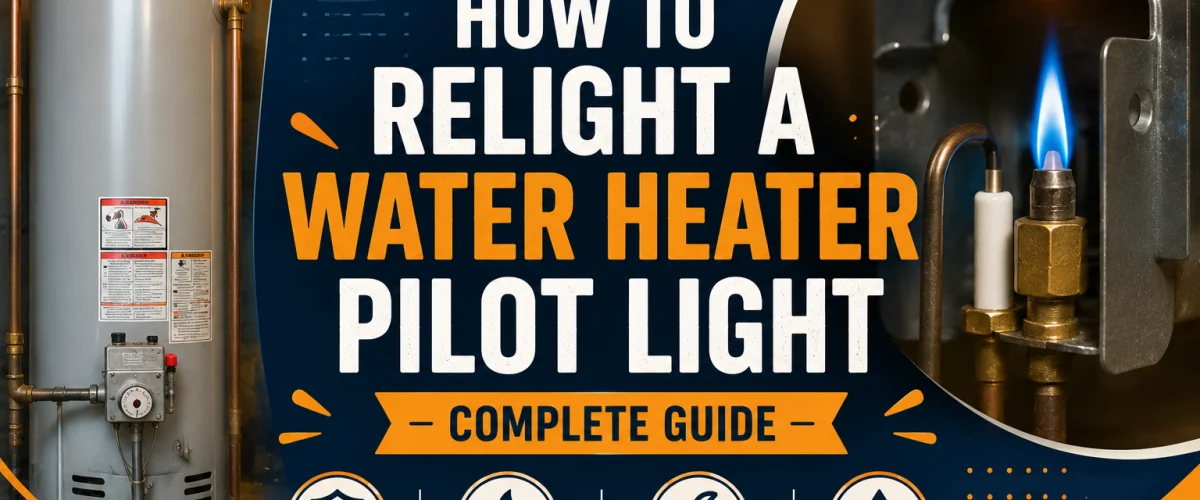
Step-by-step guide to safely relight a gas water heater pilot light, plus what to do if it won't stay lit or won't light at all.
Please note: Information in this guide is based on our research at time of writing and is subject to change. Always consult a licensed plumber or your gas utility for diagnosis of serious gas or plumbing issues before attempting repairs.
A pilot light going out is the single most common reason for a sudden loss of hot water in a gas water heater, and it’s usually the easiest problem to fix yourself — no parts, no tools beyond a lighter, and no need to drain the tank. It happens most often after a power outage, a strong draft through a basement or utility room door, or simply after years of normal use, and in the vast majority of cases relighting it is all that’s needed to get hot water flowing again.
If you’ve already ruled out other causes, or you just want the direct fix for this one specific problem, this guide walks through the standard relighting process safely, step by step, plus what it means if the pilot won’t stay lit or won’t light at all.
If you’re not yet sure a dead pilot light is actually your problem, our broader no hot water troubleshooting guide covers the full range of possible causes. And if your water heater has been showing other warning signs recently — not just this one incident — our guide to signs your water heater is failing is worth a look too.
At a Glance
| Difficulty | Easy |
| Time | 10–15 Minutes |
| Cost | $ — no parts needed unless the thermocouple or pilot assembly needs replacing |
| Tools Needed | Long lighter or matches, flashlight, your water heater’s owner’s manual (or model number to look up instructions) |
| Skill Level | Beginner |
✏️ Our Take
Relighting a pilot light is one of the simplest fixes in home plumbing — most of the time it takes under 10 minutes and doesn’t require any tools beyond a long lighter. The process is nearly identical across most gas water heaters, but the exact button layout and timing can vary slightly by manufacturer, so having your model number or owner’s manual on hand helps if anything looks different from what’s described here. The one thing that separates a smooth fix from a frustrating one is patience during the hold-and-release step — rushing it is the most common reason a pilot won’t stay lit.
IN THIS GUIDE
Before you touch anything on your water heater, read this section. Relighting a pilot is simple, but it involves natural gas, and there’s exactly one condition that changes everything below from a routine fix into an emergency.
🚨 If You Smell Gas, Stop Immediately
If you smell gas anywhere near your water heater, STOP. Do not attempt to light the pilot, do not flip any light switches, and do not use your phone inside the home. Leave the house immediately, and once safely outside, call your gas utility’s emergency line or 911. A gas smell means a leak, not a pilot light problem, and requires a professional response.
Beyond that one hard rule, use your judgment. If your water heater is more than 10 years old and this is a recurring problem, or if you’re uncomfortable at any point in this process, calling a licensed plumber or your gas utility is always a reasonable choice — there’s no downside to having a professional handle it instead. Relighting a pilot is routine maintenance, not a repair you’re obligated to attempt yourself, and there’s no shame in deciding a gas appliance simply isn’t something you want to work on.
This is a genuinely low-tool job. Gather these three things before you start:
Step 1 — Turn the Gas Control Knob to Off
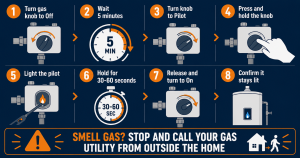
Locate the gas control valve on the front of the water heater, usually near the bottom of the tank. It’s typically a dial with three labeled positions — “Off,” “Pilot,” and “On” — and you’ll be moving through all three over the course of this guide. Turn the knob to the “Off” position now.
Wait at least 5 minutes before proceeding, to allow any residual gas near the pilot to dissipate completely. Use this time productively — locate the pilot opening with your flashlight so you’re ready to move directly into the next steps once the wait is over.
After the wait, turn the gas control knob to the “Pilot” setting. This allows a small, controlled amount of gas to flow to the pilot opening only — not to the main burner — which is exactly what you want at this stage.
Press down on the gas control knob and hold it in — this manually opens the gas valve to the pilot. Continue holding it down through the next step; releasing it now will cut off the pilot gas supply before you’ve even lit anything.
While still holding the control knob down, use your long lighter to ignite the pilot through the designated opening. You should see a small, steady flame appear right at the pilot opening.
Pilot lights are far more likely to go out during sudden cold snaps in northern states, particularly across the Midwest and Northeast, when strong drafts from poorly sealed basement or utility room doors can blow out the flame. In homes with older water heaters located in attached garages, a draft from opening the garage door on a windy day is a common and often overlooked cause. If your pilot light goes out repeatedly rather than just once, drafts, a failing thermocouple, or a clogged pilot orifice are the most likely culprits — and repeated outages are worth investigating rather than just relighting every time.
Once the pilot is lit, continue holding the control knob down for 30–60 seconds. This gives the thermocouple time to heat up enough to keep the gas valve open on its own once you let go — it’s the single most important part of the entire process.
Slowly release the control knob and check that the pilot flame stays lit on its own. If it stays lit, turn the gas control knob from “Pilot” to “On.”
Replace the outer access panel if your model has one. Wait a few minutes and check that the pilot is still burning steadily, then run a hot water tap somewhere in the house and confirm hot water returns within a reasonable time.
If the pilot repeatedly goes out after you’ve followed these steps correctly, including a full 60-second hold, the thermocouple is often the culprit. It’s a low-cost, commonly replaced part whose only job is sensing that the pilot flame is present and keeping the gas valve open — once it wears out or drifts out of position, the valve closes as soon as you release the control knob, even with a perfectly good flame. Thermocouples degrade gradually over years of normal heating and cooling cycles, so it’s common for one to start failing right around the time a water heater is otherwise several years old, rather than failing suddenly out of nowhere.

A pilot that won’t light at all despite the gas being on, with no flame appearing even briefly, may point to a clogged pilot orifice or a gas supply issue further upstream rather than a thermocouple problem. If your water heater has been showing other signs of trouble recently — inconsistent temperatures, strange noises, or rust-colored water — our guide to signs your water heater is failing can help you figure out whether this is an isolated issue or part of a bigger pattern.
If the pilot won’t stay lit, won’t light at all, or you smelled gas at any point, it’s time to call in a professional rather than keep troubleshooting on your own. If you need a licensed plumber in your area, search PlumberArchive.com — the US plumber directory with 12,000+ verified local plumbers across all 50 states.
Get weekly plumbing tips, honest tool reviews and DIY maintenance guides delivered straight to your Facebook feed. We cover water heaters, leak detection, and everything in between — written for US homeowners who want to handle more themselves.
The most common causes are drafts, a failing thermocouple, or a clogged pilot orifice. Drafts are especially common during cold snaps in northern states or in attached garages where opening the garage door can blow out the flame. A failing thermocouple typically shows up as a pilot that lights fine but won’t stay lit once you release the control knob, while a clogged orifice tends to produce a weak, sputtering flame even when it does catch. If it’s happened once, relighting it is usually enough. If it keeps happening, one of those three underlying causes is worth investigating rather than relighting the pilot every time it goes out.
Yes, for most homeowners this is a safe, routine task as long as you follow the gas safety steps in order — especially turning the gas off and waiting for it to clear before relighting. The one exception is if you smell gas at any point: that means a leak, not a simple pilot light issue, and it requires leaving the house and calling your gas utility or 911 rather than attempting to relight anything.
It can take 30–60 minutes for a full tank to reheat completely after being reignited, so don’t be concerned if your water isn’t immediately as hot as usual. If you still don’t have hot water after an hour or so, double-check that the pilot is still lit and that the control knob is turned to “On” rather than “Pilot.”
If you’re not seeing any flame at all despite following the steps correctly, with the gas control knob confirmed on the “Pilot” setting, this can indicate a clogged pilot orifice or a problem with the gas supply itself rather than something you can easily clear yourself. This is different from a pilot that lights but then won’t stay lit, which usually points to the thermocouple instead. Either way, if two or three attempts don’t resolve it, calling a licensed plumber or your gas utility is the more efficient next step.
Relighting a pilot light is a simple, safe process when the basic gas safety steps are followed correctly — turn the gas off, wait for it to clear, and never skip either step even though it’s tempting to rush straight to relighting. The most common mistake is releasing the control knob too early: hold it a full 30–60 seconds after ignition, and give it closer to the full 60 if the pilot has gone out on you before.
A pilot that won’t stay lit after several careful attempts usually points to a thermocouple issue worth having a professional look at, rather than something to keep troubleshooting indefinitely on your own. And remember the one rule that overrides everything else in this guide: if you ever smell gas, stop, leave the house, and call your gas utility or 911 from outside.
If this was a one-off pilot outage, you should be back to normal hot water within the hour. If you’re dealing with a broader pattern of water heater problems, our guide to no hot water troubleshooting covers the other common causes, our guide to signs your water heater is failing covers the warning signs of a unit nearing the end of its life, and our guide to water heater leaking covers what to do if the pilot isn’t your only concern.
✍️ About This Guide
PTR Editorial Team — Plumbing Guides. We compare manufacturer specifications, installation requirements, compatibility and available product documentation to help homeowners choose suitable tools and parts. How we review →
Not sure which tool fits your faucet nut? Identify the fixing, see how it lets go and check your clearance first. Then choose a tool, or use one you own.
Check your manual and the drain route first: gravity hose, built-in pump or external pump. Then see whether you need a dehumidifier hose at all.
Explore portable bidets that need no water-line connection, from bottle caps and squeeze bottles to battery-powered handhelds.

