Comparisons
20 Sep 2026

Utility Pump vs. Sump Pump (2026) — Which Do You Need?
Utility pump vs sump pump: one is portable for occasional jobs, the other a permanent install for ongoing water. See which your basement needs.
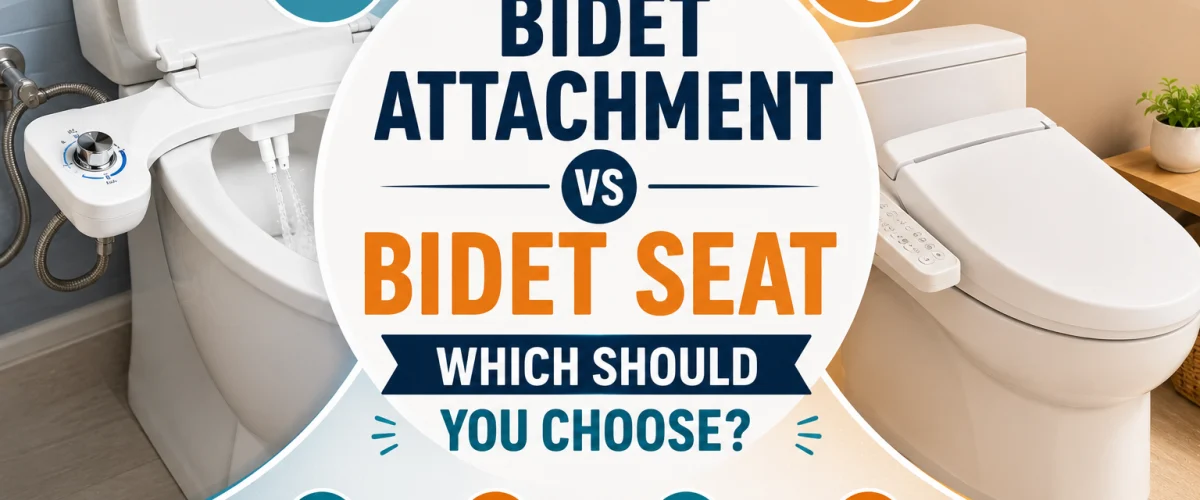
Bidet attachment vs bidet seat compared — installation, water temperature, cost and maintenance to help you choose the right upgrade.
Please note: Product availability and information are based on our research at time of writing and are subject to change. Always check current specifications before purchasing.
Bidets have moved from a niche preference to a mainstream US bathroom upgrade, driven by hygiene, comfort, and a genuine interest in using less toilet paper. But “bidet” isn’t a single product — the two most common options for a US homeowner work in fundamentally different ways, at very different price points and installation requirements.
This comparison covers the practical differences between a bidet attachment and a bidet seat so you can decide which fits your bathroom, your budget, and how much of an upgrade you’re actually looking for. If you’re weighing this alongside a broader bathroom refresh, our roundup of the best toilet seats covers standard replacement options, and our guide to installing a toilet seat covers the baseline mounting process both bidet options build on.
✏️ Our Take
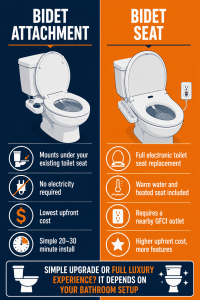
A bidet attachment is a simple mechanical sprayer that mounts under your existing toilet seat and connects to your cold water supply line — it’s inexpensive, takes about 20 minutes to install, and requires no electricity. A bidet seat replaces your entire toilet seat with an electronic unit that typically includes warm water, adjustable water pressure, a heated seat, and built-in air drying, but it needs an electrical outlet nearby and costs significantly more upfront. The real question isn’t which one is “better” in the abstract — it’s whether you want a simple, affordable upgrade to your existing setup, or a genuinely different bathroom experience with features closer to what you’d find in a luxury hotel.
IN THIS GUIDE
A bidet attachment is a simple sprayer unit that mounts between your existing toilet seat and the bowl, connecting to your toilet’s cold water supply line via a T-valve. The T-valve splits the existing supply line so the attachment gets its own dedicated water feed without disrupting the toilet’s normal fill and flush function.
No electricity is required — water pressure comes directly from your home’s plumbing rather than a pump or motor. Most models are controlled with a simple lever or dial mounted beside the toilet seat, letting you adjust spray position and pressure by hand.
How a Bidet Seat Works
A bidet seat replaces your entire toilet seat with an electronic unit that plugs into a nearby outlet. Rather than relying purely on unheated supply-line pressure, it actively heats and regulates the water itself, giving you far more control over the experience.
Most models include adjustable warm water temperature, adjustable water pressure, and often a heated seat and warm air drying function. Some higher-end models add extras like a remote control, a built-in deodorizer, or automatic seat opening — features that push a bidet seat closer to a genuine luxury bathroom fixture than a simple plumbing add-on.
A bidet attachment needs no tools beyond a wrench in most cases, no electrical work, and typically installs in 20-30 minutes as a straightforward DIY project. If you’ve ever installed a toilet seat yourself, the mounting process for an attachment is a similarly beginner-friendly job.
A bidet seat requires a nearby GFCI electrical outlet, and installation is somewhat more involved due to the full seat replacement and power connection. The plumbing side of the install — connecting to the water supply line — is comparable to what you’d do for a bathroom fixture like replacing a bathroom faucet, but the added electrical requirement is what raises the overall difficulty.
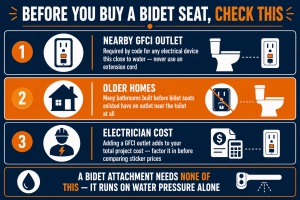
Electrical outlet proximity is the single biggest practical obstacle to bidet seat installation in US homes — most bathrooms, particularly in older housing stock across the Northeast and Midwest, were not built with an outlet near the toilet, since this wasn’t a standard fixture consideration until recently. A GFCI outlet is required by code for any electrical device this close to a water source, and adding one where none exists means an electrician visit, which changes the total cost calculation significantly. Before choosing a bidet seat, confirm outlet access or budget for electrical work as part of the total project cost.
A bidet attachment is typically cold water only, unless you specifically choose a model with a warm water mixing valve. That’s a real limitation for some households, but it also keeps the product simple, affordable, and free of electrical components.
A bidet seat offers adjustable warm water, adjustable pressure and spray pattern, and often heated seating and warm air drying — a more complete experience overall. For colder climates or households sensitive to cold water, this is often the deciding factor between the two categories.
A bidet attachment sits at the lowest cost tier of the two options, with minimal ongoing cost since there’s no electricity use involved. It’s the more budget-friendly entry point into bidet ownership by a wide margin.
A bidet seat carries a significantly higher upfront cost, plus a small ongoing electricity cost and potential electrician cost if no outlet exists nearby. The total cost of ownership depends heavily on whether your bathroom already has the electrical infrastructure in place.
A bidet attachment requires minimal maintenance. With no electronic components to fail and very few moving parts, there’s simply less that can go wrong over time.
A bidet seat has more components that can wear out or malfunction over time, including electronics, heating elements, and motorized functions. That’s the trade-off for the extra features — more capability generally means more that can eventually need repair or replacement.
The right choice depends on your budget, your bathroom’s existing electrical setup, and how much you value warm water and extra features. The head-to-head table below shows where each option has a genuine practical edge.
| Scenario | Winner |
|---|---|
| Lower upfront cost | Bidet Attachment (lowest cost tier of the two) |
| Warm water included standard | Bidet Seat (adjustable warm water built in) |
| No electrical work required | Bidet Attachment (no GFCI outlet needed) |
| Heated seat and air drying | Bidet Seat (electronic comfort features) |
| Simplest installation | Bidet Attachment (20-30 minute DIY job) |
| Lowest long-term maintenance | Bidet Attachment (few moving parts, no electronics) |
| Most complete/luxury experience | Bidet Seat (warm water, heat and drying combined) |
| Best for older homes without nearby outlets | Bidet Attachment (no electrical dependency) |
If you’re adding a bidet seat and need a GFCI outlet installed near your toilet, that’s an electrical job worth having done properly rather than improvised. A licensed plumber can also confirm your water supply line and shutoff valve are in good shape before either installation.
Find a licensed plumber in your area at PlumberArchive.com — the US plumber directory with 12,000+ verified local plumbers across all 50 states.
Get weekly plumbing tips, honest brand comparisons and DIY maintenance guides delivered straight to your Facebook feed. We cover bathroom upgrades, fixture installs, water supply plumbing and everything in between — written for US homeowners who want to make smarter decisions without overspending.
Most homeowners can install a bidet attachment themselves. It’s a beginner-friendly job involving a T-valve connection to your existing cold water supply line and mounting the unit under your toilet seat — similar in complexity to installing a toilet seat. Call a plumber if your shutoff valve is stuck, corroded, or you’re not comfortable working with the supply line yourself.
The plumbing side of a bidet seat installation is generally DIY-friendly, comparable to a task like replacing a bathroom faucet. The electrical side is different — if your bathroom already has a GFCI outlet within reach of the toilet, most homeowners can complete the install themselves. If you need a new outlet added, that portion of the job should go to a licensed electrician, since it involves wiring near a water source.
No — a bidet attachment uses a modest amount of water per use, far less than the water and energy involved in manufacturing, packaging, and transporting toilet paper. Water use varies by pressure setting and how long you run the spray, but it’s a minor addition to a household’s overall water consumption.
Only if that outlet is a GFCI (ground-fault circuit interrupter) outlet. Any electrical device installed this close to a water source requires GFCI protection by code, since it cuts power instantly if it detects a ground fault — a genuine safety measure, not just a formality. Never plug a bidet seat into a standard outlet, an extension cord, or a power strip near a toilet.
A bidet attachment is the simpler, more affordable entry point with no electrical requirements — a straightforward upgrade that mounts under your existing seat and connects directly to your water supply line. A bidet seat offers a genuinely more complete experience, with warm water, heated seating, and air drying, but it requires nearby power and a bigger upfront investment.
The right choice depends on your bathroom’s existing setup and how much you value warm water and extra features over simplicity and low maintenance. If you don’t have a GFCI outlet near your toilet and don’t want to add one, a bidet attachment is the practical choice. If you’re planning a fuller bathroom upgrade and want the closest experience to a luxury hotel bathroom, a bidet seat is worth the investment.
If you’re comparing either option against a standard replacement, our roundup of the best toilet seats covers non-bidet options, our guide to installing a toilet seat covers the baseline mounting process, and our guide to replacing a bathroom faucet covers a comparable water supply line connection if you’re new to that part of the job.
✍️ About This Comparison
Written by Sarah Mitchell, Home Improvement Editor at PlumbingToolsReview — specializing in helping homeowners make smart buying decisions without overspending. Learn how we test →
Utility pump vs sump pump: one is portable for occasional jobs, the other a permanent install for ongoing water. See which your basement needs.
Pipe repair clamp, tape, or epoxy — which should you use for a leaking pipe? Compare how each works, durability, and when to reach for which.
Not sure if your home has a septic tank or a sewer connection? Learn how to tell which one you have, plus the maintenance and cost differences.

