Comparisons
2 Oct 2026

Pop-Up Drain vs Grid Drain: Which Should You Choose?
Pop-up drains seal to hold water; grid drains never close but resist clogs better and cost less. Here's how to choose between them for your bathroom sink.
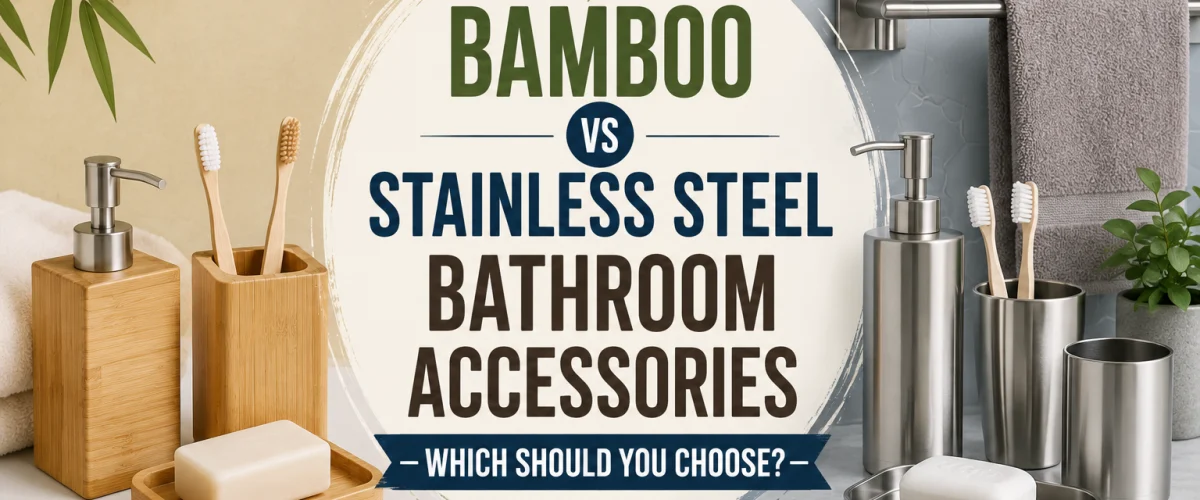
One brings warmth and a natural look, the other brings durability and easy cleaning — here's how bamboo and stainless steel compare across common bathroom accessories.
Please note: Information in this comparison is based on our research at time of writing and is general in nature. Always check specific product packaging and manufacturer claims before purchasing.
Bamboo and stainless steel show up across nearly every category of bathroom accessory — toothbrush holders, soap dispensers, trash cans, shower caddies, and more all come in versions made from either material, and the choice between them isn’t specific to any single product. It’s a broader material decision that plays out the same way regardless of which accessory you’re actually shopping for.
The two materials genuinely differ in how they perform, not just how they look. Stainless steel is engineered to shrug off water exposure indefinitely with almost no maintenance, while bamboo is a natural wood product that brings real warmth and character but needs more thoughtful care, particularly around how much water contact it actually faces. The right choice for any given accessory usually comes down to two things: how much daily water exposure that specific item gets, and which look you genuinely prefer for your bathroom. This comparison walks through both factors across the accessory categories where the choice comes up most often.
At a Glance
Bamboo
Stainless Steel
✏️ Our Take
Stainless steel is the more reliably durable choice for accessories that face constant moisture, like a shower caddy or a soap dispenser near a sink that gets splashed often — it simply handles water exposure better over years of daily use with minimal maintenance. Bamboo brings a warmer, more natural look that many households genuinely prefer, and it holds up fine for accessories in less consistently wet locations, like a countertop toothbrush holder that dries between uses, as long as it’s dried properly and not left sitting in standing water. This isn’t really about one material being better overall — it comes down to matching the material to how much water exposure each specific accessory actually faces.
IN THIS GUIDE
Here’s how bamboo and stainless steel stack up across the factors that matter most when choosing a material for a bathroom accessory.
| Factor | Bamboo | Stainless Steel |
|---|---|---|
| Moisture resistance | Moderate, needs proper drying | Excellent, unaffected by water |
| Cleaning effort | Wipe only, avoid soaking | Wipe clean, dishwasher-safe on most items |
| Typical cost | Generally $–$$ | Generally $–$$$ |
| Best placement | Countertop, drier areas | Direct shower or sink-splash zones |
| Appearance | Warm, natural, spa-like | Modern, clean, clinical |
| Long-term durability | Depends heavily on care and placement | Consistently durable regardless of placement |
| Best suited for | Dry-area accessories, natural-style bathrooms | Wet-area accessories, modern bathrooms |
Stainless steel resists moisture damage effectively across just about any placement a bathroom accessory could face. It doesn’t warp, crack, or develop mold from consistent humidity, and it holds up the same way after years of daily use as it did the day it was installed. This is exactly why stainless steel dominates in accessories that sit directly in a shower’s water path — our shower caddy reviews cover several stainless steel and rustproof aluminum options built specifically to handle that kind of constant, direct water exposure without degrading.
Bamboo is a genuinely different story, because it’s a natural wood product rather than an engineered material. Untreated or poorly sealed bamboo can absorb moisture over time if it isn’t dried properly, and that absorbed moisture is what eventually leads to warping, cracking, or mold growth in accessories that stay wet or sit in standing water. This isn’t a flaw specific to any one brand — it’s simply how wood behaves when it’s repeatedly exposed to water without a chance to fully dry out between uses.
Quality bamboo accessories are often treated with a protective sealant or food-safe oil finish specifically to reduce this risk, and a well-sealed bamboo product can genuinely hold up for years in the right placement. But the underlying material remains more moisture-sensitive than metal regardless of how it’s finished, which is the core tradeoff to understand before choosing bamboo for any accessory that might face regular water contact.
It’s worth noting that stainless steel isn’t entirely maintenance-free forever either, even though it comes close. Lower-grade steel can occasionally develop small surface rust spots over many years of exposure, particularly around welds or cut edges, though genuine 304-grade stainless steel used in most quality bathroom accessories resists this far better than cheaper alternatives. The gap between the two materials is still substantial, but “durable” for stainless steel means decades of essentially unchanged performance, not literally zero degradation under any circumstance.
Cleaning and Maintenance
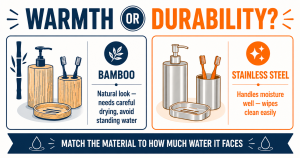
Stainless steel wipes clean easily with just a damp cloth and mild soap, and it doesn’t require any special ongoing care beyond that occasional wipe-down. Soap scum, water spots, and everyday grime all come off without much effort, and there’s no finish to maintain or reapply over time — the material itself is the finish, and it doesn’t degrade with normal cleaning.
Bamboo requires a more careful approach. It should be wiped clean rather than submerged or left soaking, since prolonged water contact during cleaning defeats the purpose of keeping it dry the rest of the time. Beyond routine wiping, bamboo accessories benefit from occasional light oiling — food-safe mineral oil or a dedicated wood conditioner works well — to maintain the protective finish and prevent the wood from drying out or cracking over time. This isn’t a frequent chore, typically just a few times a year, but it’s genuinely required maintenance that stainless steel simply doesn’t need.
The gap between these two maintenance routines is worth being honest about upfront. Stainless steel is close to maintenance-free for the life of the product, while bamboo asks for a bit of periodic attention in exchange for its warmer appearance. Neither is unreasonable, but it’s worth knowing which one you’re signing up for before you buy.
Bamboo brings a warm, natural, spa-like aesthetic to a bathroom that a lot of households genuinely gravitate toward. Its grain pattern and warm tone read as organic and calming in a way that manufactured materials generally don’t, which makes it a strong fit for bathrooms styled around a natural, minimalist, or wellness-focused look. A bamboo toothbrush holder or soap dish can function almost like a small design accent rather than a purely functional object.
Stainless steel offers a cooler, more modern or clinical look that suits contemporary bathroom designs built around clean lines and metal fixtures. It tends to coordinate naturally with chrome or brushed-nickel faucets, towel bars, and other hardware already common in updated bathrooms, giving a room a more cohesive, put-together feel when the accessories match the fixtures.
Appearance preference here is genuinely subjective, and there’s no objectively correct answer — it’s largely a matter of which look fits your existing bathroom and personal taste. In practice, this is often the deciding factor once durability concerns are addressed for a given accessory’s specific placement; if either material would hold up fine in a particular spot, style becomes the tiebreaker.
Bamboo accessories are often somewhat less expensive than comparable stainless steel options at the budget end of the market, which is part of why bamboo shows up frequently in lower-cost accessory lines. That said, pricing varies significantly by brand, finish quality, and the specific product across both materials — a premium bamboo item with a high-quality sealed finish can cost more than a basic stainless steel option, so material alone isn’t a reliable price predictor on its own.
Where the cost comparison gets more interesting is over the long term. Stainless steel’s higher typical durability can offer better long-term value if a bamboo item ends up needing replacement sooner due to water damage from an unsuitable placement. A bamboo accessory that warps or develops mold after a year in a consistently wet spot effectively cost more per year of use than a stainless steel item that’s still performing perfectly five years later, even if the bamboo item’s upfront price was lower.
The practical takeaway is that upfront price shouldn’t be the only factor. Matching the material to the right placement, as covered in the next section, does more to determine your actual long-term cost than the sticker price of either option does on its own.
The clearest way to decide is by thinking through how much direct water contact each specific accessory actually faces, rather than picking one material to use everywhere in the bathroom.
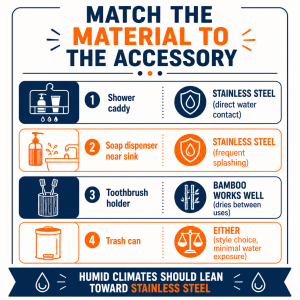
Choose stainless steel for anything in direct, frequent water contact. A shower caddy sits directly in the water path every time the shower runs, which is exactly the kind of constant exposure stainless steel is built to handle without issue. A soap dispenser positioned right at the sink edge, where it gets splashed regularly during handwashing, falls into the same category — our bathroom soap dispenser reviews include several stainless steel options well suited to that consistently wet placement.
Bamboo works well for drier-placement accessories that aren’t directly splashed on a regular basis. A countertop toothbrush holder that dries out between uses is a good fit, since the wood gets a genuine chance to dry rather than sitting in constant moisture — our toothbrush holder reviews include a bamboo option alongside several stainless steel and plastic alternatives for comparison. A toilet paper holder, positioned away from any splash zone, is another reasonable candidate for bamboo if the warmer look appeals to you.
For trash cans, either material works well, since neither typically faces direct water exposure in normal use. This makes the material choice for a trash can more of a style decision than a durability one — our bathroom trash can reviews cover options in both materials, and either holds up fine as long as it isn’t placed somewhere unusually wet, like directly beside a tub that regularly overflows or splashes.
Choosing accessory materials isn’t a plumbing decision on its own, but if persistent bathroom humidity or ventilation issues are part of what’s driving this comparison, search PlumberArchive.com — the US plumber directory with 12,000+ verified local plumbers across all 50 states.
Get weekly plumbing tips, honest tool reviews and DIY guides delivered straight to your Facebook feed.
It can, if it’s placed somewhere that stays consistently wet or if it isn’t allowed to dry out fully between uses. Bamboo is a natural wood product, and like any wood, prolonged moisture exposure without proper drying creates the conditions mold needs to develop. A well-sealed bamboo accessory placed in a drier area of the bathroom, like a countertop away from direct splash, is much less prone to this than one sitting directly in a shower or next to a sink that gets constant water contact.
For accessories that face regular direct water contact, generally yes — the added durability and near-zero maintenance often justify a higher upfront price, especially since a bamboo item in the wrong placement may need replacing sooner due to water damage. For drier-placement accessories, though, bamboo can perform just as well over the long term, so the “extra cost” of stainless steel isn’t always delivering extra value in every situation. It depends entirely on where the accessory is going.
It’s not recommended for anything that sits directly in the water path, like a shower caddy or shelf, since the constant, direct moisture exposure is exactly the scenario bamboo handles worst. Even a well-sealed bamboo product will likely warp, crack, or develop mold faster in that environment than it would in a drier spot. Stainless steel is the more reliable choice for anything mounted inside the shower itself.
Wipe it clean rather than submerging or soaking it, dry it thoroughly after any water contact rather than letting moisture sit, and apply a food-safe mineral oil or wood conditioner every few months to keep the protective finish intact. Avoid placing it anywhere it will sit in standing water or face constant direct splash. Following these habits consistently is what separates a bamboo accessory that looks good for years from one that starts warping or cracking within months.
Bamboo and stainless steel aren’t really competing for the same job — they excel in different conditions, and the right choice depends on how much water exposure a given accessory actually faces. Stainless steel is the safer, lower-maintenance choice for anything in a shower caddy, soap dispenser, or any other accessory that gets splashed or wet regularly. Bamboo is a genuinely good option for drier-placement accessories like a countertop toothbrush holder or toilet paper holder, where its warmer look can shine without the moisture risk working against it.
Rather than picking one material for the whole bathroom, consider mixing both based on each accessory’s actual placement — stainless steel where water exposure is constant, bamboo where it isn’t. That approach gets you the durability you need where it matters and the natural look you want everywhere else, without forcing a single material choice onto every accessory regardless of how it’s actually used.
Prices and ratings may change. Always check Amazon for current prices.
✍️ About This Comparison
PTR Editorial Team — Product Comparisons. We compare manufacturer specifications, installation requirements, compatibility and available product documentation to help homeowners choose suitable tools and parts. How we review →
Pop-up drains seal to hold water; grid drains never close but resist clogs better and cost less. Here's how to choose between them for your bathroom sink.
Test strips, digital meters or send-to-lab testing? Match the method to your situation — screening, ongoing monitoring, or a real health concern.
25-foot vs 50-foot drain snake: compare handling, the cable diameter trade-off and the jobs that justify extra length, plus where 50 feet stops.

