Please note: Information in this guide is based on our research at time of writing and is subject to change. Always consult a licensed plumber for diagnosis of persistent sewer gas odors or suspected sewer line issues before attempting repairs.
Introduction
A drain that smells bad but still drains normally is a different problem than a blocked drain, and it has a different set of causes entirely. If water is going down fine and there’s no gurgling or standing water, the odor is almost never a clog — it’s coming from somewhere else in the drain system, and most of the time that somewhere is easy to find once you know where to look.
This guide covers the four most common causes of drain odor — a dry P-trap, bacterial biofilm buildup, a neglected overflow opening, and a failing drain gasket — along with the specific fix for each. If your drain is smelly and draining slowly, you likely have a partial clog as well; our guide to how to clean a P-trap and our roundup of the best drain unblockers cover that side of the problem.
At a Glance
| Difficulty |
Easy |
| Time |
10–20 Minutes |
| Cost |
Free — household items only |
| Tools Needed |
Baking soda, white vinegar, boiling water, old toothbrush (optional) |
| Skill Level |
Beginner |
✏️ Our Take
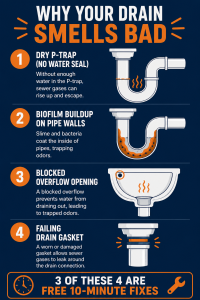
A drain that smells bad but still drains normally is almost never a plumbing problem — it’s a cleaning problem. The four most common causes are a dry P-trap that has lost its water seal, biofilm buildup from hair, soap and grease coating the inside of the drain, a blocked or dry overflow opening on a bathroom sink, or sewer gas getting past a deteriorating drain gasket. Three of those four are free 10-minute fixes using items already in most kitchens. Only the fourth — a failing gasket — requires any hardware purchase, and that’s still a beginner-level repair.
Why Drains Smell Even When They’re Not Blocked
Odor without slow draining almost always means one of three things is happening: bacteria are breaking down organic matter somewhere in the drain, a water seal that’s supposed to block sewer gas has dried out, or sewer gas is bypassing a seal that has physically failed. None of those three involve an actual blockage, which is why running a drain snake or plunger through a smelly-but-clear drain rarely does anything — there’s nothing in the pipe to remove.
Knowing which of the four causes below is responsible takes under a minute to diagnose in most cases — it usually comes down to which room the smell is in, whether the drain has been used recently, and whether the smell is constant or comes and goes. Work through them in order; the first two are by far the most common.
💡 Tip: If your drain smells AND drains slowly, you likely have both a partial clog and one of these odor causes together — fix the clog first, then address the smell separately.
Cause 1 — Dry P-Trap
The P-trap is the U-shaped section of pipe under every sink, tub and floor drain. Its curve exists specifically to hold a small amount of water at all times, and that standing water creates a seal that blocks sewer gas from rising up through the pipe and into the room. It’s a simple mechanical solution, and it works reliably — right up until the water in it evaporates.
If a sink, tub or floor drain isn’t used for a few weeks, the water sitting in the trap slowly evaporates and the seal is lost. Once that happens, sewer gas has an open path into the room, and the smell can range from a faint mustiness to a strong rotten-egg odor depending on how long the trap has been dry and what’s in the sewer line at that point.
The fix: run water in the drain for about 30 seconds to refill the trap. If the smell clears within a few minutes of doing this, a dry P-trap was the cause and nothing else needs to be done. For a full walkthrough of trap maintenance and cleaning, see our guide to how to clean a P-trap.
US regional note: In drought-prone regions like California, Arizona and parts of the Southwest, guest bathrooms and infrequently used sinks dry out their P-traps much faster than in humid climates — the water seal evaporates between uses, letting sewer gas rise directly into the room. Homeowners in these regions should run water in every drain in the house at least once a week, even in rooms rarely used, specifically to keep P-traps sealed.
💡 Tip: Guest bathrooms and basement drains are the most common dry P-trap locations — if a room smells like sewer gas only some of the time, check whether those drains have been used recently.
Cause 2 — Biofilm and Organic Buildup
Hair, soap scum, toothpaste and grease don’t just wash straight down the drain — a portion of each coats the inside of the pipe every time you use the sink or shower. Over weeks and months, that coating builds into a bacterial biofilm, and the bacteria living in it produce hydrogen sulfide gas as a byproduct. That’s the source of the classic rotten-egg smell most people associate with a dirty drain.
This is by far the most common cause in bathroom sink and shower drains, simply because those drains handle the most hair, soap and personal care product residue of anywhere in the house. The visible drain stopper and the pipe walls just below it are usually where buildup is heaviest, since that’s the narrowest point in the drain path and where debris tends to catch first. For recurring biofilm buildup that the baking soda and vinegar flush below doesn’t fully resolve, our roundup of the best enzyme-based drain cleaners covers products designed specifically to break it down.
💡 Tip: Pull the drain stopper out if it’s removable and look underneath — a black or grey slimy coating on the stopper itself is the biofilm responsible for most bathroom drain odors.
Cause 3 — Blocked or Dry Overflow Opening
Most bathroom sinks have a small overflow hole near the top of the basin, usually just below the rim opposite the faucet, designed to prevent the sink from spilling over if the drain is plugged and the tap is left running. Because water almost never actually flows through this opening during normal use, it rarely gets cleaned — and it accumulates its own biofilm buildup completely independent of whatever is happening in the main drain.
The fix: spray white vinegar directly into the overflow opening and scrub with an old toothbrush or a flexible pipe cleaner to dislodge the buildup. Let it sit for a few minutes before rinsing with hot water. This is a five-minute job and often clears an odor that a standard drain flush doesn’t touch, because the overflow opening is a completely separate path into the same drain line.
⚠️ Warning: The overflow opening is easy to overlook because it’s above the waterline and never visibly dirty — but it connects directly to the drain pipe below, so biofilm there releases odor straight into the basin.
Cause 4 — Sewer Gas Past a Failing Gasket
Drain gaskets and seals — the rubber and putty connections where the drain fitting meets the sink, tub or shower basin — deteriorate over years of exposure to water, cleaning chemicals and normal wear. When one fails, it allows sewer gas to bypass the water seal in the P-trap entirely, escaping through the gap around the fitting itself rather than up through the drain opening.
Suspect a failing gasket if the smell persists after you’ve confirmed the P-trap is full of water, cleaned the visible biofilm, and checked the overflow opening — in other words, once the first three causes have been ruled out. The gasket where the drain fitting meets the sink or tub basin is the most common failure point, since it’s under constant water exposure and typically the oldest seal in the assembly.
💡 Tip: Press firmly around the drain fitting with your fingers — if you feel any give or movement, the gasket seal has likely failed and the fitting needs reseating with fresh plumber’s putty.
The Baking Soda and Vinegar Flush
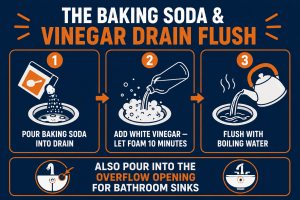
This is the single most effective free fix for drain odor, and it works directly on Cause 2 (biofilm) while also helping with Cause 3 (overflow buildup) if you apply it there too. Pour half a cup of baking soda into the drain, follow immediately with half a cup of white vinegar, and let the mixture foam undisturbed for about 10 minutes. The foaming reaction agitates and helps break down the organic coating on the pipe walls. Finish by flushing the drain with boiling water to clear the loosened residue.
For bathroom sinks, pour a small amount of the baking soda and vinegar mixture into the overflow opening as well, using the same 10-minute foam-and-rest approach before rinsing. If a drain is dealing with more than just odor — visible slow draining alongside the smell — this flush is also a reasonable first step, but see our guide to unclogging a kitchen sink if the flush alone doesn’t restore normal drainage.
💡 Tip: The foaming reaction does the cleaning work — don’t pour boiling water in until the foam has settled, or you’ll flush the cleaning action away before it’s had time to work on the buildup.
How to Keep Drains Fresh Long-Term
Run every drain in the house at least once a week, including guest bathrooms, basement floor drains and any fixture that doesn’t see daily use. This single habit prevents the dry P-trap problem — Cause 1 — from happening at all, and it takes about 30 seconds per drain.
Do the baking soda and vinegar flush described above on a monthly basis as routine maintenance rather than waiting for an odor to develop. Biofilm builds up gradually, and a monthly flush keeps it from accumulating to the point where it produces a noticeable smell. Clean drain stoppers and overflow openings whenever you’re already cleaning the bathroom basin — it adds almost no extra time and prevents both from becoming a source of odor between deeper cleanings. If slow draining becomes a recurring issue alongside odor, our roundup of the best drain unblockers covers the products worth keeping on hand.
💡 Tip: A silicone drain hair catcher over the shower drain reduces biofilm buildup significantly — the hair it catches is the primary food source for the bacteria that produce drain odor.
Need a Professional Plumber?
If the smell persists after ruling out all four causes in this guide, or if you notice sewer odor throughout multiple rooms at once, that can point to a venting issue or a problem further down the sewer line that’s outside the scope of a DIY fix. A licensed plumber can pressure-test the drain system and identify a fault that isn’t visible from inside the house.
Find a licensed plumber in your area at PlumberArchive.com — the US plumber directory with 12,000+ verified local plumbers across all 50 states.
Find a trusted plumber near you → PlumberArchive.com
Follow Us on Facebook
Get weekly plumbing tips, honest tool reviews and DIY maintenance guides delivered straight to your Facebook feed. We cover drain maintenance, bathroom fixtures, water heaters and everything in between — written for US homeowners who want to handle more themselves.
Follow PlumbingToolsReview on Facebook →
Frequently Asked Questions
Q: Why does my drain smell like rotten eggs?
A rotten-egg smell is almost always hydrogen sulfide gas, which is produced by bacteria living in a biofilm coating the inside of the drain pipe — the buildup from hair, soap and grease described as Cause 2 in this guide. It can also come from sewer gas bypassing a dry P-trap or a failing gasket, both of which carry the same characteristic odor. Start with the baking soda and vinegar flush; if the smell clears, biofilm was the cause. If it doesn’t, work through the dry P-trap and overflow opening checks next.
Q: Will baking soda and vinegar actually fix a smelly drain?
Yes, for the most common cause — biofilm buildup on the pipe walls. The foaming reaction between baking soda and vinegar helps break down and loosen the bacterial coating, and flushing with boiling water afterward clears the loosened residue from the pipe. It won’t fix a dry P-trap (that just needs water run through it) or a failing gasket (that needs a physical reseal), but for the biofilm cause specifically, it’s genuinely effective and works better as a monthly routine than a one-time fix.
Q: Why does my bathroom smell like sewage even though the drain is clear?
A clear, normally-draining pipe rules out a clog, but not the other three causes in this guide. Check first whether the sink, tub or floor drain has gone unused for a while — a dry P-trap is the single most common reason for sewage smell in a bathroom with no drainage problem. If the trap is confirmed full of water and the smell persists, check the overflow opening on the sink and press around the drain fitting to test for a failed gasket seal. If none of those resolve it, the issue may be further down the line and worth a professional inspection.
Q: How do I stop my drain from smelling long-term?
Run every drain in the house at least once a week, including ones in guest bathrooms and basements that don’t see regular use, to keep P-traps sealed. Do the baking soda and vinegar flush monthly rather than waiting for an odor to develop, and clean the drain stopper and overflow opening whenever you clean the sink itself. A silicone drain hair catcher on shower drains also meaningfully reduces the hair buildup that feeds odor-causing bacteria. Together these habits prevent three of the four causes in this guide from happening in the first place.
Conclusion
Most drain smells are free 10-minute fixes once you know which of the four causes is responsible. A dry P-trap just needs water run through it. Biofilm buildup responds well to a baking soda and vinegar flush. A neglected overflow opening needs a quick scrub with vinegar and an old toothbrush. None of these require a service call or any hardware purchase.
Run the baking soda and vinegar flush and check the overflow opening before assuming you’re dealing with a plumbing fault rather than a cleaning problem. A smell that persists after working through all three of those checks points to the fourth cause — a failing drain gasket — which is still a beginner-level fix involving fresh plumber’s putty rather than anything more involved.
If you’re also dealing with slow drainage alongside the odor, our guide to how to clean a P-trap, our roundup of the best drain unblockers, and our step-by-step guide to unclogging a kitchen sink cover the clog side of the problem in full.
✍️ About This Guide
PTR Editorial Team — Plumbing Guides. We compare manufacturer specifications, installation requirements, compatibility and available product documentation to help homeowners choose suitable tools and parts. How we review →