Please note: Product availability and information are based on our research at time of writing and are subject to change. Always check Amazon for the latest details before purchasing. This review may also contain Creator Connections links, which may earn an additional commission at no extra cost to you. Reviews remain editorially independent.
Introduction
Enzyme and bio-based drain cleaners take a different approach than the caustic chemical cleaners most homeowners grew up with. Instead of a harsh chemical reaction, they use enzymes, bacteria or both to gradually break down organic buildup — grease, soap scum, food waste — that can cause slow drains. That makes them a different product category, better suited to regular prevention and maintenance than to a fully blocked emergency clog. Some products here are enzyme formulas, some are bacterial or probiotic formulas and some combine approaches, so we describe each one the way its own maker or listing does.
We compared five enzyme and bio-based drain cleaners on Amazon, covering powder and liquid formats, main-line and septic-specific formulas, and a 1-gallon option for treating several drains. If you’re dealing with a clog right now rather than looking for a maintenance product, our drain unblockers review covers other options for an active clog, and our chemical vs mechanical drain cleaning comparison breaks down when a mechanical method such as a snake may be the better fit.
✏️ Our Take
Enzyme and bio-based drain cleaners work differently than the caustic chemical cleaners most homeowners are familiar with — instead of a harsh chemical reaction, enzymes and bacteria gradually digest organic buildup like grease, soap scum and food waste, and how long that takes varies by product. That means they are better suited to prevention and mild slow drains than to a fully blocked emergency clog. They are not automatically safe for every pipe or every septic system, so follow each product’s own instructions and see the septic section below for EPA and septic-professional guidance. If you’re dealing with a completely blocked drain right now, use a mechanical method suited to the blockage, or call a plumber — these cleaners work better as an ongoing maintenance habit.
Quick Comparison Table
Full Reviews — 5 Best Enzyme & Bio-Based Drain Cleaners
1. Bio-Clean Drain Septic, 2 lb Can — Best Overall
🏆 Best Overall
Microbe & Enzyme Powder
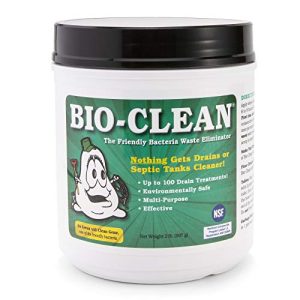
Bio-Clean Drain Septic is described on its listing as a combination of natural microbes and enzymes, formulated without caustic chemicals, and, per its listing, it is aimed at fats, oil and grease, a common cause of slow kitchen drains.
Its listing covers drains, septic tanks and grease traps with one product. The powder format requires careful measuring compared to a simple pour-and-wait liquid, and it works gradually rather than instantly, so it’s better suited to prevention and mild clogs than emergency severe blockages.
★ Top Pick
Bio-Clean
Bio-Clean Drain Septic (2 lb Can)
Best for: A versatile all-around pick for drains, septic tanks and grease traps
Bio-Clean Drain Septic is a microbe and enzyme powder, sold as one 2-pound canister, for drains, septic tanks and grease traps.
✓ Pros
• Formulated without caustic chemicals
• Aimed at grease, fat and oil buildup in drains
• Covers drains, septic tanks and grease traps in one product
✗ Cons
• Powder needs careful measuring compared with a pour-and-wait liquid
• Works gradually, so better for prevention and mild clogs than severe blockages
2. Bioda Professional Strength Enzyme Drain Cleaner, 1 Gallon — Best for Odor Elimination
⭐ Best for Odor Elimination
Probiotic Liquid
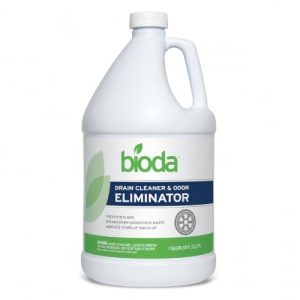
Bioda takes a dual-purpose approach, aiming at both drain buildup and lingering drain odors in one product. Despite the word “enzyme” in the product name, its listing describes a probiotic, bacteria-based formula, and “Professional Strength” in the name is not a measured concentration or performance claim we can verify, so follow the label’s dosing directions.
The listing describes it as septic safe and says it uses beneficial bacteria rather than harsh chemicals; confirm that against the label for your own pipes and septic system. It is listed for use across kitchen, bathroom, garbage disposal, sewer and shower drains rather than being limited to a single fixture. The odor-elimination focus means it may be less aggressive on severe structural clogs compared to a mechanical method, and the liquid format needs to sit undisturbed for full effectiveness, so timing your usage matters.
Bioda
Bioda Professional Strength Enzyme Drain Cleaner (1 Gallon)
Best for: Dual-purpose buildup and odor elimination
Bioda Professional Strength is a bacteria-based drain cleaner and odor eliminator that its listing calls septic safe, sold here as a 1-gallon liquid.
✓ Pros
• Targets both drain buildup and lingering odors
• Listing calls it septic safe and says it uses beneficial bacteria rather than harsh chemicals
• Listed for kitchen, bathroom, disposal, bathtub and shower drains
✗ Cons
• Odor focus may make it less effective on severe clogs than a mechanical method
• Liquid needs to sit undisturbed for full effect, so timing matters
3. Zep Drain Defense Enzymatic Drain Cleaner Powder, 18 oz — Best Powder Format
🎯 Best Powder Format
Powder Concentrate
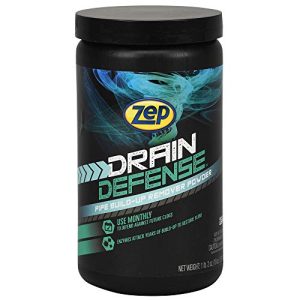
The Zep Drain Defense powder is an enzymatic powder that its listing describes as a concentrate for slow-running drains and preventative maintenance. Zep’s listing states it is safe for pipes and septic systems, and also says it is not for use with inorganic build-up or hair-clogged drains, so check the label before relying on it.
The compact powder packaging takes up less storage space than gallon jugs of liquid cleaner. Unlike a ready-to-pour liquid, a powder means measuring a dose and mixing or applying it the way the label directs.
Zep
Zep Drain Defense Enzymatic Drain Cleaner Powder (18 oz)
Best for: Buyers who prefer concentrated powder over liquid
Zep Drain Defense is an enzymatic powder for slow-running drains and preventative maintenance, sold here as one 18 oz container.
✓ Pros
• Enzymatic powder concentrate for slow-running drains and preventative maintenance, per the listing
• Safe for pipes and septic systems, per Zep
• Compact container takes less storage space than gallon jugs
✗ Cons
• Powder means measuring a dose and mixing or applying it as the label directs
• Not for inorganic build-up or hair-clogged drains, per the listing
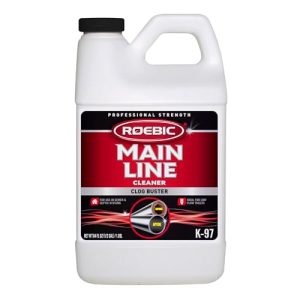
4. Roebic K-97 Liquid Main Line Cleaner, 64 fl oz — Best for Septic & Main Lines
🔧 Best for Septic & Main Lines
Main Line / Septic
The Roebic K-97 is specifically formulated for main sewer and septic line treatment, a distinct use case from the fixture-level drain cleaners in this roundup. It is a bacterial main-line treatment: Roebic files it under its bacterial treatments and describes it as working on the organic buildup that collects in sewer and main lines leading to septic tanks, and the Amazon listing describes it breaking down waste such as paper, sludge, fats and grease. Roebic’s own K-97 page does not mention enzymes, although the Amazon listing’s wording does, so we describe it as a bacterial treatment. It is sold here as a 64-ounce bottle.
The Amazon listing says it is safe for toilets and household plumbing; follow the label’s directions for your own system. Its main-line focus means it’s not the ideal choice if your primary concern is a single slow fixture drain rather than whole-system maintenance, and it’s best used as part of a regular maintenance routine rather than a one-time fix.
Roebic
Roebic K-97 Liquid Main Line Cleaner (64 fl oz)
Best for: Whole-system main sewer and septic line maintenance
Roebic K-97 is a bacterial liquid main line treatment for sewer and septic systems, sold here as a 64 fl oz bottle.
✓ Pros
• Formulated for main sewer and septic line treatment
• Bacterial treatment aimed at paper, fats and grease, per the listing
• Listing says it is safe for toilets as well as drains
✗ Cons
• Main-line focus makes it less suited to a single slow fixture drain
• Best used as regular maintenance rather than a one-time fix
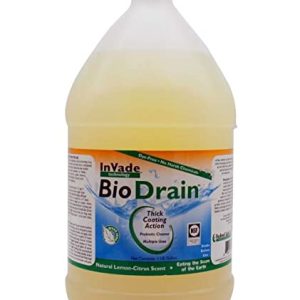
5. InVade Bio Drain, 1 Gallon (Original Version) — Best for Multi-Drain Maintenance
🪣 Best for Multi-Drain Maintenance
Microbe & Citrus Oil
InVade Bio Drain is a microbe and citrus-oil drain treatment. Its listing says it is intended specifically for drains, with a dose of 4 oz per drain, and also mentions use in soda-fountain drip trays, mop buckets, trash chutes and urinals. It is sold here as a 1-gallon bottle, the Original Version.
The listing describes a microbe and citrus-oil formula rather than a caustic one. At 4 oz per drain, a 1-gallon bottle covers many treatments, which suits regular maintenance of several drains; for a one-time trial on a single drain, the gallon size is a bigger purchase than you may need. The listing does not compare its strength with other cleaners, so follow the label’s directions.
Rockwell Labs
InVade Bio Drain (1 Gallon, Original Version)
Best for: Regular maintenance of several drains
InVade Bio Drain is a microbe and citrus-oil drain treatment, sold here as a 1-gallon Original Version.
✓ Pros
• Microbe and citrus-oil formula rather than a caustic one, per the listing
• Listing gives a dose of 4 oz per drain
• Listing also mentions mop buckets, trash chutes, urinals and soda-fountain drip trays
✗ Cons
• 1-gallon size is a bigger purchase for a one-time trial on a single drain
• How long a bottle lasts depends on how many drains you treat
Enzyme & Bio-Based Drain Cleaner Buying Guide
How enzyme and bio-based cleaners work — and why they’re slower than chemical cleaners
Enzyme and bio-based drain cleaners rely on enzymes, bacterial cultures or both to digest organic material — grease, soap scum, food waste. Enzymes speed up the breakdown of particular kinds of waste, while bacterial products add living cultures that feed on it, and the products here fall on different sides of that line. Either way, the process is slower than the harsher chemistry of a caustic drain cleaner. Treatment time varies by product, so check each label for how long to leave the product in the drain, whether to avoid running water in the meantime, and how often to repeat the dose.
Prevention vs emergency use — setting the right expectations
Enzyme and bio-based cleaners are well suited to routine maintenance — a periodic treatment, on the schedule each label gives, that aims to keep grease, soap scum, and organic buildup from accumulating enough to cause a slow drain in the first place. They’re not meant for a drain that’s already fully blocked and not draining at all, because the biological process is gradual. For a blockage, use a mechanical method suited to it — a plunger for a fixture drain, or a drain snake for a clog deeper in the line — and call a plumber if the blockage won’t clear, affects several fixtures or backs up from the main line. Use these cleaners to help prevent problems, not to clear one that has already formed.
Septic systems: what these cleaners can and can’t do
A septic system relies on living organisms in the tank to digest and treat household waste, and EPA warns that pouring toxins down the drain can kill those organisms and harm the system. EPA advises septic owners to avoid chemical drain openers and to use boiling water or a drain snake for a clogged drain instead. Enzyme and bio-based products are marketed as gentler alternatives, and several listings here call themselves septic safe, but that is each maker’s own claim. EPA also says septic systems do not need additives to function properly, and its main advice is regular inspection and pumping by a septic professional. Read EPA’s septic system care guidance, follow each product’s own septic directions, and ask your septic professional before adding any product to the system.
US regional context: septic systems
According to EPA, about one in five US homes has a septic system, and they are especially common in suburban and rural areas. If you’re unsure whether your home is on septic or municipal sewer, confirm that before choosing a drain cleaning product, because what is fine for a sewer-connected drain may not be right for a septic tank. Septic households should follow the guidance above and check with a septic professional before using any drain product regularly.
Frequently Asked Questions
Q: Are enzyme and bio-based drain cleaners safe for all pipes?
Not automatically. Product listings often describe these cleaners as gentler than caustic chemicals, and some listings here say a product is safe for pipes, but that is each maker’s claim, and no type of cleaner is safe for every pipe material, fixture or septic system. Check the label for the pipes and systems it covers and follow the directions exactly. If your plumbing is old or already damaged, or you are on a septic system, ask a plumber or septic professional first, and see the septic section above for EPA guidance.
Q: How long does an enzyme or bio-based drain cleaner take to work?
It varies by product. These cleaners work through biological digestion, which is slower than a caustic chemical reaction, but the dose, how long to leave the product in the drain, whether to avoid running water during that time and how often to repeat it all depend on the product’s label. Follow the directions for the one you buy, and expect gradual results rather than minutes.
Q: Can I use an enzyme drain cleaner as regular maintenance, not just for a clog?
Yes — preventive use is what these cleaners are generally designed for. A periodic treatment, on the schedule the label gives, helps keep grease, soap scum, and organic buildup from accumulating enough to cause a slow drain in the first place, which is a genuinely different use case than reaching for a product only after a clog has already formed.
Q: Are enzyme and bio-based drain cleaners better than chemical drain cleaners?
Neither is objectively “better” — they’re suited to different situations. Caustic chemical cleaners act through a harsher mechanism and aren’t right for every clog, pipe or septic system, while enzyme and bio-based cleaners are gentler in approach but gradual, so they’re better suited to ongoing prevention than emergency use. For an active clog, a mechanical method such as a plunger or drain snake, or a plumber, is usually the appropriate next step. Our chemical vs mechanical drain cleaning comparison covers the options in more depth if you’re dealing with an active clog right now.
Conclusion
For most households, Bio-Clean Drain Septic is the easiest recommendation — a versatile microbe-and-enzyme formula whose listing covers drains, septic tanks and grease traps. If lingering drain odor is your main frustration, the Bioda Professional Strength cleaner’s dual-purpose formula is a close alternative.
Buyers who prefer a concentrated powder should look at the Zep Drain Defense Powder, households focused on main sewer or septic line maintenance specifically should consider the Roebic K-97, and households treating several drains on a regular schedule may prefer the 1-gallon InVade Bio Drain. If you’re dealing with a clog rather than looking for a maintenance product, our drain unblockers review and guide to unclogging a drain without chemicals cover other options for a clog that’s already formed. Whichever product you choose, follow its own instructions, and check with a septic professional first if you have a septic system.
✍️ About This Review
PTR Editorial Team — Product Reviews. We compare manufacturer specifications, installation requirements, compatibility and available product documentation to help homeowners choose suitable tools and parts. How we review →