Comparisons
20 Sep 2026

Utility Pump vs. Sump Pump (2026) — Which Do You Need?
Utility pump vs sump pump: one is portable for occasional jobs, the other a permanent install for ongoing water. See which your basement needs.
Product availability and information are based on our research at time of writing and are subject to change. Always check Amazon for the latest details before purchasing.
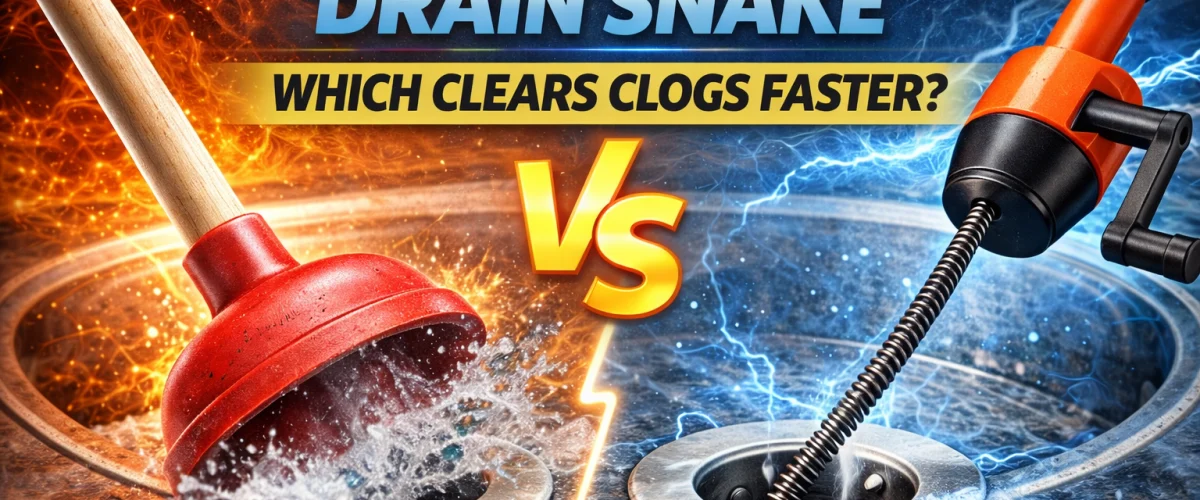
A blocked toilet or drain is one of the most stressful household emergencies — and grabbing the wrong tool makes it worse. Plungers and drain snakes both clear clogs, but they work completely differently and suit different situations. Use a plunger on a deep hair clog and you will push it further into the pipe. Use a drain snake on a fresh soft blockage when a 30-second plunge would have fixed it and you have wasted 20 minutes getting messy for no reason. This guide explains exactly how each tool works, which clogs each one handles best, and when to switch from one to the other. For full product recommendations, see our best plungers and best drain snakes guides.
A plunger is a rubber suction cup on a handle that clears drain blockages using alternating pressure and vacuum. When you push down, pressurized water is forced toward the clog. When you pull up, suction pulls the clog back. This back-and-forth action dislodges soft blockages close to the drain opening quickly and cleanly — no disassembly required.
There are two types to know. A cup plunger has a simple dome-shaped rubber cup and is designed for flat drain openings on sinks, tubs and shower drains. A flange plunger (also called a toilet plunger) has an additional rubber flap — the flange — that folds out to seal inside the curved toilet drain opening. Using the correct type for the job makes a significant difference to how much suction you can generate.
A drain snake — also called a plumber’s snake or drain auger — is a flexible metal cable coiled inside a drum, with an auger tip or hook at the working end. You feed the cable into the drain by hand or with a drill attachment, rotating it as it travels into the pipe. The auger tip either breaks through the clog or hooks into it so you can pull the debris back out of the drain.
Unlike a plunger which works on pressure alone, a drain snake physically reaches the obstruction. Most hand-operated models extend to 15–25 feet — far enough to clear the trap and several feet into the drain line. This makes them effective on stubborn hair clogs, solid debris and blockages that are too far from the drain for a plunger to reach. Manual models work for most home use; powered drill-attachment versions handle more serious blockages faster.
| Factor | Plunger | Drain Snake |
|---|---|---|
| How it works | Pressure and suction | Physical cable reaches the clog |
| Best clog type | Soft, recent clogs | Stubborn, deep or hair clogs |
| Reach | 0–6 inches from drain | Up to 25 feet into the pipe |
| Ease of use | Very easy — no skill needed | Moderate — needs technique |
| Mess level | Clean and simple | Can be messy |
| Speed | 1–2 minutes | 5–15 minutes |
| Cost | $10–$30 | $15–$60 |
| Reusable | Yes — lasts years | Yes — lasts years |
| Best for toilets | Excellent | Good |
| Best for hair clogs | Poor | Excellent |
A plunger is always the right first tool to reach for. It is fast, clean, requires no skill and works immediately on the most common household clogs. If it works — and it usually does on fresh blockages — you are done in under two minutes with no mess and no cost.
Switch to a drain snake when the plunger has not cleared the blockage after several attempts, or when you know from experience that the clog type will not respond to suction. A drain snake reaches deeper, physically removes the obstruction rather than just dislodging it, and is the only real solution for hair clogs and solid debris.
The plunger wins on speed — a fresh soft clog typically clears in 1–2 minutes of plunging. A drain snake takes 5–15 minutes to feed through the pipe, break up or hook the clog and retrieve the cable. There is no contest on a simple blockage.
But speed is only half the picture. A plunger often pushes the clog further into the pipe rather than removing it, or creates a temporary gap that reseals within hours or days. A drain snake physically removes the obstruction, so the drain stays clear. For stubborn or recurring clogs, the extra time spent with a drain snake saves far more time over the long term by eliminating the problem rather than masking it.
Both tools are essential and both represent exceptional value against the cost of a plumber callout. A basic plumber service call typically starts at $100–$200 before any work is done. A quality plunger and drain snake together cost under $50 and will last for years of regular use.
The smartest approach is to own both:
Combined cost: under $50 for both. That pays for itself the first time you avoid a plumber callout fee — and these tools will clear dozens of blockages over the years. For the bigger question of chemical against mechanical clearing, our chemical vs mechanical drain cleaning comparison covers it.
Sometimes a job is too big for DIY. If you need a licensed plumber in your area, search PlumberArchive.com — the US plumber directory with 12,151+ verified plumbers across all 50 states.
Find a trusted plumber near you →
Looking for our top recommended tools in one place? Browse our curated Amazon Storefront →
Get weekly plumbing tips, honest tool reviews and DIY guides delivered to your Facebook feed.
Always try the plunger first. It is faster, cleaner and works well on most fresh soft clogs. If the plunger fails after 5–6 attempts, switch to a drain snake which will physically reach and remove the blockage. Starting with the plunger is almost always the right call — it costs nothing to try and takes under two minutes.
Used correctly, a drain snake is safe for all standard household pipes including PVC, ABS and copper. Avoid forcing the cable if it meets strong resistance — rotate slowly and let the auger tip do the work. Never use a motorized snake on old clay pipes or severely corroded pipes without checking the pipe condition first. For plastic waste pipes, a manual snake is gentler and sufficient for most blockages.
If the same toilet blocks repeatedly, the plunger is not fully clearing the clog — it is just temporarily dislodging it. A drain snake will reach deeper into the trap and drain line to remove the obstruction completely. If the problem persists after snaking, it may indicate a deeper sewer line issue, a partial blockage from tree root intrusion, or a mechanical problem requiring a professional plumber.
A flange plunger — also called a toilet plunger — is the correct type for toilets. The rubber flange folds out to create a seal inside the curved toilet drain opening, generating maximum suction. A standard cup plunger is designed for flat drain openings on sinks and tubs and does not seal a toilet drain effectively. See our best plungers guide for our full tested recommendations.
For a fresh soft clog, reach for the plunger first — it is fast, clean and resolves most blockages in under two minutes. For stubborn blockages, hair clogs, deep obstructions or any clog that keeps coming back, a drain snake is the right tool. It physically removes the problem rather than just moving it, which is why recurring clogs almost always need a snake rather than another round of plunging.
The smartest setup is to keep both in your home. A quality flange plunger and a 15-foot drain snake together cost under $50 and will handle the vast majority of blocked drains and toilets you will ever encounter — saving hundreds in plumber callout fees over the years. See our best plungers and best drain snakes guides for our hands-on tested recommendations.
✍️ About This Review
Sarah Mitchell, Home Improvement Editor — Sarah Mitchell focuses on helping homeowners make smart buying decisions without overspending. She specialises in product comparisons, buying guides and budget-conscious recommendations — cutting through the marketing noise to find tools that genuinely deliver value. Learn how we test →
Utility pump vs sump pump: one is portable for occasional jobs, the other a permanent install for ongoing water. See which your basement needs.
Pipe repair clamp, tape, or epoxy — which should you use for a leaking pipe? Compare how each works, durability, and when to reach for which.
Not sure if your home has a septic tank or a sewer connection? Learn how to tell which one you have, plus the maintenance and cost differences.

