Comparisons
20 Sep 2026

Utility Pump vs. Sump Pump (2026) — Which Do You Need?
Utility pump vs sump pump: one is portable for occasional jobs, the other a permanent install for ongoing water. See which your basement needs.
Product availability and information are based on our research at time of writing and are subject to change. Always check Amazon for the latest details before purchasing.
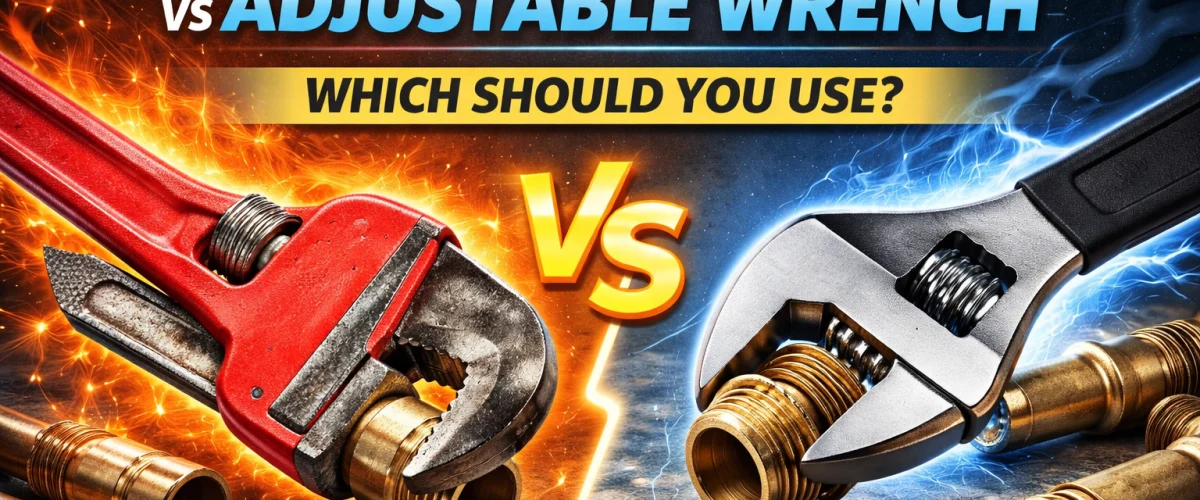
Grab the wrong wrench and you risk damaging your pipe, fitting or fixture — a mistake that turns a simple job into an expensive repair. A pipe wrench and an adjustable wrench look similar at a glance, but they are engineered for completely different tasks. Use a pipe wrench on a chrome nut and you will score the finish. Use an adjustable wrench on a round metal pipe and it will slip, round the fitting and leave you worse off than when you started. This guide covers exactly what each wrench is designed for, where each one excels, and how to choose the right tool every time. For our full reviews of the best options available, see our best pipe wrenches guide.
A pipe wrench is a heavy-duty adjustable wrench with serrated, angled jaws designed specifically for gripping and turning round pipes and threaded fittings. The distinguishing feature is its self-tightening mechanism — as you apply more rotational force, the upper jaw bites harder into the pipe, creating an increasingly firm grip. This makes it exceptionally effective on corroded or rusted connections where significant force is needed.
The serrated teeth leave marks on whatever they grip, which means pipe wrenches are not suitable for chrome fittings, polished brass or any surface where finish protection matters. They come in sizes ranging from 8 inches up to 48 inches for industrial use, with 14-inch and 18-inch models being the most common for home plumbing work. The jaws open at an angle to the handle, and the wrench only grips effectively in one direction of rotation — you flip it over to reverse direction.
An adjustable wrench (also called a crescent wrench) has smooth, parallel jaws that open and close via a worm gear on the handle. The smooth jaw faces are designed to grip flat surfaces — nuts, bolt heads and hex fittings — without scoring the material. Because the jaws are parallel and smooth, they distribute pressure evenly across flat surfaces and protect chrome and soft metal finishes.
The limitation is the flip side of this strength: smooth parallel jaws cannot grip a round pipe. They contact only two points on a circular surface, generate no lateral bite, and will slip under load — often rounding the fitting in the process. Adjustable wrenches come in sizes from 4 inches to 24 inches, with 8-inch and 10-inch being the standard sizes for plumbing and general use.
| Factor | Pipe Wrench | Adjustable Wrench |
|---|---|---|
| Jaw type | Serrated — grips round pipes | Smooth — grips flat surfaces |
| Best for | Round pipes and threaded fittings | Nuts, bolts and flat fittings |
| Grip on round pipe | Excellent | Poor — slips easily |
| Grip on nuts/bolts | Damages corners | Excellent — clean grip |
| Finish protection | Leaves teeth marks | Protects chrome and soft finishes |
| Weight | Heavy — 1 to 4 lbs | Light — 0.5 to 1.5 lbs |
| Size range | 8″ to 48″ | 4″ to 24″ |
| Price | $15 – $50 | $10 – $30 |
| Best brands | RIDGID, IRWIN | Channellock, Craftsman, Stanley |
A pipe wrench is the correct tool any time you are working with threaded round pipe connections. The self-tightening jaw mechanism provides a level of grip that no other hand tool can match on cylindrical surfaces, especially when corrosion has fused a fitting in place.
An adjustable wrench is the right choice whenever you are working with flat-sided fittings where finish protection matters or where a secure grip on a hexagonal surface is needed. It is the more versatile everyday tool for general plumbing repairs around the home.
In a word: no. The two wrenches are not interchangeable, and using the wrong one causes real damage.
Using a pipe wrench on nuts and bolts will round the corners of the fastener. The serrated jaws chew into the flat surfaces of a hex nut, making it increasingly difficult to remove — potentially turning a straightforward repair into a job that requires a nut splitter or angle grinder.
Using an adjustable wrench on round pipes is equally problematic. The smooth parallel jaws have no way to bite into a circular surface. Under load they slip, scoring the pipe surface and potentially deforming softer fittings. On corroded connections the wrench will slip repeatedly without breaking the fitting free, while risking injury from sudden loss of grip.
The single exception: if a pipe fitting has a flat hexagonal section (as many modern push-fit fittings and some brass valves do), an adjustable wrench is appropriate for that fitting. Read the shape of the fitting — if it is round, use a pipe wrench; if it is flat-sided or hexagonal, use an adjustable wrench.
Sometimes a job is too big for DIY. If you need a licensed plumber in your area, search PlumberArchive.com — the US plumber directory with 12,151+ verified plumbers across all 50 states.
Find a trusted plumber near you →
Looking for our top recommended tools in one place? Browse our curated Amazon Storefront →
Get weekly plumbing tips, honest tool reviews and DIY guides delivered to your Facebook feed.
Not on round pipes. An adjustable wrench has smooth parallel jaws that cannot grip a cylindrical surface. Under load the jaws will slip, potentially damaging the fitting. If the fitting has a flat hexagonal section you can use an adjustable wrench, but for round threaded pipe you need a pipe wrench.
The serrated jaws of a pipe wrench will leave teeth marks on soft materials including copper, chrome and plastic. On steel and galvanized iron pipe the marks are minor and do not affect function. Never use a pipe wrench on copper pipe, chrome-plated fittings, plastic pipe or any surface where finish protection matters.
For most home plumbing work a 14-inch pipe wrench handles the majority of jobs. For larger supply pipes or stubborn outdoor connections, an 18-inch model provides more leverage. Having both sizes covers almost every residential job. See our best pipe wrenches guide for specific recommendations.
Using two pipe wrenches — one to hold the pipe stationary and one to turn the fitting — prevents the pipe from rotating when you apply force to the fitting. If only one wrench is used, the rotational force transfers along the pipe and can crack joints or connections further down the line.
The rule is simple: round pipes get a pipe wrench, flat fittings get an adjustable wrench. The serrated self-tightening jaws of a pipe wrench are purpose-built for cylindrical surfaces and provide grip that no other hand tool can match on threaded metal pipe. The smooth parallel jaws of an adjustable wrench protect finishes and grip flat hex surfaces cleanly — but will slip and cause damage on round pipe.
For most homeowners, a quality 14-inch pipe wrench and a good 10-inch adjustable wrench cover the vast majority of plumbing repairs. If your other option under the sink is the adjustable wrench you already own, our basin wrench vs adjustable wrench comparison covers that pairing. Buy the right tool for the job and you avoid the expensive consequences of a slipped wrench or a rounded fitting. Check our best pipe wrenches guide for our top-tested recommendations.
✍️ About This Review
Sarah Mitchell, Home Improvement Editor — Sarah Mitchell focuses on helping homeowners make smart buying decisions without overspending. She specialises in product comparisons, buying guides and budget-conscious recommendations — cutting through the marketing noise to find tools that genuinely deliver value. Learn how we test →
Utility pump vs sump pump: one is portable for occasional jobs, the other a permanent install for ongoing water. See which your basement needs.
Pipe repair clamp, tape, or epoxy — which should you use for a leaking pipe? Compare how each works, durability, and when to reach for which.
Not sure if your home has a septic tank or a sewer connection? Learn how to tell which one you have, plus the maintenance and cost differences.

