Please note: Information in this guide is based on our research at time of writing and is subject to change. Always follow the specific instructions included with your product, since exact steps vary by model.
Introduction
A smelly bathroom trash can is one of those problems people tend to just live with, reaching for an air freshener or scented candle instead of actually addressing what’s causing the smell in the first place. That’s unfortunate, because bathroom trash can odor is almost always genuinely fixable, and it usually comes down to a small, identifiable set of causes rather than something mysterious or unsolvable.
In most households, the culprit is some combination of bag type, how often the can gets emptied, whether the can has a lid, and how much humidity the bathroom holds onto after a shower. None of these are hard to fix once you know which one applies to your situation, and addressing the actual cause works far better — and lasts far longer — than masking the smell with a spray that wears off in an hour. This guide walks through the common causes, the fixes that actually work, and when persistent odor might mean something beyond the trash can itself is worth a look. If you’re also shopping for a new can as part of the fix, our bathroom trash can reviews compare the top lidded and open-top options. If a step-pedal lid versus a motion-sensor design is part of what you’re weighing, our step pedal vs motion sensor trash can comparison breaks down that specific trade-off.
At a Glance
| Most Common Cause |
Organic waste sitting too long without proper containment |
| Fastest Fix |
Switch to a lidded can if currently using an open-top design |
| Best Long-Term Habit |
Empty on a consistent schedule rather than waiting until full |
| Cost to Fix |
Most solutions cost little to nothing — mainly a habit and product choice change |
✏️ Our Take
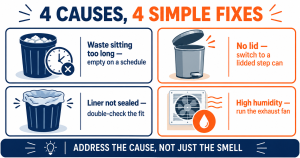
Bathroom trash can odor almost always comes down to one of a few root causes: waste sitting too long, an open-top design that doesn’t contain smell, or a liner that isn’t properly sealed. The good news is that fixing any of these is usually simple and inexpensive — a lidded can, a slightly more frequent emptying schedule, and an occasional deep clean solve the vast majority of odor complaints. Air fresheners and odor sprays can help in the short term, but they’re masking the smell rather than addressing why it’s there in the first place. Start with the actual cause, and the smell tends to resolve on its own.
Common Causes of Bathroom Trash Can Odor
Before fixing anything, it helps to know which of a handful of common causes actually applies to your bathroom, since the right fix depends on the actual source of the smell rather than a one-size-fits-all approach. The good news is that this is a short list, and most bathrooms have one or two of these factors at play rather than all of them at once.
Organic and moisture-retaining waste — used cotton products, tissues, dental floss, and similar items — is the single biggest contributor. These materials break down over time, and bacteria feeding on that breakdown is what actually produces the smell, not the waste itself sitting there inert. The longer this material sits in a warm, enclosed space, the more noticeable the odor becomes.
An open-top can compounds the problem by giving that smell nowhere to be contained — it’s simply present in the room continuously rather than sealed away between emptyings. A liner bag that isn’t sealed tightly, or one that’s been reused past its useful life, allows odor to escape around the edges even if the can itself has a lid. Humidity from showering adds another layer, since bacteria generally thrive in warm, damp conditions, and a bathroom that stays humid after every shower creates exactly that environment inside and around the can. Finally, infrequent emptying relative to how quickly waste actually accumulates in your specific household is often the simplest explanation of all — a can that’s emptied twice a week in a household that fills it in three days is going to smell, regardless of what type of can or liner you’re using.
It’s also worth noting that these causes tend to compound one another rather than act in isolation. An open-top can in a humid bathroom that’s emptied infrequently is dealing with all three factors at once, which is why odor in that situation can feel disproportionately strong compared to any single cause on its own. Identifying which of these apply to your bathroom — sometimes it’s just one, sometimes it’s several — is the first real step toward fixing it, rather than guessing at a solution and hoping it happens to address the actual problem.
Choose the Right Can Type and Liner
A lidded step can genuinely helps here, and not in a marginal way. Containing smell between openings — rather than letting it sit exposed to the room continuously, as an open-top design does — is one of the most effective single changes you can make, because it addresses where the odor actually escapes rather than just how strong it gets before you notice it. The difference between a lidded and open-top can in a household that generates a normal amount of bathroom waste is often the difference between a bathroom that smells fine and one that doesn’t.
Liner choice matters too, though it’s a smaller factor than can type. Scented liner bags, or ones with a baking-soda lining built into the material, can provide a modest ongoing improvement over a plain, unscented bag — not a dramatic transformation, but a real one worth the small price difference if odor has been a recurring issue. Double-bagging isn’t usually necessary for typical bathroom waste, but it can help in particularly humid bathrooms, or with certain types of waste that tend to produce more odor than average, as a temporary measure while you work on the underlying habits covered elsewhere in this guide.
💡 Tip: If you’re currently using an open-top can and dealing with persistent odor, switching to a lidded step can is often the single most effective change you can make — it addresses the problem at the source rather than trying to manage it after the fact.
Establish a Consistent Emptying Schedule
Waiting until the can is full before emptying it sounds efficient, but it’s one of the most common reasons odor builds up in the first place. The waste that hits the bottom of the can early in the cycle sits there the entire time it takes to fill the rest of the can, which in a low-traffic bathroom can be several days or more. By the time the can is actually full, that bottom layer has had plenty of time to start breaking down.
Emptying on a set schedule instead — every few days, or twice weekly, depending on your household’s actual usage — prevents waste from sitting long enough to develop noticeable odor in the first place, regardless of whether the can looks full yet. This is especially worth doing deliberately in guest bathrooms or powder rooms that see less frequent use but still accumulate waste over time; it’s easy to forget about a can that’s rarely visited, and that’s exactly the kind of can that tends to develop a persistent smell nobody notices until a guest points it out.
A simple way to build this habit is to tie it to something you already do regularly, like trash day for the rest of the house, or a set day each week for bathroom cleaning. That way emptying the bathroom can becomes an automatic part of an existing routine rather than a separate task you have to remember on its own. If your household’s usage varies — busier weeks with houseguests, for example — it’s worth adjusting the schedule up temporarily rather than sticking rigidly to a fixed interval that no longer matches actual usage.
Deep Clean the Can Itself
Even with a good liner and a consistent emptying schedule, the can itself accumulates residue over time that a liner alone won’t catch. An occasional deep clean addresses buildup that routine emptying simply can’t reach, and it’s a quick job that’s worth doing on a regular basis rather than only once odor has already become noticeable.
- Remove the liner and any loose debris. Empty the can completely and check the bottom and sides for anything that’s fallen out of the liner or leaked through it.
- Wash the interior with warm water and a mild dish soap or diluted vinegar solution. Either works well for typical bathroom trash can residue, and you don’t need anything stronger for routine cleaning.
- Pay particular attention to the bottom and any seams where residue can collect. These spots are easy to miss with a quick wipe-down but are often where the actual source of lingering odor is hiding.
- Dry the can completely before inserting a new liner. Moisture left behind encourages the same bacterial growth that caused the odor in the first place, so this step matters more than it might seem.
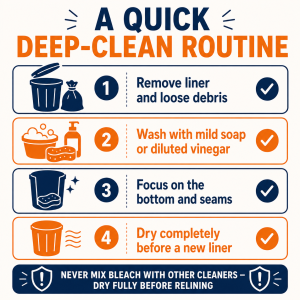
⚠️ Warning: Avoid mixing bleach with other cleaning products, including vinegar, when cleaning a trash can — this can produce hazardous fumes. Stick to one cleaning method at a time and ensure good ventilation while cleaning.
Use Odor-Absorbing Products Effectively
A small amount of baking soda in the bottom of the can — either underneath the liner or sprinkled directly inside it — can help absorb odor between cleanings. It’s an inexpensive, low-effort addition that works passively without any ongoing attention once it’s in place, and it’s worth refreshing every time you change the liner rather than letting the same amount sit indefinitely.
Activated charcoal sachets or odor-absorbing pods designed specifically for trash cans offer a similar effect and typically last several weeks before needing replacement, making them a reasonable low-maintenance option if you’d rather not think about it as often as a baking soda refresh requires. Whichever product you choose, it’s worth being clear-eyed about what these products actually do: they work best as a supplement to good emptying and cleaning habits, not as a substitute for them. No odor-absorbing product will keep pace with a can that’s rarely emptied or cleaned, so treat these as a helpful addition on top of the habits covered earlier in this guide, not a replacement for them.
Improve Bathroom Ventilation
Humidity plays a bigger role in trash can odor than most people expect, since bacteria generally grow faster in warm, damp conditions than in a dry environment. A bathroom exhaust fan run during and after showering helps reduce ambient humidity, which in turn slows bacterial growth in the trash can and elsewhere in the room — not just on visible surfaces, but in the air itself. If you’re not sure your current fan is doing enough, our exhaust fan sizing guide covers how to calculate whether it’s actually rated for your bathroom’s size, and our bathroom exhaust fan reviews cover replacement options if it’s time for an upgrade.
In bathrooms without a fan, or with a fan that’s undersized for the space, cracking a window or door briefly after showering can help move that humidity out rather than letting it linger and settle into everything in the room, including the trash can. This isn’t a complete substitute for proper ventilation, but it’s a genuinely useful habit in the meantime, and it costs nothing beyond remembering to do it.
When Odor Signals a Bigger Problem
If you’ve addressed the trash can itself — right can type, consistent emptying, regular deep cleaning, and reasonable ventilation — and the odor persists or keeps coming back quickly, it’s worth considering that the source might not be the trash can at all. Persistent bathroom odor that doesn’t improve with better trash can habits can point to something else in the room, such as a slow or partially clogged drain, or a dry P-trap that’s no longer holding the water seal that normally blocks sewer gas from entering the room. Our P-trap kit reviews cover replacement options if that turns out to be the issue.
This guide isn’t meant to diagnose those issues in depth — a dry P-trap, a venting problem, or a genuine drain clog each deserve their own separate troubleshooting process. The point here is simply that if you’ve genuinely ruled out the trash can as the cause and odor persists, it’s worth looking elsewhere in the bathroom rather than continuing to treat the can as the culprit indefinitely.
US Regional Context: Humidity levels vary significantly across US regions, and homes in consistently humid climates may need more frequent trash can cleaning and emptying than the general guidance above suggests. If odor keeps returning quickly despite following these steps, a shorter cleaning interval suited to your specific climate may simply be necessary.
Frequently Asked Questions
Q: How often should I empty a bathroom trash can?
Most bathroom trash cans should be emptied every few days to twice a week, depending on your household’s actual usage rather than a fixed universal schedule. A busy shared bathroom fills faster and needs more frequent emptying, while a low-traffic guest bathroom can still develop odor from infrequent use if it’s left too long between emptyings despite looking mostly empty. The key is picking a consistent schedule and sticking to it, rather than waiting until the can looks full, since waste that sits at the bottom for days before the can is visibly full is often what actually causes the smell.
Q: Do scented trash bags actually help with odor?
Yes, to a modest degree. Scented liner bags, or ones with a baking-soda lining built into the material, provide a real but limited improvement — they help mask and partially absorb odor, but they don’t address the underlying causes like infrequent emptying or an open-top can that doesn’t contain smell between uses. Think of scented liners as a small helpful addition on top of good habits, not a fix on their own. If odor persists despite using scented bags, the actual cause is likely elsewhere, such as emptying frequency or can type.
Q: Is it normal for a bathroom trash can to smell even when emptied regularly?
Some odor is normal, but persistent or strong odor despite regular emptying usually points to residue on the can itself rather than the current contents. This is exactly what a deep clean addresses — residue in the seams and at the bottom of the can can continue producing odor even after the liner and its contents are removed, since bacteria left behind on those surfaces keep working regardless of what’s currently inside the bag. If a deep clean doesn’t resolve it, humidity or ventilation in the bathroom is worth checking next, followed by whether the odor might actually be coming from somewhere else in the room entirely.
Q: Can baking soda really reduce trash can odor?
Yes, baking soda is a genuinely effective, low-cost odor absorber, and a small amount in the bottom of the can — under the liner or sprinkled inside it — measurably helps between cleanings. It works by neutralizing odor rather than just masking it, which is part of why it’s a popular, inexpensive choice. That said, it works best as a supplement to good emptying and cleaning habits rather than a standalone fix; a can that’s rarely emptied or cleaned will still develop noticeable odor even with baking soda in it, just somewhat less than it would otherwise.
Conclusion
Bathroom trash can odor is a genuinely solvable problem, and in most households it comes down to some combination of can type, emptying frequency, cleaning habits, and bathroom humidity — not a mystery requiring anything more than a bit of attention to the right details. Start with the can itself: switch to a lidded design if you’re currently using an open-top can, settle on a consistent emptying schedule rather than waiting until it’s full, and give it an occasional deep clean rather than relying on the liner to handle everything. Odor-absorbing products and good ventilation help round out the picture, but they work best as a supplement to those core habits rather than a replacement for them. If you’ve genuinely addressed all of this and odor still persists, it’s worth looking elsewhere in the bathroom — but for the vast majority of households, these steps resolve the problem for good.
Prices and ratings may change. Always check Amazon for current prices.
✍️ About This Guide
PTR Editorial Team — Plumbing Guides. We compare manufacturer specifications, installation requirements, compatibility and available product documentation to help homeowners choose suitable tools and parts. How we review →


