Please note: Code requirements and regulatory details are based on our research at time of writing and are subject to regional variation. Always confirm local plumbing code requirements with a licensed plumber before installing either system.
Introduction
Sump pumps and sewage ejector pumps are two of the most frequently confused pieces of home plumbing equipment, and it’s easy to see why — both typically sit in a basin below floor level, both run on a float switch, and both are usually tucked away in a basement corner where most homeowners rarely look closely at them. But the two devices serve fundamentally different purposes, and choosing the wrong one for your project doesn’t just mean underwhelming performance — it can mean a system that doesn’t work at all, or one that fails a plumbing code inspection outright.
This comparison covers exactly what each pump does, how their designs differ, and how to know which one your specific project actually needs. If you’re dealing with groundwater seepage and are deciding between a pump-based solution and a passive drainage system, our sump pump vs French drain comparison covers that separate decision. And if you’ve already confirmed a sump pump is what you need, our roundup of the best sump pumps covers vetted models for every basement size.
✏️ Our Take
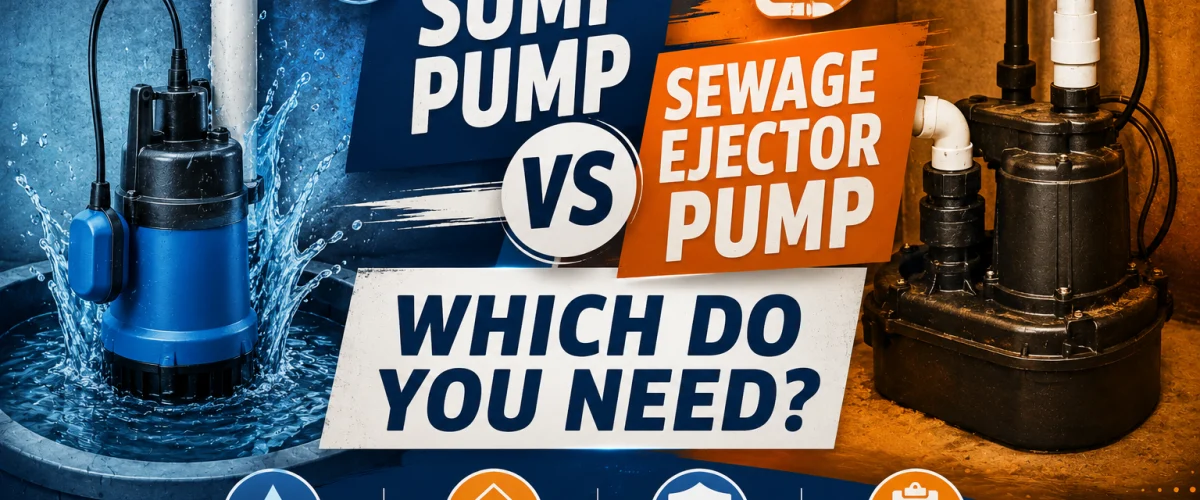
These two pumps get confused constantly because they look similar and both sit in a basement pit — but they do fundamentally different jobs and are not interchangeable. A sump pump moves clean or lightly dirty groundwater that seeps in around your foundation, protecting your basement from flooding. A sewage ejector pump moves actual wastewater — everything from a below-grade toilet, sink, or shower — up to the level of your main sewer line so it can drain out normally. Installing the wrong one isn’t just ineffective, it can be a genuine plumbing code violation, since sewage ejector systems require a sealed basin and vented setup that a standard sump pump installation doesn’t have.
What a Sump Pump Actually Does
A sump pump removes groundwater that collects in a sump pit, typically fed by a French drain system installed around the interior or exterior perimeter of your foundation, or simply by natural seepage through basement walls and floor during wet weather. The pit collects that water, and once it rises to a set level, a float switch triggers the pump to discharge it away from the house.
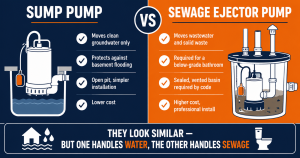
Critically, a sump pump is built to handle clean water or water with only light sediment — not wastewater, and not solid waste of any kind. Its discharge line routes outside to a storm drain, dry well, or simply away from the foundation exterior, never into your home’s sewer or septic system. The impeller inside a standard sump pump isn’t designed to pass anything beyond fine grit, which is a big part of why it can’t be repurposed for wastewater duty.
💡 Tip: A sump pump’s job is purely preventive — it protects your basement from flooding by managing groundwater before it becomes a standing water problem, not processing anything from your home’s plumbing fixtures.
What a Sewage Ejector Pump Actually Does
A sewage ejector pump moves wastewater and solid waste from below-grade plumbing fixtures — a basement toilet, sink, shower, or laundry drain — up to the level of your home’s main gravity sewer line, since gravity alone can’t carry waste uphill from a below-grade bathroom to the sewer connection. Once the wastewater reaches that level, it flows out through the normal sewer or septic connection just like waste from any fixture upstairs.
Unlike a sump pump’s open or loosely covered pit, an ejector pump is installed inside a sealed, vented basin specifically engineered to handle solid waste without clogging and without releasing sewer gas into your basement. The pump itself uses a specialized grinder or solids-handling impeller design, built to pass waste that would immediately jam or destroy a standard sump pump’s impeller.
⚠️ Warning: Never use a standard sump pump to handle wastewater from a toilet or other sewage source — sump pumps are not designed to pass solid waste and will clog or fail quickly, and the installation itself would not meet plumbing code requirements for sewage handling.
Key Differences in Design and Installation
A sump pump sits in an open or loosely covered pit. There’s no sewer gas to seal against, since it never handles sewage, which keeps the installation comparatively simple — set the pump in the pit, run a discharge line outside, and wire it to power.
A sewage ejector system requires a sealed and vented basin, mandated by plumbing code specifically because the basin is holding actual sewage before it’s pumped out. The discharge line connects into your home’s sewer line rather than routing outside, and the basin needs its own vent tied into your home’s plumbing vent stack. This is a more involved installation overall, and it’s one of the main reasons ejector systems typically require a licensed plumber rather than being a straightforward DIY swap.
💡 Tip: The sealed basin requirement isn’t just a design preference — it’s what prevents sewer gas from entering your basement, which is a genuine health and safety issue, not just a code technicality.
Can One Do the Job of the Other?
A sewage ejector pump can technically move clean groundwater too, since it’s built to handle far more demanding conditions than a sump pump ever faces. But using one for a simple groundwater application is typically overkill — it’s more expensive to buy, more involved to install because of the sealed basin requirement, and unnecessarily oversized for a job a standard sump pump handles perfectly well.
The reverse is not true. A sump pump absolutely cannot safely or legally handle sewage or solid waste. This isn’t a matter of degree or a “works but isn’t ideal” situation — it’s a hard incompatibility. The impeller will clog or fail on solid waste almost immediately, and even if it somehow kept running, the open-pit design has no way to contain sewer gas or meet code requirements for wastewater handling. If your project involves an existing sump pump vs French drain groundwater management decision, that’s a completely separate question from what’s covered here — both of those solutions handle clean water only.
💡 Tip: If you’re unsure which situation you have, the presence of a toilet, sink, or shower drain feeding into the pit is the clearest sign you need a sewage ejector system, not a sump pump.
Cost Comparison
A sump pump sits at a lower overall cost tier ($). The unit itself is less expensive than an ejector pump, and the simpler open-pit installation keeps labor costs down too — many homeowners handle a sump pump swap themselves without hiring a plumber at all.
A sewage ejector system sits at a meaningfully higher cost tier ($$-$$$). Both the pump unit and the required sealed basin cost more upfront than sump pump equipment, and the installation itself is more involved — connecting into the sewer line, sealing and venting the basin correctly, and meeting local code requirements typically means hiring a licensed plumber rather than tackling it as a weekend DIY project.
💡 Tip: Factor in installation labor, not just the pump price — a sewage ejector system’s sealed basin and vent connection typically requires professional installation, which adds meaningfully to the total project cost compared to a sump pump.
Signs You Need One vs the Other
Signs you need a sump pump: water seeping around the foundation during heavy rain, a wet or damp basement floor after storms, or an existing French drain system with nowhere for the collected water to go. None of these involve wastewater or plumbing fixtures — they’re all about managing groundwater before it becomes a standing water problem.
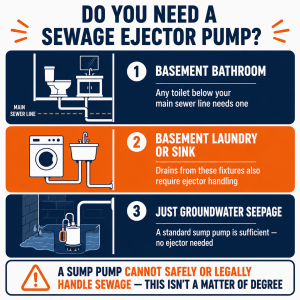
Signs you need a sewage ejector pump: any plan to add a bathroom, laundry room, or kitchen sink below your main sewer line level. If gravity can’t carry wastewater from that fixture to the sewer line on its own — which is the case for essentially any below-grade fixture — an ejector system is required to make it function at all, not just recommended for better performance.
Homes with a finished or partially finished basement that includes a bathroom, laundry room, or wet bar below the main sewer line level are common across the Midwest and Northeast, where basements are standard construction — and these below-grade fixtures require a sewage ejector system, not a sump pump, to function at all. Many older homes retrofitted with a basement bathroom without a licensed plumber’s involvement have been incorrectly plumbed with an undersized sump pump instead of a proper ejector system, leading to backups and code violations that surface during a home sale inspection or renovation.
💡 Tip: If your basement renovation plans include any fixture that uses water and drains it away — not just fixtures that let water in — you almost certainly need a sewage ejector system as part of that project.
Which Should You Choose?
The table below maps the most common decision factors to whichever pump actually wins on that point.
| Factor |
Winner |
| Handles clean groundwater |
SUMP PUMP |
| Handles toilet/sewage waste |
SEWAGE EJECTOR |
| Lower cost and simpler install |
SUMP PUMP |
| Required for a basement bathroom |
SEWAGE EJECTOR |
| Prevents basement flooding |
SUMP PUMP |
| Sealed, code-compliant sewage handling |
SEWAGE EJECTOR |
| Best for an unfinished basement with seepage |
SUMP PUMP |
| Best for a below-grade bathroom or laundry addition |
SEWAGE EJECTOR |
Choose a Sump Pump If:
- You’re managing groundwater seepage or an existing French drain system
- Your basement is unfinished or doesn’t include any below-grade plumbing fixtures
If this describes your situation, our roundup of the best sump pumps covers vetted models for basements of every size.
Choose a Sewage Ejector Pump If:
- You’re adding or already have a toilet, sink, or shower below your main sewer line
- You need code-compliant handling of wastewater and solid waste from a basement fixture. Our roundup of the best sewage & effluent ejector pumps covers the specific models worth buying.
Need a Professional Plumber?
A sewage ejector installation involves code requirements, sewer line connections, and venting that go well beyond a typical DIY project — this is one worth having a licensed plumber handle, or at minimum inspect before you rely on it.
Find a licensed plumber in your area at PlumberArchive.com — the US plumber directory with 12,000+ verified local plumbers across all 50 states.
Find a trusted plumber near you → PlumberArchive.com
Follow Us on Facebook
Get weekly plumbing tips, honest tool reviews and DIY guides delivered straight to your Facebook feed. We cover water management, basement plumbing, and everything in between — written for US homeowners who want to make smart decisions without overspending.
Follow PlumbingToolsReview on Facebook →
Frequently Asked Questions
Q: Can I use a sump pump instead of a sewage ejector pump to save money?
No. A standard sump pump is not designed to handle solid waste or wastewater, and using one for that purpose will lead to clogging or complete pump failure fairly quickly, not just reduced performance. Beyond the reliability problem, it also won’t meet plumbing code requirements for sewage handling, which matters for insurance, resale, and inspection purposes even if it seemed to “work” temporarily. The cost difference between the two systems reflects genuinely different equipment and installation requirements, not an upsell.
Q: Do I need a permit to install a sewage ejector pump?
In most US jurisdictions, yes. Because a sewage ejector system connects into your home’s main sewer or septic line and involves code-mandated venting, most municipalities require a plumbing permit and inspection before or after installation. Requirements vary by location, so check with your local building department, and strongly consider using a licensed plumber who’s already familiar with your area’s specific code requirements.
Q: How do I know if my basement needs a sewage ejector system?
If your basement has, or will have, any plumbing fixture that drains wastewater — a toilet, sink, shower, or laundry hookup — and that fixture sits below the level of your home’s main sewer line, you need a sewage ejector system for it to function at all. This is different from fixtures that only let water in, like a floor drain collecting groundwater, which is a sump pump’s job instead.
Q: Can a sewage ejector pump also handle groundwater from a sump pit?
Technically yes — an ejector pump is built for more demanding conditions than a sump pump ever faces, so it can move clean groundwater without issue. In practice, it’s not a sensible choice for that job alone, since it costs more, requires a more involved sealed-basin installation, and is unnecessarily oversized for simple groundwater management. If your basement has both a groundwater seepage issue and a below-grade bathroom, you’ll typically need two separate systems — a sump pump for the groundwater and an ejector pump for the wastewater — rather than expecting one pump to do both jobs.
Conclusion
A sump pump and a sewage ejector pump solve fundamentally different problems, despite looking similar and often sitting just a few feet apart in the same basement. They are not interchangeable, and treating them as though they are — usually to save money on an ejector system by installing a sump pump instead — leads to equipment failure, sewer gas exposure, and code violations rather than a working system.
A sump pump protects your basement against groundwater flooding. A sewage ejector pump is what makes a below-grade bathroom, laundry room, or kitchen sink possible to install at all, by lifting wastewater up to your main sewer line’s level. The presence of any drain-based fixture below that level is the clearest sign you need an ejector system, not a sump pump — there’s no gray area on that point.
If you’re weighing groundwater management options more broadly, our sump pump vs French drain comparison covers that separate decision in depth. Once you’ve confirmed a sump pump is the right fit for your project, our roundup of the best sump pumps covers vetted models for every basement size, and our guide to the best utility pumps covers smaller-scale pumping needs beyond dedicated sump or ejector applications.
✍️ About This Comparison
PTR Editorial Team — Product Comparisons. We compare manufacturer specifications, installation requirements, compatibility and available product documentation to help homeowners choose suitable tools and parts. How we review →