Please note: This guide is based on our research and hands-on experience at time of writing and is for general information only. If the bowl is close to overflowing, or if several drains in the house are backing up at once, stop and call a licensed plumber rather than working through these methods.
Introduction
The toilet is blocked, the plunger is nowhere to be found, and your guests are arriving in thirty minutes. It is one of those household moments that turns a small problem into a full-blown emergency — but here is the reassurance you need: most toilet clogs do not require a plunger to fix. A large share of blockages are soft organic matter — too much toilet paper, ordinary waste buildup — that responds well to heat, lubrication, or a mild fizzing reaction. If you act quickly and methodically, you can often clear the clog entirely with things already in your home.
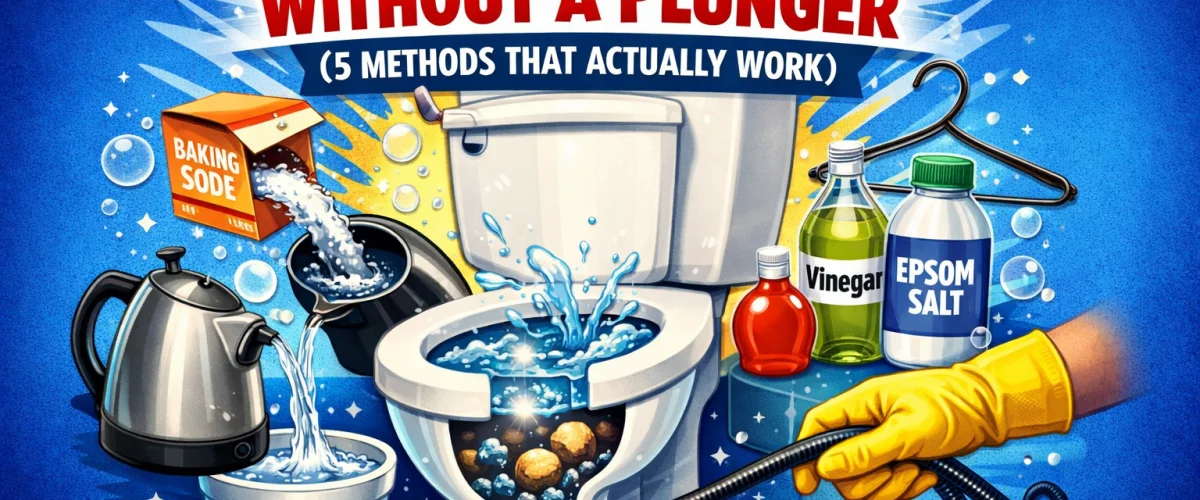
Below are five methods to unclog a toilet without a plunger, ordered from free household fixes to inexpensive tools. Start with the first and work down until the blockage clears: hot water and dish soap, baking soda and vinegar, a flexible barbed drain tool, drain unblocker gel, and — when none of that works — calling a licensed plumber. If these come up empty, the clog is probably deeper than a household method can reach, and a toilet auger or a plumber is the next step.
At a Glance
| Skill Level |
Beginner. Every method here is something a homeowner can do with no plumbing knowledge — pouring, waiting, and at most feeding a flexible tool a few inches into the drain. Nothing is taken apart. |
| Tools Needed |
For the first two methods, nothing you do not already have: dish soap, a bucket or large pot, baking soda, and white vinegar. Later methods use inexpensive items from any hardware store — a flexible barbed drain tool, or a bottle of drain unblocker gel. Rubber gloves for anything that involves reaching into the bowl. |
| Time Needed |
Varies by method — from about 10 minutes for hot water and dish soap, to 30–60 minutes for baking soda and vinegar, to an overnight soak for gel on a stubborn clog. |
| Critical First Step |
Work the free methods first. Hot water and dish soap, then baking soda and vinegar, clear most soft clogs and cost nothing — try them before you spend money or reach for a chemical. And if the bowl is near the rim, bail out a few cups of water first so nothing you add causes an overflow. |
✏️ Our Take
Most toilet clogs are soft, organic, and shallow — too much paper, ordinary waste buildup — and they give way to heat, a little lubrication, or a mild fizzing reaction without any special equipment. Start with the free methods and only escalate if they fail. That said, none of this is as fast or as reliable as a good plunger used correctly, so once the immediate problem is solved, put a proper plunger in the bathroom for next time. If a clog resists everything here, it is deeper than a household method can reach and the job belongs to a toilet auger or a plumber.
Method 1: Hot Water and Dish Soap
This is always the first thing to try. It costs nothing, needs no tools, and works well on soft blockages from excess toilet paper or organic matter. The dish soap coats the clog and acts as a lubricant; the hot water adds weight and helps soften the material and push it through the trap.
- Fill a bucket or large pot with hot tap water — as hot as the tap runs, but not boiling, since boiling water can crack a porcelain bowl.
- Squirt a generous amount of dish soap straight into the bowl — several pumps.
- Give the soap about 5 minutes to sink to the bottom while the water heats.
- Pour the hot water into the bowl slowly and steadily from about waist height — the drop adds force at the trap.
- Wait 10 to 15 minutes while the heat and soap work on the blockage.
- Try a flush. If it drains normally, the clog is gone. If not, repeat once before moving on.
It is free and safe for every toilet and pipe type, but it is not instant, it does nothing for a solid object like a toy or a wad of wipes, and a denser clog may need a second round.
Method 2: Baking Soda and Vinegar
This method uses a gentle fizzing reaction to break down organic matter at the clog. It is slower than a plunger but needs no tools and uses two things most kitchens already have. It works best on paper and organic buildup.
- Pour 1 cup of baking soda directly into the bowl.
- Follow with 2 cups of white vinegar, poured slowly to keep the fizzing under control.
- The mixture will bubble vigorously — that is the reaction working on the clog.
- Leave it for at least 30 minutes; up to an hour for a stubborn blockage.
- Flush. If the bowl clears, the clog is gone.
💡 Tip: If the bowl is close to overflowing, bail a few cups of water into a bucket first. That gives the baking soda and vinegar room to work without spilling over the rim.
It is natural, safe for old pipes and septic systems, and cheap. The trade-off is patience — it needs half an hour or more — and it will not shift a compacted clog or a foreign object.
Method 3: A Barbed Drain Tool
If the free methods have not worked, the blockage may be a firmer mass sitting just below the drain opening rather than soft matter deeper in the trap. A flexible plastic drain tool with backward-facing barbs — sometimes sold as a “Zip-It” or under similar names, usually a strip around 25 inches long — can physically hook that material and pull it out. Reach for it when hot water and baking soda have failed and you suspect hair, wipes, or a soft solid mass near the surface of the drain.
- Put on rubber gloves — the tool pulls out whatever is in the drain.
- Feed the strip slowly and firmly into the drain opening at the bottom of the bowl.
- Rotate it gently as you push so the barbs catch on the blockage.
- When you feel resistance, draw it back slowly and steadily; the barbs drag the clog material with it.
- Put whatever comes out straight into a trash bag. These tools are inexpensive and usually treated as single-use.
- Flush to confirm the drain runs clear.
⚠️ Warning: A barbed strip only reaches shallow clogs near the drain opening. It is not built to reach into the trap or the main line. If it pulls nothing out and the toilet is still blocked, move on to the next method.
It removes the blockage rather than pushing it deeper, uses no chemicals, and is safe for any pipe or septic system — but its reach is short and it does nothing for a solid object wedged further down.
Method 4: Drain Unblocker Gel
When a mechanical approach has not shifted the clog, a purpose-made drain unblocker gel is the next step. Unlike bleach — a disinfectant that does nothing to a clog — these gels are formulated to dissolve hair, grease, and organic matter while you wait, with no physical effort. There is a real range in how well different formulas perform; our roundup of the best drain unblockers compares chemical gels and mechanical options if you are choosing one.
- Read the label for the recommended dose before you start.
- Put on rubber gloves and ventilate the room — open a window or run the exhaust fan.
- Pour the recommended amount into the bowl, aimed at the drain opening.
- Leave it for the time on the label — typically 15 to 30 minutes for a standard clog, or overnight for a stubborn one.
- Flush with hot tap water to carry the dissolved material through.
- If it still will not drain freely, a second dose may help — otherwise it is time for a professional.
⚠️ Warning: Never mix drain unblocker gel with bleach, another chemical cleaner, or the baking soda and vinegar from Method 2 — the combinations can give off toxic fumes. Wear gloves, keep the room ventilated, and avoid chemical cleaners entirely on very old or already-corroded pipes; ask a plumber in that case.
It works passively and handles most hair-and-grease clogs, but it is harsh, not suitable for every pipe type, and slower than a plunger on a severe blockage — and it will not touch a solid object.
Method 5: When to Call a Professional
If you have worked through the methods above and the toilet still will not clear, the blockage is probably deeper in the drain line than any household method can reach. Forcing more solutions at this point can make things worse, especially if the clog is in the main stack or the sewer line. This is when a licensed plumber is the right call.
Signs you need a plumber now
Multiple drains backing up at once — sinks, showers, and tubs all draining slowly, not just the toilet.
Gurgling from other drains when you flush the toilet — air being displaced in the main line.
A sewage smell from floor drains or other fixtures, which points to a blockage in the main sewer line.
The toilet overflows when flushed despite your attempts — stop flushing immediately.
A plumber call-out for a toilet or drain blockage generally runs a few hundred dollars, depending on your area, the time of the call, and how deep the blockage turns out to be; an after-hours or holiday visit costs more. It is worth paying — a blocked main line left alone can cause sewage to back up into the house, which is far more expensive and unpleasant to deal with. A professional also has equipment that reaches blockages no household tool can, and can identify the root cause rather than just the symptom.
Preventing the Next Clog
None of the methods here is as fast or as reliable as a good plunger used correctly. The situation you are in right now — blocked toilet, no plunger, working through workarounds — has a simple permanent fix: keep a quality plunger in the bathroom before you need it, not sourced in a hurry during an emergency. If you are not sure which to buy, our guide to the best plungers covers the bowl-sealing designs that actually work.
For a clog a plunger cannot clear — something lodged well down in the trap — the tool is a toilet auger (also called a closet auger): a cable inside a rigid shaft that reaches through the trap without scratching the porcelain. Our roundup of the best toilet augers walks through the options. A plunger for everyday clogs and an auger for the stubborn ones cover almost every toilet emergency without a service call.
Need a Professional Plumber?
If several drains are backing up, you hear gurgling when the toilet flushes, or there is a sewage smell from other fixtures, the blockage is in the main line and it is time to bring someone in. Search PlumberArchive.com — the US plumber directory with 12,151+ verified local plumbers across all 50 states.
Find a trusted plumber near you → PlumberArchive.com
Frequently Asked Questions
Q: Does hot water actually unclog a toilet?
Yes, when the clog is soft matter like toilet paper or organic waste. Hot water — not boiling, which can crack porcelain — combined with dish soap is surprisingly effective on minor blockages: the soap lubricates the clog and helps it pass the trap, and the heat softens the material. For a solid object or a clog deeper in the drain line, you will need a mechanical tool or a chemical gel instead.
Q: Can I use bleach to unclog a toilet?
No. Bleach is a disinfectant, not a drain cleaner — it will not break down a clog, and repeated use can degrade pipe seals and gaskets over time. If you want a chemical option, use a purpose-made drain unblocker gel, which is formulated to dissolve the hair, grease, and organic matter behind most toilet clogs.
Q: How long does it take to unclog a toilet without a plunger?
The hot water and dish soap method needs 10 to 15 minutes of waiting after you pour. Baking soda and vinegar needs at least 30 minutes, up to an hour for a stubborn clog. Drain unblocker gel usually works in 15 to 30 minutes, though the label may call for an overnight soak on a severe blockage. If a few hours of total effort has not cleared it, stop — more DIY is unlikely to help and can make things worse.
Q: When should I call a plumber instead of fixing it myself?
Call a plumber if multiple drains are backing up at the same time, if other drains gurgle when you flush, if there is a sewage smell from floor drains or fixtures, or if the toilet overflows despite your efforts. Those all point to a blockage in the main drain line or sewer stack — not something household methods can reach — and forcing more DIY at that stage risks pushing the clog deeper or causing a backup.
Conclusion
Most toilet clogs clear at home without a plunger. Work the free methods first — hot water and dish soap, then baking soda and vinegar — before spending anything. If those do not do it, a barbed drain tool or a bottle of drain unblocker gel handles most of what is left. And if the toilet still will not drain after all of that, or you see the warning signs above, the blockage is past what a household fix can reach and a plumber is the right call. Once the immediate problem is solved, put a proper plunger in the bathroom, and keep a toilet auger on hand for the stubborn ones — together they cover nearly every toilet emergency without a service call.
Prices and ratings may change. Always check Amazon for current prices.
✍️ About This Guide
PTR Editorial Team — Plumbing Guides. We compare manufacturer specifications, installation requirements, compatibility and available product documentation to help homeowners choose suitable tools and parts. How we review →