
Guides
9 Nov 2026

Compression Sleeve Pullers: Fit, Uses and Limits
What a compression sleeve puller is for, what its maker documents about 1/2 in (5/8 in OD) fit, and what to check before you choose one.
Five measures that can help reduce the risk of frozen pipes, plus outdoor faucet notes and what to do if a pipe freezes or you suspect a leak.
Please note: Information in this guide is based on our research at time of writing and is subject to change. Always consult a licensed plumber for diagnosis of serious plumbing issues before attempting repairs.
A burst pipe from freezing can be a costly plumbing emergency. Water damage can affect structure, flooring, drywall and personal property, and repairs can be disruptive. Five measures can help reduce that risk when used together, although none of them guarantees that a pipe will not freeze in severe or prolonged cold, and no temperature is guaranteed safe.
This guide covers five measures — insulation, open cabinet doors, letting faucets drip when it is very cold, keeping the heat on and sealing air leaks near pipes — plus outdoor faucets, what to do if a pipe freezes, and how to tell a frozen pipe from a possible leak or burst. If you want a detailed step-by-step walkthrough of pipe insulation specifically, our guide to insulating pipes for winter covers that task in depth. And if you’re dealing with the aftermath of a failure, our guide on how to fix a leaking pipe covers the repair process from isolation to patch.
At a Glance
| Difficulty | Easy for basic preventive checks; other work, such as heat cable or thawing, depends on the product instructions and the situation |
| Time | Varies with the size of the home and how many pipes are exposed |
| Cost | Varies; several tactics need no purchase |
| Tools Needed | Pipe insulation (optional), flashlight, faucet covers for outdoor spigots (optional) |
| Skill Level | Beginner for basic preventive checks; other work depends on the product instructions and the situation |
✏️ Our Take
A burst pipe from freezing can be a costly plumbing emergency, and a few habits and materials can reduce the risk. Prevention is not only insulation: it is five tactics used together — insulation, open cabinet doors, dripping faucets in very cold weather, steady heat and sealing air leaks — along with knowing which pipes are exposed. A pipe that has never frozen before can still freeze in a longer or colder event than usual.
IN THIS GUIDE
Water expands as it freezes. The American Red Cross notes that this expansion puts tremendous pressure on whatever contains it, including metal or plastic pipes, and that no matter the strength of a container, expanding water can cause pipes to break.
The rate at which a pipe freezes depends on factors including the air temperature surrounding it, how long that temperature persists, and whether there is any insulation or heat source slowing the process. Pipes in unheated or exterior-facing spaces are more exposed because both conditions work against them — low surrounding air temperature and no compensating heat input. No single temperature marks a guaranteed safe or unsafe point: how cold it gets, how long it lasts and where the pipe runs all matter.
Not every pipe in your home carries equal freeze risk. The pipes most likely to freeze are those that run through spaces that aren’t heated by your home’s central heating system or that face direct cold air exposure. Understanding which pipes these are before winter arrives is the first step toward effective prevention — because the tactics that follow are most important for these specific locations.
Unheated basements and crawl spaces are among the places where the Red Cross lists water supply pipes freezing. Crawl space pipes can be exposed to outside air during sustained cold, with no insulation and no heat source nearby.
Pipes in exterior walls run through wall cavities that are separated from the outdoors by only the wall insulation and sheathing. During a prolonged cold snap, the temperature inside a poorly insulated exterior wall cavity can approach the outdoor temperature. The Red Cross lists pipes that run against exterior walls with little or no insulation among those that freeze most frequently.
Outdoor faucets, hose bibs, and irrigation supply lines are at risk every winter unless they’re specifically winterized — these pipes extend through or past the building envelope and may have little or no heat protection. Pipes in unheated garages are another place to check.
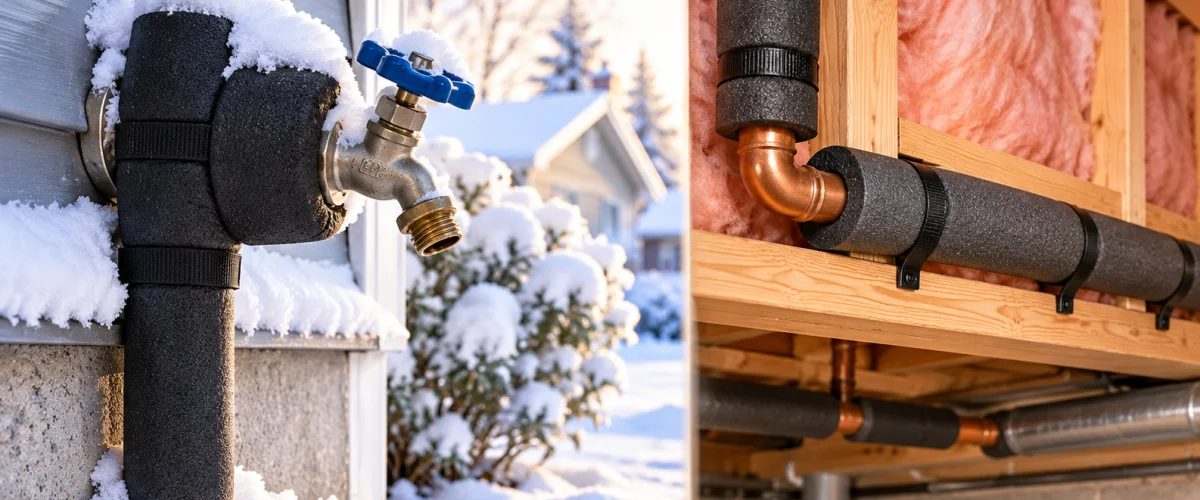
Pipe insulation slows the rate at which cold air draws heat out of the water inside a pipe. Foam pipe sleeves — pre-slit tubular foam that slips over the pipe — are a common insulation method sold at home improvement stores, and the Red Cross lists pipe sleeves among the products made to insulate water pipes. Self-sealing foam tape is an insulating product, not a heating one. Heat tape (also called heat cable) is different: it is a powered electrical product that adds heat, and it is not a substitute for insulation or an automatic extra layer beneath it. Some owners consider a heat cable for very exposed pipes, but only one rated for your pipe material and location, and only by following the current manual for the exact cable you own: pipe compatibility, whether it may touch or cross itself, whether insulation is required or prohibited, how to fasten it and what electrical protection it needs all differ by product — our roundup of the best heat tape and pipe heating cables covers powered cable options.
A sensible way to prioritize insulation is to start with the exposed pipes you identified: those in unheated crawl spaces and basements, in exterior walls you can reach from inside, and in garages. The Red Cross advises insulating both hot and cold water pipes in unheated areas. For a complete step-by-step walkthrough of the insulation process including which materials to use and how to seal around fittings and joints, see our dedicated guide to insulating pipes for winter.
Under-sink cabinets can be cold spots: the Red Cross lists kitchen cabinets among the unheated areas where water supply pipes freeze, and closed doors can keep warm air from reaching the pipes underneath. If those pipes run along an exterior wall, the cabinet can become a small cold pocket.
The Red Cross advises opening kitchen and bathroom cabinet doors to allow warmer air to circulate around the plumbing. Be sure to move harmful cleaners and household chemicals up out of the reach of children.
The American Red Cross advises that when the weather is very cold, you let the cold water drip from a faucet served by exposed pipes, noting that running water through the pipe, even at a trickle, helps prevent pipes from freezing.
Choose faucets served by pipes that run through the highest-risk areas, such as exterior walls, crawl spaces and unheated garages, and open the cold tap enough to let it drip or trickle.
Many homeowners turn the thermostat down at night or when leaving the house for extended periods — a reasonable energy-saving habit in normal conditions, but a risk factor for frozen pipes during cold snaps. Pipes in exterior walls, crawl spaces, and unheated basement areas are influenced by both the outdoor temperature and the indoor temperature. When the indoor temperature drops significantly at night, the buffer of warm air that keeps those marginal pipes above freezing shrinks or disappears.
The American Red Cross advises keeping the thermostat at the same setting day and night during very cold weather, and, if you will be away, leaving the heat on at no lower than 55°F. That may raise your heating bill, but the Red Cross notes it can prevent a much more costly repair. Treat 55°F as a floor, not a guarantee: pipes in exposed spots can still freeze in a house that is heated.
For vacation homes or investment properties left vacant through winter, a smart thermostat with remote temperature monitoring can alert you if the indoor temperature drops, but an alert does not prevent freezing: it only tells you that something needs attention, and someone still has to act on it. A heating failure in a vacant property can go unnoticed without monitoring.
Cold air infiltration can add to freeze risk. A pipe with good foam insulation around it can still freeze if cold outdoor air is flowing directly across it through an unsealed gap in the building envelope. Gaps around pipe penetrations — where supply lines pass through exterior walls, foundation sills, or rim joists — are common entry points for cold air that puts pipes at risk even when they appear to be well-insulated.
Check around every point where a pipe passes through an exterior wall or foundation. Even small gaps can let cold air reach a pipe and cool the air around it. Gaps can be sealed with products made for the purpose, such as expanding foam sealant or caulk; check that the product suits the gap and the material, and follow its instructions. Sealing these gaps can reduce both freeze risk and heat loss from those locations.
Rim joists — the structural framing at the top of your foundation walls where the floor structure meets the exterior wall — are another place where cold air can enter, and gaps around pipe penetrations there may never have been sealed. Check them when you inspect the crawl space or basement.
Outdoor faucets, hose bibs, and any dedicated supply lines to irrigation systems are among the pipes the Red Cross lists as freezing most frequently, because they are exposed to severe cold. Winterize them before cold weather arrives.
Disconnect and drain garden hoses before the first freeze of the season. For a conventional outdoor faucet whose interior shutoff valve you have identified, the American Red Cross advises removing, draining and storing hoses, closing the inside valve that supplies the faucet, opening the outside faucet to drain it, and keeping it open so that any water remaining in the pipe can expand without breaking it. If your faucet is frost-free, or you can’t identify which valve supplies it, follow the current instructions for your exact model or ask a plumber before operating any valve; hose guidance for frost-free models is model-specific. Our guide to winterizing outdoor faucets covers the steps.
Consider insulated foam faucet covers on outdoor spigots. A foam cover can slow heat loss from the faucet body, but it does not replace removing hoses and shutting off and draining a conventional faucet.
Irrigation lines. Drain irrigation and sprinkler supply lines following the system maker’s or installer’s directions. The Red Cross says not to put antifreeze in these lines unless directed.
Start by working out what you are dealing with. If you turn on a faucet and only a trickle comes out, the Red Cross says to suspect a frozen pipe; likely places include pipes against exterior walls or where the water service enters through the foundation. A frozen pipe may also have split or started to leak. If you see or hear water escaping, or find stains or pooling water, treat it as a possible leak or burst: don’t start thawing, and see the next section. If you suspect a frozen pipe and see no sign of a leak, the steps are as follows. The first thing to do is open the faucet and leave it open: the Red Cross says that as the frozen area begins to melt, water will begin to flow through it, and that running water through the pipe will help melt the ice.
Apply heat to the suspected frozen section. The Red Cross lists an electric hair dryer, an electric heating pad wrapped around the pipe, or towels soaked in hot water for accessible pipes, applying heat until full water pressure is restored. A portable space heater kept well away from flammable materials is another method the Red Cross lists. The Red Cross also says to check all other faucets in your home, because if one pipe freezes, others may freeze too.
When to call a plumber. The Red Cross says to call a licensed plumber if you are unable to locate the frozen area, if it is not accessible, or if you can’t thaw the pipe. A plumber can also assess whether the pipe has already been damaged.
A pipe that has already burst may not be immediately obvious, particularly if the rupture happened in a wall, floor, or crawl space. A leak may not show until a frozen section thaws, so check for signs of water after a cold snap. Knowing the warning signs helps you catch it quickly and limit the damage.
Water stains or wet spots appearing on walls, ceilings, or floors that weren’t there before the cold snap can be a sign of a leak. Stains can have other causes and do not by themselves prove a burst, but they warrant investigation; if you can’t find the source, ask a plumber.
A drop in water pressure, throughout the house or at one fixture, can also warrant investigation. It does not prove a burst: a frozen pipe or another problem can reduce flow too. For a reliable baseline reading of your home’s normal water pressure, our guide to the best water pressure gauges covers affordable options any homeowner can keep on hand.
The sound of running water when every fixture is closed can point to a leak somewhere in the system, and so can water pooling near a wall, baseboard or floor with no obvious source. Neither proves a burst, and both warrant investigation.
If a pipe has already burst, or if you’re dealing with a frozen section you can’t locate or safely access, a licensed plumber is the right call.
Find a licensed plumber in your area at PlumberArchive.com — the US plumber directory with 12,000+ verified local plumbers across all 50 states.
Get weekly plumbing tips, honest tool reviews and DIY maintenance guides delivered straight to your Facebook feed. We cover seasonal pipe protection, winter plumbing prep, leak repairs and everything in between — written for US homeowners who want to stay ahead of problems before they become emergencies.
There is no single outdoor temperature that marks a guaranteed safe or unsafe point for pipes. How cold it gets, how long it lasts and where the pipe runs all matter, and the Red Cross lists the pipes that freeze most frequently: those exposed to severe cold, such as outdoor hose bibs, those in unheated interior areas, and those against exterior walls with little or no insulation. Pipes that have never frozen before are not immune; they simply haven’t experienced the right combination of conditions yet, and a longer or colder event than previous winters is often all it takes.
The Red Cross advises letting cold water drip from a faucet served by exposed pipes when the weather is very cold outside; it does not address leaving a faucet dripping all winter. A drip uses some water and does not guarantee that a pipe will not freeze, so weigh that when deciding how long to keep it running. The other measures in this guide — insulation, open cabinet doors, steady heat and sealed air leaks — don’t depend on it.
Yes, if you suspect a frozen pipe: the Red Cross lists an electric hair dryer as one way to thaw an accessible pipe. Keep the faucet open while you work, apply heat until full water pressure is restored, and keep the dryer and its cord away from water. If you can’t locate or reach the frozen area, or can’t thaw the pipe, call a licensed plumber. A frozen pipe may also have split or be leaking; if you suspect a leak or burst, don’t try to thaw it.
Any pipe that runs through a space that isn’t heated by your home’s central heating system carries some freeze risk. The practical way to assess your specific home is to walk through it before winter with a flashlight and identify every pipe that is: in a crawl space or unheated basement, running along or through an exterior wall, in an unheated garage, or extending outside the building envelope (outdoor faucets and irrigation lines). These are your at-risk locations. A pipe in a heated interior space is less exposed than the locations above, though no location is guaranteed safe.
Preventing frozen pipes isn’t a single task — it’s five separate tactics that work together across your home’s full pipe layout. Insulation slows heat loss from exposed pipes. Open cabinet doors allow warm room air to reach under-sink supply lines against exterior walls. A slow faucet drip when the weather is very cold keeps water moving through exposed pipes, as the Red Cross advises. Consistent indoor heat helps keep pipes in exterior walls and crawl spaces from getting as cold. And sealing air gaps around pipe penetrations reduces the cold air that can reach pipes. None of these guarantees that a pipe will not freeze.
For the full step-by-step process of insulating your exposed pipes, our dedicated guide to insulating pipes for winter covers material selection and installation in detail, and our companion guide to winterizing outdoor faucets covers the exterior side of the same seasonal prep. If you’re dealing with a pipe that has already failed, our guide on how to fix a leaking pipe covers isolation and temporary repair while you wait for a plumber. And to know your home’s baseline water pressure so you can notice a drop in pressure that may warrant investigation, our picks for the best water pressure gauges cover affordable options worth having on hand before a cold season begins.
✍️ About This Guide
PTR Editorial Team — Plumbing Guides. We compare manufacturer specifications, installation requirements, compatibility and available product documentation to help homeowners choose suitable tools and parts. How we review →
What a compression sleeve puller is for, what its maker documents about 1/2 in (5/8 in OD) fit, and what to check before you choose one.
Check mount, sink thickness, clearances, drain, dishwasher and power before buying a replacement garbage disposal, using the makers' own documents.
Not sure which tool fits your faucet nut? Identify the fixing, see how it lets go and check your clearance first. Then choose a tool, or use one you own.

