Reviews
23 Sep 2026

5 Best Natural Gas & Propane Leak Detectors (2026) — Expert Reviews
Compare 5 top natural gas & propane leak detectors for 2026 — plug-in alarms vs handheld sniffers, tested for accuracy, price and home safety.
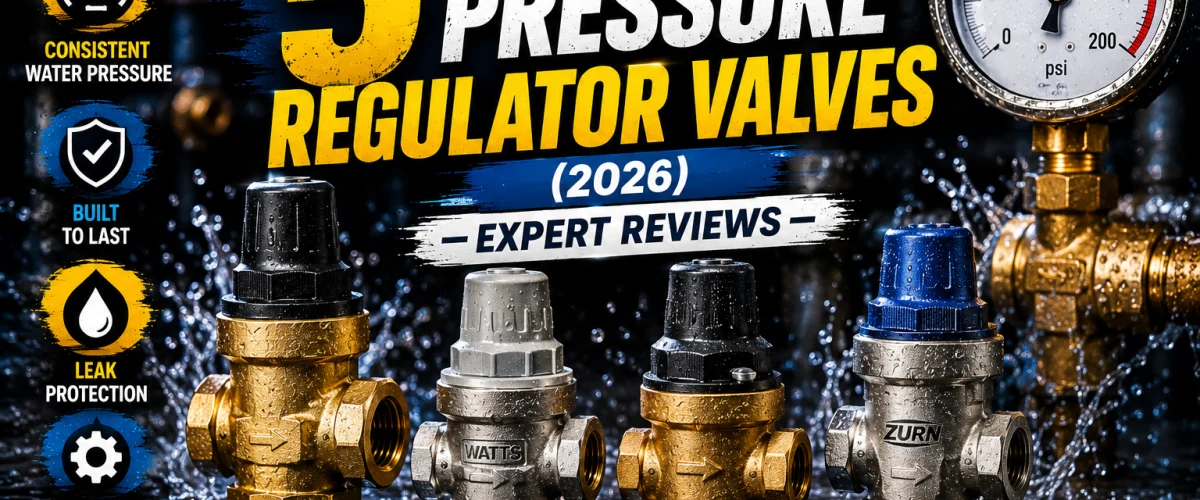
Expert reviews of the 5 best pressure regulator valves for 2026. We compare Watts LF25AUB-Z3, Watts LFN45B PEX, Cash Acme EB45, and more — with pros, cons, buying guide, and FAQ to help you protect your home's plumbing.
Please note: Product availability and information are based on our research at time of writing and are subject to change. Always check Amazon for the latest details before purchasing.
High water pressure is one of the most overlooked threats to a home’s plumbing system. When incoming pressure exceeds 80 PSI, pipes, fixtures, and appliances face chronic stress that shortens their lifespan, causes water hammer, and inflates water bills. A quality pressure regulator valve (PRV) keeps delivery pressure in the safe 45–65 PSI range — protecting everything downstream from your washing machine to your shower valves.
We tested and evaluated five leading PRVs to bring you this guide. Whether you’re replacing a failed regulator, installing one for the first time, or dealing with fluctuating municipal supply pressure, one of these five valves will solve your problem. For help diagnosing water pressure problems before you buy, see our guide to how to test your water pressure. And to verify your results after installation, check out our roundup of the best water pressure gauges.
✏️ Our Take
Most homeowners do best with the Watts LF25AUB-Z3 — it has the highest flow capacity in this lineup and a replaceable cartridge that avoids a full valve swap down the road. If your home runs PEX, the Watts LFN45B connects natively without adapters. If you want the fastest, tool-free DIY install, the push-to-connect Cash Acme EB45 goes in without soldering or threading. If long-term serviceability at the lowest price in this lineup matters most, the double-union Cash Acme EB45 is the pick, and the Watts LFN45BM1-U is a solid entry-level option if you just want reliable, no-drama performance from a trusted brand.
IN THIS GUIDE
| Product | Rating | Best For | Price |
|---|---|---|---|
| Watts LF25AUB-Z3 BEST OVERALL |
★★★★★ | Highest flow capacity, replaceable cartridge | $$$ |
| Watts LFN45B PEX | ★★★★★ | Professional PEX installs | $$$ |
| Cash Acme EB45 Push-to-Connect | ★★★★★ | DIY-friendly, no-tools replacement | $$$ |
| Cash Acme EB45 Double Union NPT | ★★★★☆ | Best value with serviceability | $$ |
| Watts LFN45BM1-U | ★★★★☆ | Budget reliability | $$$ |
🏆 Best Overall
The Watts LF25AUB-Z3 is the gold standard for residential pressure regulation in the US. Built from lead-free brass and tested to NSF/ANSI 61 and 372 standards, this valve is certified safe for potable water applications and handles incoming municipal pressures up to 300 PSI. Its field-adjustable range of 25–75 PSI gives homeowners and plumbers full flexibility to dial in the exact delivery pressure the home requires.
What separates the LF25AUB-Z3 from cheaper options is its integral bypass seat and replaceable cartridge design. When the cartridge eventually wears — typically after a decade or more of service — you can swap it out without cutting the supply line or unthreading the valve body. It’s available in ½”, ¾”, and 1″ NPT sizes, and of all five valves we tested, it has the highest flow capacity — important for homes with multiple bathrooms and simultaneous demand.
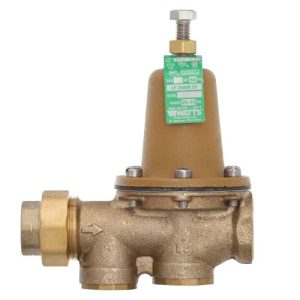
Watts
Best for: Best overall pick
In StockThe gold standard for residential pressure regulation — lead-free brass, NSF/ANSI 61 and 372 certified, with a replaceable cartridge and the highest flow capacity in this lineup.
on Amazon · $$$
Last updated: 2026-09-19
👷 Pro Choice
For homes with PEX piping — which accounts for the majority of new residential construction across the US — the Watts LFN45B is the professional installer’s go-to pressure reducing valve. The valve is purpose-built with PEX crimp connections integrated into the body, eliminating the need for threaded adapters and reducing potential leak points in the system. The lead-free brass body carries full NSF/ANSI 61 and 372 certification.
The LFN45B uses the same proven spring-and-diaphragm design as the broader Watts N45 series, factory-set to 50 PSI with an adjustment range of 25–75 PSI. Professional plumbers appreciate the compact form factor, which fits into tight mechanical rooms and basement installations without issue. The integrated inlet strainer captures sediment and debris before it reaches the valve seat — protecting the diaphragm and extending service intervals compared to valves without this feature.
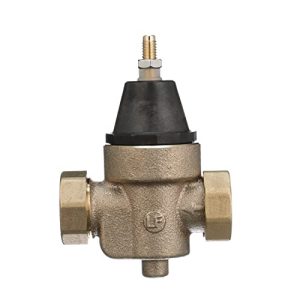
Watts
Best for: Professional PEX installs
In StockThe professional installer's go-to PRV for PEX homes — native PEX crimp connections, an integrated inlet strainer, and full NSF/ANSI 61 and 372 certification.
on Amazon · $$$
Last updated: 2026-09-19
⭐ Our Top Pick
If you want to replace a pressure regulator valve without soldering, threading, or special tools, the Cash Acme EB45 Push-to-Connect is exactly what you need. The push-fit SharkBite-compatible connection works with copper, CPVC, and PEX pipe — push the pipe in, it locks, and you’re done. No crimp rings, no thread tape, no torch. For a confident DIYer replacing an old PRV on a weekend afternoon, this valve gets the job done quickly, cleanly, and reliably.
The EB45 uses the same proven diaphragm-and-spring design found across the entire Cash Acme EB series. It ships factory-set to 50 PSI with a 25–75 PSI adjustment range, and the brass body is lead-free and NSF 61 certified for potable water use. One consideration: push-fit connections, while highly reliable, are best suited to accessible installations where they can be inspected periodically — for permanent in-wall applications, a threaded or soldered connection is generally preferred by code inspectors.
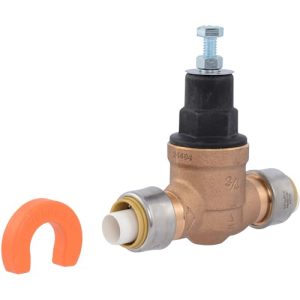
Cash Acme
Best for: DIY-friendly replacement
In StockThe easiest DIY pressure regulator swap in this lineup — a push-fit, SharkBite-compatible connection that works with copper, PEX, and CPVC with no soldering, threading, or special tools.
on Amazon · $$$
Last updated: 2026-09-19
💰 Best Value
The Cash Acme EB45 Double Union NPT takes a practical approach to long-term ownership: double union ends let you remove the valve body from the line without cutting pipe or unthreading live connections. You simply unscrew the unions on each side, swap the valve, and reconnect — a five-minute job. For properties with older plumbing where future valve replacement is a certainty, this design pays dividends over the years and substantially reduces the cost of ongoing maintenance.
The NPT threaded connections are compatible with all standard pipe materials via off-the-shelf fittings, and the valve carries the same lead-free NSF 61 certification as the rest of the EB45 series. While the flow coefficient is slightly lower than the LF25AUB-Z3, it’s more than sufficient for most residential mains up to ¾”. At its price point, the double union design makes this the standout value pick for homeowners who want professional-level serviceability without the professional price tag.
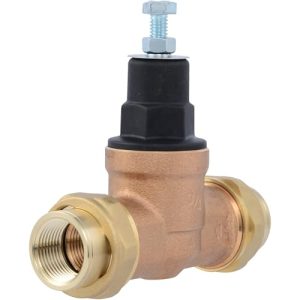
Cash Acme
Best for: Best value with serviceability
In StockA serviceability-first PRV — double union ends let you pull the valve body for replacement in minutes without cutting pipe or unthreading live connections.
on Amazon · $$
Last updated: 2026-09-19
🎯 Staff Pick
The Watts LFN45BM1-U is the entry point to the trusted Watts N45 PRV family. It carries the same lead-free designation and NSF 61 certification as its more expensive siblings, but strips back to the essentials: a solid brass body, adjustable diaphragm, and standard NPT connections. For rental property owners managing multiple units, or for plumbers installing a secondary regulator in a pressure zone that’s already moderate, this valve consistently delivers without drama.
One standout characteristic is its quiet operation. At the target 50 PSI output setting, the LFN45BM1-U virtually eliminates water hammer and the intermittent ticking sound that some diaphragm regulators produce at lower pressures. The adjustment locknut also holds the preset more securely than comparably priced competitors — pressure creep after a few months of service is minimal. For a budget PRV, it punches well above its weight class in day-to-day performance.
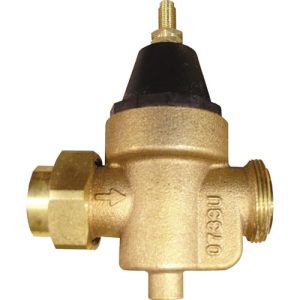
Watts
Best for: Budget reliability
UnknownA budget entry point into the trusted Watts N45 PRV family — a solid lead-free brass body with notably quiet operation and minimal pressure creep over time.
on Amazon · $$$
Last updated: 2026-09-19
Not all pressure regulator valves are created equal. Here are the five factors that matter most when selecting a PRV for your home.
The most important compatibility factor is how the PRV connects to your existing pipe. NPT threaded valves (like the LF25AUB-Z3 and the EB45 Double Union) work with copper, galvanized, and any other pipe material via standard threaded fittings — they’re the most universal option. PEX crimp connections (like the LFN45B) are purpose-built for PEX homes and require a crimp ring tool. Push-to-connect valves (like the EB45 PTC) offer tool-free installation compatible with copper, PEX, and CPVC. Always match the valve’s connection type to your home’s pipe material for the cleanest, most code-compliant installation.
Most residential PRVs are factory-set to 50 PSI, which falls in the middle of the 45–65 PSI range recommended by the Uniform Plumbing Code. All five valves in this roundup are adjustable between 25–75 PSI, giving you room to fine-tune delivery pressure for your specific fixture layout. If your municipality delivers water at very high pressure — over 150 PSI — confirm the valve is rated for high inlet pressure (all five picks here handle up to 300 PSI). For guidance on checking your current supply pressure, see our guide to testing your water pressure, and our companion guide on how to adjust a pressure regulator valve once it’s installed.
Since January 2014, US federal law under the Reduction of Lead in Drinking Water Act requires all plumbing components in contact with potable water to meet NSF/ANSI 61 and 372 (lead-free) standards. All five valves in this roundup comply. When shopping independently, always check for the NSF certification mark on the product listing or packaging — do not assume compliance based on brand name alone, especially for older stock that may have been sitting in a warehouse before the regulations took effect.
The Cv value measures how much water a valve can pass at a given pressure differential. A higher Cv means greater flow capacity — critical for larger homes with multiple bathrooms and simultaneous fixture demand. For a 1″ main serving a three- or four-bedroom house, look for a Cv of at least 4.0. For standard ½” or ¾” installations with typical residential demand, a Cv of 2.5–3.5 is sufficient. Our top pick, the Watts LF25AUB-Z3, leads the group in flow capacity and is the right call for high-demand homes.
Quality PRVs typically last 10–15 years before the diaphragm or cartridge wears out. When choosing a valve, consider how easy future servicing will be. The Watts LF25AUB-Z3 has a user-replaceable cartridge that swaps out without removing the valve from the line. The Cash Acme EB45 Double Union NPT lets you pull the entire valve body in minutes via its union connections. The simpler the future service, the lower your total cost of ownership. If you’d rather leave installation and maintenance to a professional, see the PlumberArchive box below to find a licensed plumber near you.
Pressure regulator valve installation often involves shutting off the main supply and soldering or threading connections into existing pipe. If you’d rather leave it to a professional, search PlumberArchive.com — the US plumber directory with 12,000+ verified plumbers across all 50 states.
Get weekly plumbing tips, honest tool reviews and DIY guides delivered to your Facebook feed.
A pressure regulator valve (PRV) reduces the high incoming water pressure from the municipal supply — which can reach 100–150 PSI or more in many US cities — down to a safe delivery level for your home’s plumbing, typically 45–65 PSI. Without a PRV, excessive pressure damages pipes over time, causes water hammer (the banging noise you hear when taps are turned off), shortens the lifespan of appliances like washing machines and dishwashers, and drives up your water usage. Most US building codes require a PRV whenever the municipal supply pressure exceeds 80 PSI.
The Uniform Plumbing Code sets a maximum delivery pressure of 80 PSI, but most plumbing professionals recommend setting your PRV to 50–60 PSI for the best balance between flow performance and equipment protection. The ideal setting also depends on your home’s layout — upper-floor fixtures naturally receive lower pressure due to elevation, so a slightly higher setting (55–60 PSI) can improve shower performance upstairs without over-pressurizing lower-floor fixtures. Use a pressure gauge on an outdoor hose bib to verify your actual delivery pressure after adjusting. See our water pressure gauge recommendations for the right measuring tool.
A quality PRV from a reputable brand like Watts or Cash Acme will typically last 10–15 years under normal residential conditions. Warning signs that your PRV is wearing out include fluctuating water pressure throughout the day, a gradual increase in pressure over time, water leaking from the valve body, or an increase in water hammer that wasn’t there before. Annual pressure checks with a gauge will catch pressure creep early — before a failing valve causes downstream damage to pipes and appliances. If you’re unsure whether pressure problems are coming from the PRV or the municipal supply, our guide to testing your water pressure walks you through the process.
Yes — with some basic plumbing experience, most homeowners can replace an existing PRV themselves. The simplest DIY option is the push-to-connect Cash Acme EB45, which requires no soldering, no threading, and no special tools beyond what you need to shut off the main supply. For NPT-threaded installations you’ll need pipe wrenches and PTFE tape; for PEX installations a crimp ring tool and crimp rings are required. Always shut off the main supply and drain the line before starting. If the main shutoff valve is also failing, or if the installation involves reconfiguring pipe runs, it’s worth calling a licensed professional — find one near you at PlumberArchive.com.
Looking for our top recommended tools in one place? Browse our curated Amazon Storefront →
Installing a quality pressure regulator valve is one of the highest-return maintenance investments you can make in your home. The cost of a PRV is a small fraction of what a burst pipe, failed appliance, or corroded fixture will cost to repair — and in areas with aggressive municipal supply pressure, the valve typically pays for itself in reduced water bills within a year or two.
Our top overall recommendation is the Watts LF25AUB-Z3 — it offers the best combination of flow capacity, adjustability, long-term serviceability, and NSF certification in a lead-free package. If your home uses PEX piping, the Watts LFN45B PEX is the professional-grade native choice. For the most tool-free DIY installation available, the Cash Acme EB45 Push-to-Connect is unmatched. The Cash Acme EB45 Double Union NPT is now the genuinely cheapest valve in this lineup, and its double-union serviceability makes it the best-value pick by a comfortable margin. And for reliable everyday performance from a trusted brand at an accessible entry-level price, the Watts LFN45BM1-U delivers.
Whichever valve you choose, pair it with a quality pressure gauge to verify your results after installation — see our current picks in our best water pressure gauges roundup.
If pressure spikes cause banging pipes, the best water hammer arrestors address that directly; and if your incoming pressure is too low rather than too high, see the best water pressure booster pumps.
Prices and ratings may change. Always check Amazon for current prices.
✍️ About This Review
Reviewed by James Carter, Senior Tool Reviewer at PlumbingToolsReview — 15 years of hands-on experience in residential plumbing and tool testing. Learn how we test →
Compare 5 top natural gas & propane leak detectors for 2026 — plug-in alarms vs handheld sniffers, tested for accuracy, price and home safety.
5 septic tank riser kits compared for 2026 — Tuf-Tite and Polylok risers by diameter and height, so you can bring tank access to grade level.
The 5 best sewage and effluent ejector pumps for 2026, expert-reviewed: grinder, standard solids-handling and light-duty effluent pumps compared.

