Please note: Product availability and information are based on our research at time of writing and are subject to change. Always check Amazon for the latest details before purchasing.
Introduction
Self-fusing silicone repair tape is not the same product as PTFE thread seal tape — and that distinction matters before you buy. PTFE tape goes on pipe threads during fitting assembly to seal a joint. Self-fusing silicone tape goes on the outside of an already-assembled pipe or hose to stop an active leak on the pipe body itself. It stretches and bonds directly to itself as you wrap it under tension, creating a watertight seal with no adhesive, no heat and no waiting for anything to cure. The result is a repair you can make in under two minutes on a live leak with nothing but the roll in your hand.
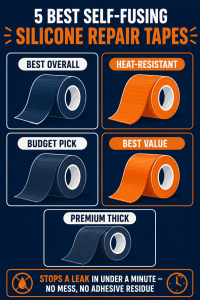
This roundup covers five of the best self-fusing silicone repair tapes available in 2026, ranked by buyer demand, thickness, roll length and real-world repair performance. Every product here targets a specific need — whether that’s maximum roll length for multiple repairs, extra thickness for high-pressure lines, or a budget short roll for occasional household emergencies. Once the immediate leak is contained, our guide to how to fix a leaking pipe covers the proper follow-through repair options, and our guide to the best pipe repair kits covers the permanent clamp and fitting options for the next step. If you’re weighing tape against a clamp or epoxy for the follow-up fix, our comparison of pipe repair clamp vs tape vs epoxy breaks down which approach suits which type of damage.
✏️ Our Take
Self-fusing silicone tape is the single most useful emergency repair item a homeowner can keep on hand — it stretches, bonds to itself rather than the pipe surface, and creates a genuinely watertight seal in under a minute with no mess, no curing time, and no adhesive residue. The key word is emergency: this buys you time to shut off water and call a plumber, or to source a proper repair clamp or replacement fitting, not a permanent fix for a failing pipe. Keep a roll in a kitchen drawer and a garage shelf — you’ll use it sooner than you expect.
Quick Comparison Table
Full Reviews — 5 Best Self-Fusing Silicone Repair Tapes
1. XFasten Self Fusing Silicone Tape Waterproof, Black, 1″ x 36 Feet — Best Overall
🏆 Best Overall
What sets the XFasten apart from every other product in this roundup is the combination of maximum roll length and the lowest price tier here — a 1-inch by 36-foot roll built for US homeowners across plumbing pipe sealing, garden hose repair and general waterproofing emergencies. The self-amalgamating silicone rubber construction bonds to itself under tension rather than adhering to the pipe surface, which means no adhesive residue when the wrap is eventually removed and a proper repair installed.
The 36-foot roll length is a meaningful differentiator at this price tier — at four to six overlapping wraps per repair, a single roll covers multiple repairs rather than being consumed by one. This makes it the most cost-effective option for households that want to keep one roll on hand indefinitely rather than buying a new roll each time they use it. The black color works well for outdoor, underground and exposed pipe applications. If you’re dealing with a cracked fitting or a failed compression joint rather than a pipe body leak, our guide to fixing a leaking pipe covers the full range of permanent repair approaches once the emergency is contained.
- Black color suits outdoor, underground and exposed pipe applications
- 36-foot roll — covers multiple repairs at four to six wraps each from a single purchase
- Self-amalgamating silicone rubber — bonds to itself, leaves no adhesive residue on the pipe surface
- Rated for plumbing pipe sealing and garden hose repair from one product
- $ price tier — maximum roll length at the lowest price point in this roundup
✓ Pros
Black color suits outdoor, underground and exposed pipe applications
36-foot length covers multiple repairs from one roll
Self-fusing bond creates a watertight seal without adhesive residue
Works on both plumbing pipes and garden hoses
✗ Cons
Black color only on this specific listing — less discreet on light-colored pipe
Like all self-fusing tape, this is a temporary fix, not a permanent pipe repair
💡 Tip: Apply with the tape stretched to roughly half its original width as you wrap — that tension is what activates the self-fusing bond. Unstretched tape laid loosely will not seal properly regardless of how many layers you apply.
🛒 Check Price on Amazon — $ →
2. Self-Fusing Silicone Tape 1″ x 36′ x 20mil, Heat-Resistant Emergency Repair Tape — Best Multi-Use
🎯 Best Multi-Use
★★★★☆
Best Multi-Use Pick
This 20mil self-fusing silicone tape earns its multi-use position through a specification list that extends meaningfully beyond standard plumbing repair. Heat resistance is the differentiating property here — where standard self-fusing tape is suited for cold and warm water pipe repairs, a heat-resistant formulation handles hot water supply lines specifically, which run hot enough in some configurations to degrade a tape not rated for elevated temperatures. This tape is built for a broad audience that spans plumbing emergencies, automotive hose repairs and electrical cable insulation in a single product.
The 20mil thickness is the industry standard for residential repair applications — it provides a solid sealing layer with four to six overlapping wraps without building up so much material that the wrap becomes stiff or difficult to apply in a tight space. At 36 feet per roll, the length matches the XFasten tape, making it equally suitable for multi-repair households. The chemical resistance claim extends its usefulness beyond water lines to fuel hoses, chemical-exposed outdoor plumbing and irrigation connections. If your repair involves a supply line rather than a drain line, see our guide to the best pipe repair kits for the follow-up permanent fix options.
- Serves plumbing emergencies, automotive hose repairs and electrical cable insulation from one roll
- Heat resistance rated specifically for hot water pipe repairs — a meaningful spec beyond standard silicone tape
- 20mil thickness — industry standard for residential plumbing and hose repair applications
- 36-foot roll — same coverage as the XFasten tape at the same price tier
- Chemical resistance extends use to automotive, fuel and outdoor irrigation applications
✓ Pros
Serves plumbing emergencies, automotive hose repairs and electrical cable insulation from one roll
Heat resistance makes it suitable for hot water pipe repairs specifically
20mil thickness provides extra durability over thinner tapes
Doubles as automotive and electrical repair tape for genuine multi-purpose value
✗ Cons
Marketed broadly across multiple use cases rather than plumbing-specific
No-residue claim should still be tested on a small area first on delicate surfaces
🛒 Check Price on Amazon — $ →
3. Copatocacy Self-Fusing Silicone Sealing Tape, Waterproof Repair Tape for Hose, Pipe — Budget Pick
👷 Budget Pick
The Copatocacy tape occupies a genuinely useful position in this roundup: a 5-foot roll that covers exactly one or two single-leak repairs for occasional household use, at the lowest cost entry point in this comparison. Not every homeowner needs 36 feet of silicone repair tape — most leak emergencies involve a single cracked hose, a split pipe section or a pinhole in a supply line, and five feet is sufficient for multiple tight wraps around a short damaged section. The shorter format meets a real need rather than being a compromise — plenty of leak emergencies simply don’t call for 36 feet of tape.
The 20mil thickness matches the standard used by the multi-use pick — it’s not a thinner, weaker tape despite the budget positioning. Applications are straightforward: hose and pipe body repairs, electrical cable insulation and general waterproofing where a short section of tape is all that’s needed. The lower cost also makes it a practical choice for keeping one roll in a kitchen junk drawer and one in a garage shelf without spending significantly on each. For a complete walkthrough of what to do after the immediate leak is contained, see our guide to fixing a leaking pipe permanently.
- Five feet is enough for three to four tight wraps around a typical half-inch pipe
- 5-foot roll — genuinely useful for occasional single-repair households without excess waste
- 20mil thickness — matches the standard spec of the more expensive options in this roundup
- Rated for hose, pipe and electrical cable leak repair from a single product
- Lowest cost entry point in this roundup — practical for keeping multiple stashed locations
✓ Pros
Five feet is enough for three to four tight wraps around a typical half-inch pipe
Shorter 5-foot roll is genuinely useful for occasional single-repair households
High-strength leak fix wrap rated for both hose and pipe applications
Lowest cost entry point in this roundup
✗ Cons
Shorter roll length means less material for larger or multiple repairs
Lower star rating than the premium options in this roundup
💡 Tip: A 5-foot roll is enough for three to four tight repair wraps around a typical half-inch pipe — measure the damaged section before buying to confirm a short roll covers what you need.
🛒 Check Price on Amazon — $ →
4. CLAVICHORD Seal Self Fusing Silicone Tape, 1 Inch x 15 Feet, Weatherproof — Best Value
💰 Best Value
The CLAVICHORD tape hits the most useful mid-length option in this roundup — 15 feet provides enough material for multiple repairs without the excess of a 36-foot roll for homeowners who repair occasionally rather than routinely. The 15-foot format genuinely suits homeowners who find the budget 5-foot roll too short and the 36-foot option more than they need. The weatherproof rating covers both indoor supply line repairs and outdoor irrigation, garden hose and exterior pipe repairs, making it a genuinely dual-use product without claiming heat or chemical resistance it doesn’t specifically offer.
What pushes this to best value positioning is the balance between roll length, verified waterproofing performance and price tier relative to the budget pick — 15 feet at the $ price tier delivers meaningfully more material than the 5-foot budget option without the premium of stepping up to the 36-foot rolls. Buyers reviewing this product specifically cite waterproofing performance, which is the core requirement for emergency pipeline and hose repair use. See our guide to the best pipe repair kits for the permanent repair options to have ready alongside this tape.
- Suits homeowners who repair occasionally rather than routinely, without excess unused tape
- 15-foot length balances value against the shortest budget rolls — covers multiple repairs without excess
- Weatherproof rating suits both indoor and outdoor pipe and hose repairs
- Buyers specifically note positive waterproofing performance in reviews
- $ price tier for a mid-length roll — best length-to-cost ratio in this roundup
✓ Pros
Suits homeowners who repair occasionally rather than routinely, without excess unused tape
15-foot length balances value against the shortest budget rolls
Weatherproof rating suits both indoor and outdoor pipe repairs
Positively reviewed specifically for waterproofing performance
✗ Cons
Mid-length roll may run short on larger pipe diameters needing multiple wraps
Single color option on this listing
🛒 Check Price on Amazon — $ →
5. Proxicast Pro-Grade Extra Strong 30mil Weatherproof Self-Fusing Silicone Rubber Sealing Tape — Premium Pick
⭐ Premium Pick
The Proxicast takes two specifications beyond the standard in this category: 30mil thickness instead of the 20mil used by every other option here, and a 1.5-inch width rather than the 1-inch standard. The extra thickness is not a marketing claim — 30mil silicone is noticeably stiffer and more resistant to puncture and sustained pressure than 20mil tape, which makes it the appropriate choice for high-pressure supply line repairs, heavy-duty garden hose fittings and automotive hydraulic and fuel hose applications where failure of the repair tape has more serious consequences than a residential cold water pipe leak. The wider 1.5-inch format covers more surface area per wrap, reducing the number of passes needed to build a complete seal over a longer damaged section.
With the highest star rating in this roundup, the Proxicast is the tape for buyers willing to pay the $$ premium for the extra thickness margin. The 15-foot roll length is shorter than the two 36-foot options at the $ tier, but for the applications where 30mil thickness is genuinely needed, 15 feet is typically more than sufficient for the repair at hand. This is the tape for homeowners who want the strongest possible temporary seal on a high-pressure line rather than the maximum roll length for occasional routine repairs. If you’re deciding between a tape repair and a clamp repair for a pressurized line, our guide to the best pipe repair kits covers the permanent clamp options alongside this emergency approach.
- Suited to high-pressure supply lines, heavy-duty hose fittings and automotive hydraulic and fuel hose repairs
- 30mil thickness — noticeably thicker than standard 20mil tapes for tougher seals under sustained pressure
- 1.5-inch width — covers more surface area per wrap, reducing passes needed over larger damaged sections
- Highest star rating in this roundup
- $$ price tier — justified by the extra-thickness specification over standard 20mil options
✓ Pros
Suited to high-pressure supply lines, heavy-duty hose fittings and automotive hydraulic and fuel hose repairs
30mil thickness is noticeably thicker than standard 20mil tapes for tougher seals
Wider 1.5-inch width covers more surface area per wrap
Highest star rating in this roundup
✗ Cons
Higher price point than standard-thickness alternatives
Shorter 15-foot length than the top-volume pick despite the premium price
💡 Tip: The wider 1.5-inch format makes the Proxicast particularly effective on larger-diameter pipes — it builds a complete wrap faster than 1-inch tape on anything above three-quarter-inch pipe diameter.
🛒 Check Price on Amazon — $$ →
Buying Guide — Self-Fusing Silicone Repair Tape
Self-fusing silicone tape vs PTFE thread seal tape — different problems, different tape
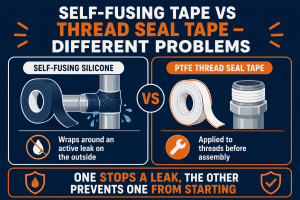
If you’ve already read our guide to the best thread seal tape, it’s worth being clear upfront: PTFE tape and self-fusing silicone tape solve completely different problems. PTFE tape is applied to pipe threads during fitting assembly — you wrap it on the male threads before screwing on a coupling or valve to create a compression seal at the joint. It’s used on dry threads before any water is present. Self-fusing silicone tape is applied to the outside of an already-assembled pipe or hose to seal a crack, pinhole or split on the pipe body itself. The pipe is already in service, possibly actively leaking, and the tape bonds over the leak from the outside.
Using thread seal tape on an active pipe body leak will not work — it won’t adhere under water pressure and has no sealing properties on a smooth pipe surface. Using self-fusing silicone tape on a pipe thread joint is equally the wrong tool. Identify which problem you have before purchasing: thread leaking at a fitting = PTFE tape; pipe body cracked or split = self-fusing silicone tape.
How thick should your tape be? 20mil vs 30mil
All but one product in this roundup use 20mil tape — this is the standard residential thickness and it provides a genuinely watertight seal on pinhole leaks, hairline cracks and damaged hose sections with four to six overlapping wraps under tension. For typical home plumbing emergencies involving cold or warm water supply lines, domestic hot water pipes and garden hoses, 20mil is entirely sufficient.
The Proxicast at 30mil creates a noticeably thicker and stiffer seal that resists puncture and sustained pressure better than 20mil tape. That extra material matters for high-pressure residential supply lines (lines carrying full municipal or well pressure rather than downstream of a pressure regulator), automotive hydraulic and fuel hoses, and any application where tape failure has consequences beyond a manageable slow leak. For most homeowners, 20mil is the correct choice. Choose 30mil when the pressure or criticality of the line warrants the extra margin.
Emergency fix vs permanent repair — setting the right expectations
Every product in this roundup is marketed as an emergency or temporary repair option, and that characterization is accurate. A well-applied silicone tape wrap can hold a pressurized residential pipe for an extended period — but there’s no specification that tells you when it will fail, and it does not address the underlying cause of the crack or split. Pipes crack because they’re old, corroded, frozen, mechanically damaged or under excessive pressure. The tape covers the symptom, not the cause.
The correct use of self-fusing silicone tape is to stop an active leak long enough to shut off the water at the main supply valve, arrange a qualified plumber visit, or source a proper replacement fitting, pipe section or repair clamp. See our guide to the best pipe repair kits for the permanent clamp options and our complete walkthrough on how to fix a leaking pipe properly once the emergency is contained.
US regional note: In cold-climate states like Minnesota, Wisconsin, Michigan and across the Northeast, self-fusing silicone tape is a genuinely useful first response to a pipe that’s just started leaking after a freeze-thaw crack — it can stop the immediate leak long enough to shut off the water supply and arrange a proper repair, especially valuable during winter storms when plumbers are in high demand.
Need a Licensed Plumber?
Self-fusing tape is the right emergency response — but a pipe that has cracked once is telling you something about its condition. If the leak is on an older section of galvanized, copper or PEX pipe, a licensed plumber can assess whether a single repair is sufficient or whether the section needs full replacement before the next failure happens.
Find a licensed plumber in your area at PlumberArchive.com — the US plumber directory with 12,151+ verified local plumbers across all 50 states.
Find a trusted plumber near you → PlumberArchive.com
Follow Us on Facebook
Get weekly plumbing tips, honest tool reviews and DIY repair guides delivered straight to your Facebook feed. We cover emergency repairs, pipe maintenance, drain tools and everything in between — written for US homeowners who want to handle more themselves.
Follow PlumbingToolsReview on Facebook →
Frequently Asked Questions
Q: Is self-fusing silicone tape a permanent pipe repair?
No — every product in this roundup is accurately described as a temporary or emergency repair solution. A well-applied wrap can hold a pressurized pipe for days, weeks or potentially longer depending on the pressure, pipe condition and the nature of the original leak, but there’s no reliable way to know when it will fail. It does not repair the underlying pipe damage — it covers it. The correct next step after applying silicone tape is to shut off the water at the main supply valve, assess the pipe condition, and either install a proper repair clamp, replace the damaged pipe section, or have a licensed plumber evaluate whether the pipe is safe to continue using. See our guide to the best pipe repair kits for the permanent follow-up options.
Q: Does self-fusing silicone tape work on pressurized pipes?
Yes, with caveats. Self-fusing silicone tape can seal a leak on a pressurized residential water supply line — standard residential water pressure runs between 40 and 80 psi, which is within the operating range of quality silicone tape when applied correctly. The key factors are: the leak must be a pinhole, hairline crack or small split rather than a burst pipe; the tape must be applied stretched under tension and with multiple overlapping wraps; and the pipe surface must be as dry as possible before application even if the pipe is actively weeping. On very high-pressure lines or a fully ruptured section, tape alone will not hold. For lines under higher pressure, the 30mil Proxicast provides a stronger seal margin than 20mil options.
Q: How long does self-fusing silicone tape last once applied?
There is no reliable specification for how long a silicone tape wrap will last on a pressurized pipe in service, because it depends on the pressure, water temperature, the nature of the original crack and how cleanly the tape was applied. Manufacturers market it as an emergency or temporary fix specifically because the longevity is not predictable enough to claim otherwise. In practice, a well-applied wrap on a cold water residential supply line may hold for weeks or months — but treating it as anything more than a temporary measure until a proper repair is made is not sound practice. Do not use self-fusing tape as a long-term repair on any line you can’t regularly inspect.
Q: Can I use self-fusing silicone tape on hot water pipes?
Standard self-fusing silicone tape can tolerate moderate heat, but hot water supply lines in residential plumbing run at temperatures that can stress a standard silicone tape wrap over time. If you’re repairing a pipe that carries domestic hot water — typically between 120°F and 140°F in a US water heater system — choose a tape specifically rated for heat resistance, such as the second pick in this roundup. Applying a standard-rated tape to a continuously hot pipe is not recommended as a practice even temporarily. On pipes downstream of a mixing valve or cold-blended supply, standard silicone tape is generally appropriate. When in doubt, check the product’s temperature rating before applying to any hot line.
Conclusion — Which Self-Fusing Silicone Repair Tape Should You Buy?
For most US homeowners, the XFasten 1″ × 36-foot roll is the straightforward answer — the maximum roll length in this roundup at a $ price tier that makes it the most cost-effective option for long-term emergency readiness. The 36-foot format means a single purchase handles multiple repairs over time rather than being consumed by one, and the self-amalgamating silicone bond works without adhesive or residue on either plumbing pipe or garden hose repairs. Keep one roll in the kitchen and one in the garage and you’ve covered the most common household pipe emergencies.
If your repairs regularly involve hot water supply lines, the heat-resistant multi-use tape is the more appropriate choice at the same $ price tier — its specific heat and chemical resistance rating addresses applications where standard silicone tape’s limitations matter. Occasional users who only need coverage for one or two repairs are well served by the Copatocacy 5-foot budget pick or the CLAVICHORD 15-foot value option. And for high-pressure line repairs or applications where the strongest possible temporary seal is warranted, the Proxicast 30mil is the only option in this roundup that delivers that specification.
Remember that every tape in this roundup is a temporary measure. Once the immediate leak is stopped, our complete guide on how to fix a leaking pipe walks through the permanent repair options, and our guide to the best pipe repair kits covers the clamps and fittings that turn an emergency patch into a lasting repair.
✍️ About This Review
PTR Editorial Team — Product Reviews. We compare manufacturer specifications, installation requirements, compatibility and available product documentation to help homeowners choose suitable tools and parts. How we review →