Please note: Product availability, pricing and insurance discount terms are based on our research at time of writing and are subject to change. Always confirm current specifications and discount eligibility before purchasing.
Introduction
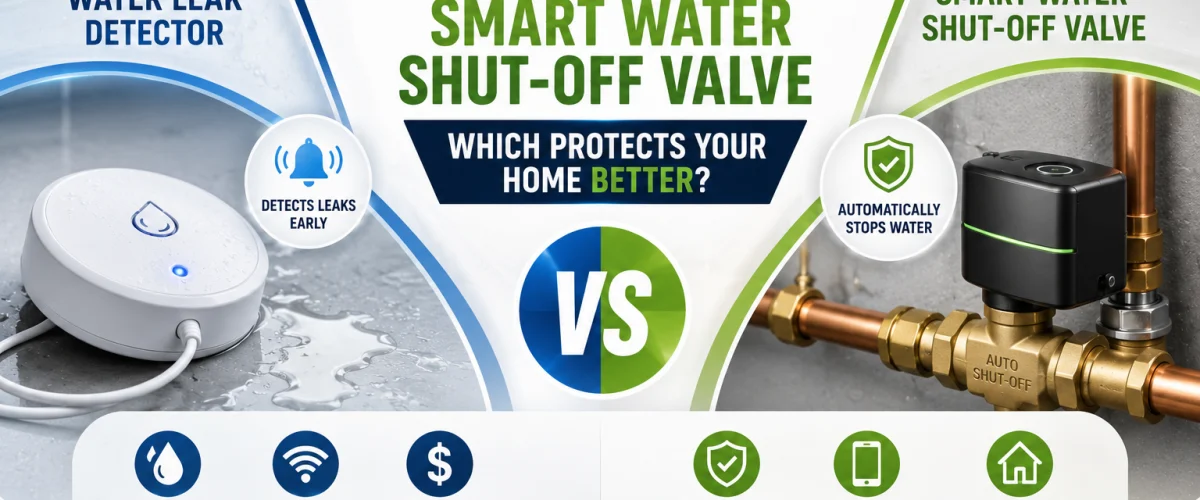
Both a water leak detector and a smart water shutoff valve exist to prevent water damage, but they intervene at completely different points in the process. One tells you a leak is happening; the other stops it. That distinction sounds small, but it drives nearly every other difference between the two devices — cost, installation complexity, and how much protection you actually get while you’re asleep or away from home.
This comparison covers the practical differences a US homeowner needs to weigh when deciding between them in 2026 — how each device works, what it costs to buy and install, and which one fits your specific situation. If you haven’t yet confirmed you have a leak, our guide to detect a water leak covers the diagnostic steps first. And if you land on a leak detector as the right fit, our roundup of the best water leak detectors covers the specific models worth buying.
✏️ Our Take
A water leak detector is a sensor — it tells you a leak is happening, but you still have to act on that alert, whether you’re home or not. A smart water shutoff valve goes a step further: it doesn’t just detect a leak, it automatically shuts off your home’s main water supply the moment it senses a problem, stopping the damage before it spreads. The trade-off is cost and complexity — a leak detector is a $20–$60 sensor you place near common risk areas, while a smart shutoff valve is a professional-grade installation on your main water line that typically costs several hundred dollars installed. For most homeowners, the right answer isn’t necessarily one or the other — it’s understanding what each one actually protects against before deciding where to spend your budget.
How a Water Leak Detector Works
A water leak detector is a small, battery-powered sensor placed near common risk areas around the home — under sinks, near the water heater, behind the washing machine, or on a basement floor. The sensor sits passively until it makes contact with moisture, at which point it triggers an alert.
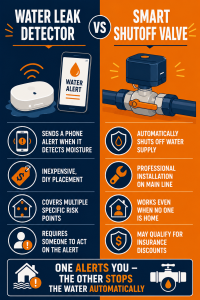
That alert is sent to your phone via WiFi or a connected smart home hub, letting you know exactly where the moisture was detected. What the detector does not do is stop the water — it only reports the problem. Acting on that alert, whether that means shutting off a valve yourself, calling someone at home, or triggering a connected smart home system to respond, is entirely up to the homeowner.
💡 Tip: Leak detectors are cheap enough to place in multiple locations — under every sink, behind the washing machine, and near the water heater — giving you coverage across your highest-risk areas for the cost of one shutoff valve installation.
How a Smart Water Shutoff Valve Works
A smart water shutoff valve is installed directly on the home’s main water supply line, typically near the water meter or the existing main shutoff point. Rather than waiting for water to reach a sensor pad, it monitors the flow of water passing through the line itself using built-in flow sensors, and in some systems, paired leak detectors placed around the home.
When the system identifies an abnormal water flow pattern consistent with a leak or a burst pipe — a continuous flow with no fixture actively in use, for example — it automatically closes the valve, cutting off water to the entire home. This happens without any input from the homeowner, which is the core functional difference from a standalone leak detector.
💡 Tip: Most smart shutoff valves also let you manually close your home’s water supply remotely from a phone app — useful for anyone who travels frequently or owns a second home.
Protection Level — Alert vs Active Shutoff
A leak detector’s protection depends entirely on someone being available to respond to the alert in time. If you’re home, awake, and near your phone, that response can happen within minutes. If you’re not, the water keeps flowing regardless of how quickly the alert was sent.
A smart shutoff valve’s protection is automatic — it works the same way whether you’re home, asleep, or on the other side of the country, because it doesn’t wait for a human to act on it. This is the fundamental trade-off between the two devices: a detector alone can still result in significant water damage if the alert goes unnoticed for hours, even though it did exactly what it was designed to do.
⚠️ Warning: A leak detector alert sent at 3am while you’re asleep, or during a week-long vacation, provides little practical protection if nothing stops the water from continuing to flow — this is the core limitation that a shutoff valve is specifically designed to solve.
Cost and Installation Complexity
A water leak detector is inexpensive, battery powered, and requires no plumbing modification whatsoever — you place it near a risk area and it’s ready to work within minutes. This is a genuine DIY product from start to finish, with no tools or professional involvement required at any point.
A smart shutoff valve is a different category of purchase entirely. Professional installation is typically required, since the device is plumbed directly into your main water line — this is a genuine plumbing job, not a plug-and-play accessory. The higher upfront cost reflects both the device itself and the installation labor. On the ongoing side, leak detectors need occasional battery replacement, while shutoff valves need periodic system checks to confirm the valve, sensors, and connectivity are all still functioning correctly.
💡 Tip: Smart shutoff valve installation is a genuine plumbing job — unless you’re comfortable cutting into your main water line, budget for professional installation as part of the total cost.
Insurance Discounts and Compatibility
In freeze-prone regions across the Midwest and Northeast, burst pipes from winter freezing are a leading cause of major water damage claims — and because these bursts often happen while a home is unoccupied or overnight, a smart shutoff valve’s automatic response is significantly more valuable than a detector alert nobody sees in time. Many US insurance providers, including State Farm and Allstate in certain states, offer homeowner insurance discounts of 5–15% for installing a smart shutoff valve, though discount availability and percentage vary significantly by state and provider — check with your specific insurer before buying based on the discount alone.
It’s also worth confirming exactly what qualifies. Some insurers only recognize whole-home shutoff valve systems for discount eligibility and do not extend any discount for standalone leak detectors, since a detector alone doesn’t actively prevent the claim the insurer is trying to avoid. Never assume a discount applies to a specific product without checking your actual policy.
💡 Tip: Call your insurance provider directly and ask which specific smart water devices qualify for a discount on your policy — requirements vary significantly and buying the wrong device won’t qualify even if it’s a reputable brand.
Best Use Cases for Each
A water leak detector makes the most sense for renters, budget-conscious homeowners, or anyone supplementing an existing whole-home shutoff system with more granular, appliance-level coverage. It’s also the practical choice for monitoring specific high-risk appliances individually — a water heater, a washing machine, or a dishwasher — without the cost of a full shutoff installation.
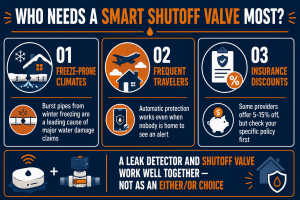
A smart shutoff valve delivers the most value for homeowners in freeze-prone climates, frequent travelers, owners of a second home that sits empty for long stretches, and anyone who has already experienced a major leak and wants protection that doesn’t depend on someone being present to respond. If your immediate concern is a specific appliance, our guide to water heater leaking covers that scenario directly.
💡 Tip: These two devices are not mutually exclusive — many homeowners use leak detectors at specific appliance-level risk points alongside a whole-home shutoff valve for complete coverage.
Which Should You Choose?
The right choice depends on your budget, your climate, how often your home sits unoccupied, and whether you’re willing to modify your main water line. The head-to-head table below shows where each device has a genuine practical edge.
| Scenario |
Winner |
| Lower upfront cost |
Leak Detector ($20–$60 vs several hundred installed) |
| Automatic protection with no action needed |
Smart Shutoff Valve (shuts off water without human response) |
| Easiest DIY installation |
Leak Detector (no plumbing modification) |
| Best for freeze-prone regions |
Smart Shutoff Valve (responds to overnight/unoccupied bursts) |
| Best for renters |
Leak Detector (no permanent plumbing changes) |
| Highest potential insurance discount |
Smart Shutoff Valve (5–15% with qualifying insurers) |
| Best for monitoring multiple specific appliances |
Leak Detector (cheap enough to place at every risk point) |
| Best protection while away from home |
Smart Shutoff Valve (no one needs to see the alert) |
Choose a Leak Detector if:
- You’re renting or don’t want to modify your home’s plumbing.
- You want affordable coverage across multiple specific risk points.
- You or someone in your home can respond quickly to alerts. Our roundup of the best water leak detectors covers the specific models worth buying.
Choose a Smart Shutoff Valve if:
- You live in a freeze-prone climate or travel frequently.
- You want protection that works even when no one is home.
- You want to maximize a potential insurance discount. Our roundup of the best smart water shut-off valves covers the specific models worth buying. If you’re still confirming whether you have a leak in the first place, our guide to detect a water leak covers that process first.
Need a Professional Plumber?
Installing a smart shutoff valve means cutting into your home’s main water line — this is a genuine plumbing job, and a licensed plumber ensures it’s installed correctly and won’t create a leak of its own. A professional can also confirm your specific installation qualifies for any insurance discount your provider offers.
Find a licensed plumber in your area at PlumberArchive.com — the US plumber directory with 12,000+ verified local plumbers across all 50 states.
Find a trusted plumber near you → PlumberArchive.com
Follow Us on Facebook
Get weekly plumbing tips, honest brand comparisons and DIY maintenance guides delivered straight to your Facebook feed. We cover leak protection, water heater care, pipe maintenance and everything in between — written for US homeowners who want to make smarter decisions without overspending.
Follow PlumbingToolsReview on Facebook →
Frequently Asked Questions
Q: Can I use a leak detector and a smart shutoff valve together?
Yes, and many homeowners do exactly this for the most complete coverage. A whole-home smart shutoff valve handles the big-picture risk — a burst pipe or major supply-line failure — while standalone leak detectors placed at specific appliances catch smaller, localized leaks that might not trigger a whole-home flow anomaly large enough for the shutoff valve to notice. Some smart shutoff valve systems are even designed to pair directly with leak detector sensors, using them as an additional trigger for the automatic shutoff.
Q: Do smart shutoff valves really lower my insurance premium?
Many US insurers do offer a discount, commonly in the 5–15% range, for installing a qualifying smart shutoff valve — providers including State Farm and Allstate offer this in certain states. However, availability, percentage, and which specific devices qualify vary significantly by state and provider, and some insurers only recognize whole-home shutoff systems rather than standalone leak detectors. Call your insurer directly and confirm eligibility for your specific policy and the exact device you’re considering before purchasing based on the discount alone.
Q: Does a smart shutoff valve need a professional plumber to install?
In most cases, yes. The valve is installed directly on your home’s main water supply line, which typically means cutting into existing plumbing — this is a genuine plumbing job rather than a DIY accessory. Professional installation also matters for insurance purposes, since some providers require documentation of a proper installation before extending a policy discount. A licensed plumber ensures the valve is correctly sized and installed without creating a new leak point of its own.
Q: What happens if my smart shutoff valve loses WiFi or power?
This depends on the specific system, so it’s worth checking before you buy. Most reputable smart shutoff valves are designed to fail safe, meaning they either remain in their last known position or default to a specific state during a power or connectivity loss, and many include battery backup to maintain core function during a power outage. A loss of WiFi typically only affects remote app control and alerts, not the valve’s core ability to detect and respond to abnormal flow locally. Confirm the specific failure behavior of any model you’re considering, since this varies by manufacturer.
Conclusion
A water leak detector alerts you to a problem; a smart water shutoff valve stops the problem automatically. That’s the entire decision in one sentence — everything else, from cost to installation to insurance discounts, flows from that core difference in how each device intervenes.
Homeowners in freeze-prone climates and frequent travelers get the most value from a shutoff valve’s automatic protection, since it works whether or not anyone is around to see an alert. Budget-conscious homeowners, renters, and anyone wanting to monitor multiple specific appliances get excellent value from leak detectors instead. The two devices work well together rather than as a strict either/or choice — many complete leak-protection setups use both.
If you haven’t yet confirmed you have a leak, start with our guide to detect a water leak. Our roundup of the best water leak detectors covers specific sensor models if that’s the direction you choose, and if your immediate concern is a specific appliance, our guide to water heater leaking covers that scenario in detail.
✍️ About This Comparison
PTR Editorial Team — Product Comparisons. We compare manufacturer specifications, installation requirements, compatibility and available product documentation to help homeowners choose suitable tools and parts. How we review →