Reviews
23 Sep 2026

5 Best Natural Gas & Propane Leak Detectors (2026) — Expert Reviews
Compare 5 top natural gas & propane leak detectors for 2026 — plug-in alarms vs handheld sniffers, tested for accuracy, price and home safety.
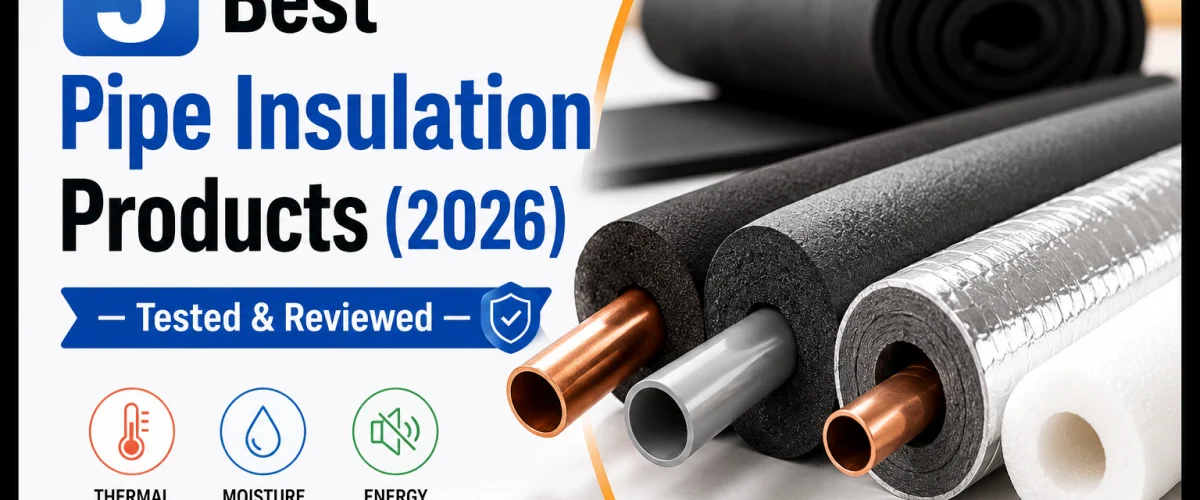
Frozen pipes cost billions every winter. We tested 5 best pipe insulation products — foam tubes, outdoor covers and AC wraps — to find the top picks.
Product availability and information are based on our research at time of writing and are subject to change. Always check Amazon for the latest details before purchasing.
Frozen pipes cost US homeowners an estimated $1 billion in damage every year — and the fix is almost always simple pipe lagging that takes an afternoon to install. When water inside an uninsulated pipe freezes and expands, it can split copper, crack PVC, and burst soldered joints, leaving you with a flooded basement and an emergency call to a plumber. Insulation is one layer of winter prep — our guide on how to prevent frozen pipes covers the rest. The best pipe insulation stops that from happening for just a few dollars per linear foot of pipe.
Beyond freeze protection, insulating your hot water pipes cuts energy bills by keeping water hotter between the boiler and the faucet — reducing the wait time for hot water and lowering your heating load. It also stops cold-water pipes sweating in summer, preventing mold and drips in crawl spaces and basements. Whether you need pipe insulation foam for indoor supply lines, outdoor faucet covers for winter, or heavy-duty wrap for AC lines, this guide covers the five best options on the market. If a pipe has already burst, see our best pipe repair kits guide before insulating.
| Product | Rating | Best For | Size | Price |
|---|---|---|---|---|
| 2Pack Outdoor Faucet Covers BEST BUDGET | ★★★★ | Budget / Outdoor Faucets | Universal fit | $ |
| Pipe Insulation Foam Tube 1/2″ ID x 6FT | ★★★★☆ | Standard Pipes | 1/2″ ID × 6 ft | $ |
| Amylove 24 Pcs Foam Pipe Insulation 1/2″ | ★★★★☆ | Bulk Pack / Whole House | 1/2″ ID × 24 pcs | $$ |
| Redford Supply Co. 2 inch x 14 ft | ★★★★☆ | Large Pipes | 2″ ID × 14 ft | $ |
| COVERTIFY 5 Layers HVAC AC Line Cover | ★★★★ | AC / HVAC Lines | Multi-layer wrap | $ |
💰 Best Value
Outdoor faucet covers are the fastest, cheapest form of pipe freeze protection you can buy — and this 2-pack is one of the most widely used options in the category. The hard-shell outer casing with foam interior traps a layer of insulating air around the spigot, keeping the temperature above freezing even when it dips below 20°F outside. Installation takes under a minute: remove the garden hose, slip the cover over the spigot, and tighten the draw-cord seal around the faucet body.
this is the most cost-effective winterization upgrade you can make to any home with exposed outdoor faucets. It is a well-reviewed, widely trusted option, and the pick most people should start with here. The hard outer shell outperforms soft fabric covers in sustained cold snaps, and the universal sizing fits most standard US outdoor spigots without modification.
⭐ Top Pick
This 1/2-inch ID foam pipe insulation tube is the standard solution for insulating copper or PVC supply lines in basements, crawl spaces, and utility rooms. The pre-slit design means installation requires no tools and no cuts — simply press the foam open along the seam and snap the sleeve over the pipe. The 6ft length covers a typical pipe run without joins, and the closed-cell polyethylene foam construction resists moisture and maintains its insulating properties even in damp environments.
it’s exceptional value for a full 6 feet of foam pipe insulation, and it fits the most common residential pipe size — most copper cold and hot supply lines run at 1/2-inch outside diameter. Beyond pipe freeze protection, insulating hot water lines with this foam sleeve keeps water hotter between the water heater and the faucet, trimming your energy bills in the process. For joining multiple sections, pair it with our best plumbing tapes guide to seal the seams properly.
🏆 Bulk Pick
The Amylove 24-piece set is the right choice when you’re insulating an entire basement, crawl space, or multiple units in a rental property. Each piece is a pre-slit 1/2-inch ID foam pipe insulation sleeve, and the 24-count gives you enough material to cover a substantial run of residential pipework in a single order. the per-piece cost works out to pennies each — significantly cheaper than buying individual tubes from a hardware store, and you get a uniform batch for a consistent, professional finish throughout the installation.
The foam is closed-cell polyethylene — the same material used in single-piece sleeves — which resists moisture and maintains its R-value over time. Property managers winterizing multiple rental units will find this pack especially practical, as one order handles most standard layouts. Reviewers consistently report a good fit on standard 1/2-inch copper and CPVC pipes. For larger pipes in the same property, pair this with the Redford Supply Co. 2-inch option below.
⭐ Large Pipe Pick
Most pipe insulation products target 1/2-inch to 3/4-inch residential pipes — the Redford Supply Co. 2-inch x 14ft foam sleeve fills the gap for main supply lines, basement water mains, boiler feed pipes, and HVAC condensate lines running through unheated spaces. The 2-inch inner diameter fits standard 2-inch nominal pipe, and the 14ft single piece minimizes joins for better thermal continuity across longer runs. Closed-cell foam construction resists moisture absorption and holds its shape in damp basement environments.
it’s competitively priced for large-diameter pipe insulation — comparable hardware store alternatives typically cost more per linear foot. steady sales of 200+ units per month, it has a proven track record across a wide range of installation types including domestic plumbing, HVAC, and light commercial use. If a large pipe has already leaked or burst, read our guide on how to fix a leaking pipe before applying insulation to the repaired section.
⭐ HVAC Pick
★★★★
The COVERTIFY AC Line Cover is purpose-built for insulating outdoor HVAC refrigerant lines — the copper tubing that runs between your air conditioning unit and the interior air handler. Standard foam pipe insulation degrades quickly when exposed to UV rays and weather, often crumbling within two to three seasons. The COVERTIFY solves this with five-layer construction including a UV-resistant outer jacket rated for permanent outdoor installation, a reflective foil layer, and dense inner foam for genuine thermal protection.
Keeping AC refrigerant lines properly insulated maintains system efficiency, reduces compressor workload, and extends the lifespan of your HVAC system — poorly insulated suction lines cause the refrigerant to absorb heat before reaching the compressor, forcing it to work harder and increasing your energy bills. Early feedback is consistently positive for this newer product. If you’re doing a full winterization project, combine this with the foam tube sleeve above for your indoor supply lines.
Foam pipe insulation (closed-cell polyethylene) is the most common type for residential use — it’s affordable, easy to install, and effective for most indoor and sheltered applications. Fiberglass pipe lagging offers a higher R-value per inch and handles higher temperatures, making it better suited to steam pipes and high-heat applications, though it requires protective outer wrap and gloves to install. Rubber insulation (EPDM or nitrile) is more flexible and durable than foam, making it the preferred choice for refrigerant lines and chilled water systems — it resists condensation better than foam and holds up in outdoor conditions without UV degradation. For standard residential cold and hot water pipes, foam is the practical, cost-effective choice. For HVAC and AC lines, rubber or multi-layer wraps like the COVERTIFY are worth the premium.
Pipe insulation is sold by inner diameter (ID), which must match the outer diameter (OD) of your pipe. The simplest way to measure is to wrap a piece of string around the pipe, mark where it overlaps, measure the string length, and divide by pi (3.14) to get the OD. For copper pipe: 1/2-inch nominal copper has a 5/8-inch OD — use 1/2-inch ID insulation. For 3/4-inch nominal copper, the OD is 7/8 inch — use 3/4-inch ID foam. CPVC dimensions differ slightly from copper, so always measure rather than guessing from the nominal size label.
Indoor pipe insulation foam works well in basements, crawl spaces, and utility rooms — protected from direct UV exposure and weather. For any outdoor application — outdoor faucets, AC refrigerant lines, or exposed pipe sections on exterior walls — you need insulation with UV stabilization or a protective outer jacket. Standard black foam insulation will degrade and crumble outdoors within one to two seasons without it. The COVERTIFY option in this list is designed specifically for outdoor use.
R-value measures thermal resistance — the higher the R-value, the better the insulation. Standard 3/8-inch foam pipe insulation has an R-value of approximately R-2. A 1-inch thick foam sleeve reaches around R-4. For pipe freeze protection in areas that regularly drop below 0°F, thicker insulation with a higher R-value — or adding heat tape underneath the foam — is the safer choice. For energy savings on hot water lines in a conditioned basement, standard 3/8-inch to 1/2-inch foam is sufficient.
Self-sealing pipe insulation has a peel-and-stick adhesive strip along the pre-slit opening, bonding the seam shut without additional tape. It’s faster to install and creates a more airtight seal, making it preferable in high-humidity crawl spaces where a gap in the seam would allow moisture ingress. Non-sealing foam is cheaper and works well when you plan to seal the seam with foil HVAC tape anyway. Neither type requires special tools — both snap over the pipe and stay in place without fasteners.
Sometimes a job is too big for DIY — frozen pipes that have already burst, or pipe runs in difficult crawl spaces, are best handled by a licensed plumber. Search PlumberArchive.com — the US plumber directory with 12,151+ verified plumbers across all 50 states.
Find a trusted plumber near you →
Looking for our top recommended tools in one place? Browse our curated Amazon Storefront →
Get weekly plumbing tips, honest tool reviews and DIY winterization guides delivered to your Facebook feed.
Yes — pipe insulation slows the rate of heat loss from the pipe to the surrounding air, which delays the point at which water inside the pipe reaches 32°F and begins to freeze. In mild cold snaps (temperatures between 20°F and 32°F) quality foam insulation alone is often sufficient. In sustained deep freezes below 15°F, combining pipe insulation with heat tape (self-regulating electrical cable wrapped around the pipe under the foam) provides reliable freeze protection. The key is to insulate before winter, not after a pipe has already frozen — once water starts to freeze, expansion pressure can split the pipe within hours.
For most residential hot and cold water pipes in a conditioned space (heated basement or utility room), 3/8-inch to 1/2-inch foam is sufficient for both energy savings and light freeze protection. For pipes in unheated crawl spaces, garages, or exposed exterior walls, use at least 1-inch thick foam insulation for meaningful freeze resistance. The thicker the insulation wall, the higher the R-value and the longer the pipe stays above freezing in cold conditions. If your area regularly sees temperatures below 10°F overnight, prioritize thickness over cost.
Pipe insulation is one of the most beginner-friendly home improvement tasks you can do. Pre-slit foam pipe insulation requires no tools, no pipe draining, and no cutting — you simply press the sleeve open along the seam and snap it over the pipe. An average basement or crawl space can be insulated in a Saturday morning. You don’t need to turn off your water supply or drain the pipes. The only situation where a plumber is advisable is if you’re insulating around existing leaks or damaged pipe sections — fix those first (see our guide on how to fix a leaking pipe), then insulate the repaired section once it’s solid.
Indoor foam pipe insulation typically lasts 8 to 10 years before it begins to harden, crack, or lose its effectiveness — longer if it’s in a dry, stable environment. Outdoor foam insulation without UV protection can degrade in as little as one to two seasons due to sunlight and temperature cycling. Rubber-based insulation and multi-layer wraps with UV-resistant jackets (like the COVERTIFY in this list) last significantly longer outdoors — often 15 years or more. Inspect your pipe insulation each fall before winter as part of your annual winterization check, and replace any sections that have split, hardened, or pulled away from the pipe.
For the best pipe insulation value this winter, the answer depends on what you’re protecting. If you have exposed outdoor faucets, the 2Pack Outdoor Faucet Covers are the obvious first buy — they’re the cheapest protection against a burst-pipe repair that can cost thousands, and they’re a widely used, well-reviewed option. For indoor supply lines, the Pipe Insulation Foam Tube covers a full 6ft run for the same, while the Amylove 24-piece bulk pack is the smart choice when you’re doing a whole basement or multiple units.
Once your pipes are insulated, it’s worth having the right repair kit on hand in case the worst does happen — see our best pipe repair kits guide for the top emergency options. And for any pipe that runs through a difficult area or shows signs of existing wear, check our guide to our best plumbing tapes guide before you insulate — sealing small weeping joints before adding foam lagging saves a bigger headache later.
✍️ About This Review
James Carter, Senior Tool Reviewer — James Carter has 15 years of hands-on experience in residential plumbing and tool testing. He specialises in pipe tools, hand tools and professional grade equipment, helping US homeowners and tradespeople find the right tool for every job. Learn how we test →
Compare 5 top natural gas & propane leak detectors for 2026 — plug-in alarms vs handheld sniffers, tested for accuracy, price and home safety.
5 septic tank riser kits compared for 2026 — Tuf-Tite and Polylok risers by diameter and height, so you can bring tank access to grade level.
The 5 best sewage and effluent ejector pumps for 2026, expert-reviewed: grinder, standard solids-handling and light-duty effluent pumps compared.

